
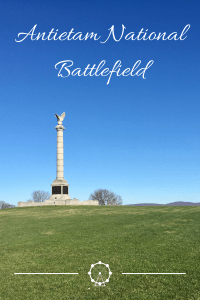
The battle of Antietam, fought on September 17, 1862 in a rural area along the Antietam Creek just outside of Sharpsburg, Maryland, remains to this day the bloodiest single day in American military history and proved to be a pivotal moment in the American Civil War. Prior to the start of the battle, President Abraham Lincoln had his Emancipation Proclamation ready to go, but feared releasing it at a time when the Union Army had suffered a few discouraging losses would make enactment challenging. The Union Army needed a decisive victory over the Confederacy, which they accomplished at Antietam. The battle resulted in over 22,000 casualties including those killed, wounded, missing or captured, with 3,650 dead from both sides. In 1890, Antietam National Battlefield became one of America’s first five national military parks and is known today as one of the most well-preserved battlefields in the nation.
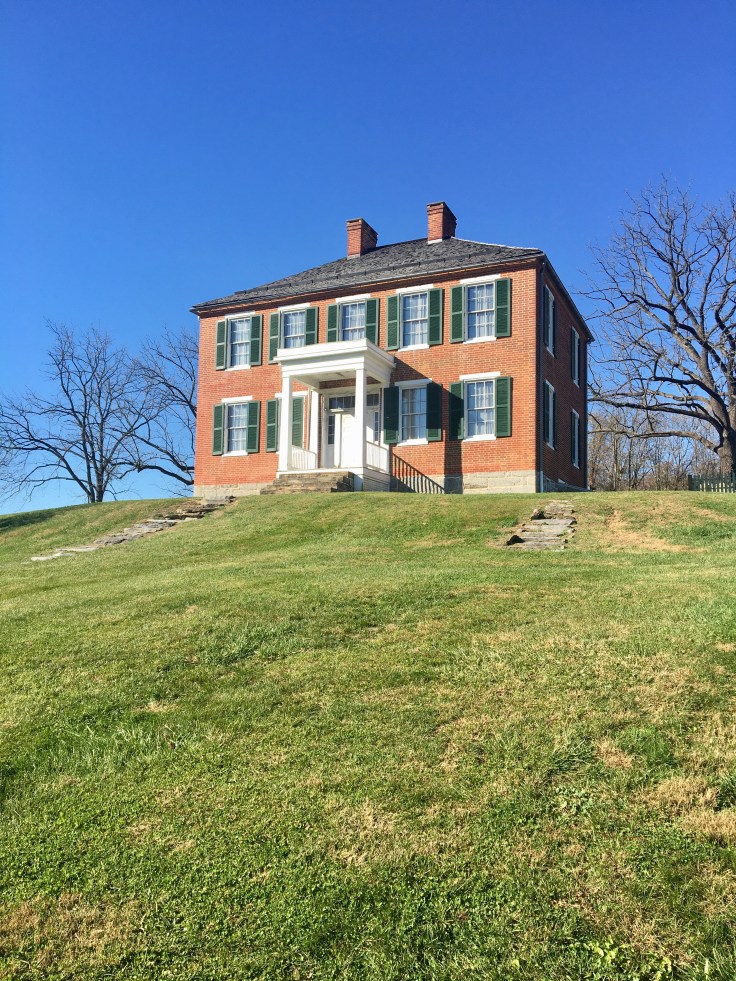
I visited Antietam National Battlefield on a road trip through Maryland and eastern West Virginia. It sits 40 minutes outside of Frederick, Maryland, another great stop on the Civil War heritage trail. On my way to the battlefield, I made a brief stop at the Pry House, a farmhouse above the Antietam Creek that became a field hospital and the headquarters of Union Army General George B. McClellan. It’s ordinarily open as a museum, but was closed indefinitely during my visit, although it was still cool to see from the outside.
From there I made my way to the Antietam National Battlefield Visitor Center. The Visitor Center itself is undergoing a renovation with plans to reopen in late 2022, but there is a temporary structure where you can stop in to pay the park admission fee ($10 individual or $20 per family in a vehicle) and pick up the park’s self-guided driving tour. The battlefield covers a lot of ground, so doing the driving tour is the best way to see everything, although there are areas with walking trails if you need to stretch your legs a bit. There’s also a 20-30 minute video at the visitor center that provides an overview of the battle which I recommend watching if you’re truly interested in the history. It will orient you on the significant fighting locations which you are about to see on the driving tour.
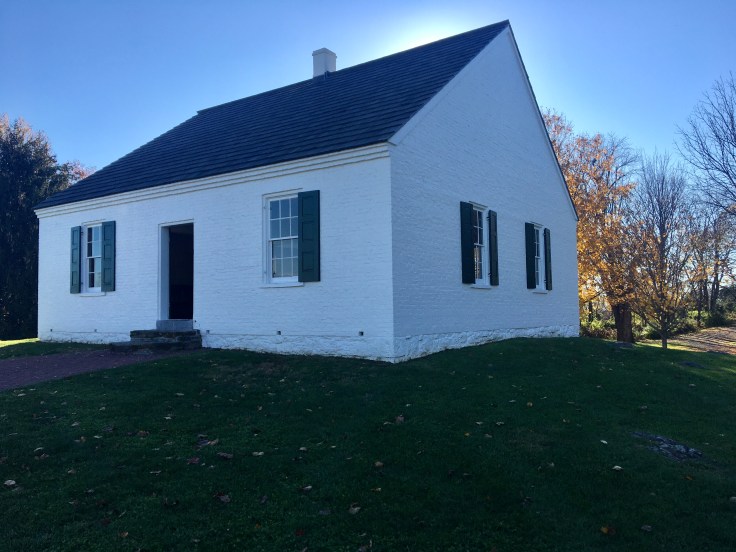
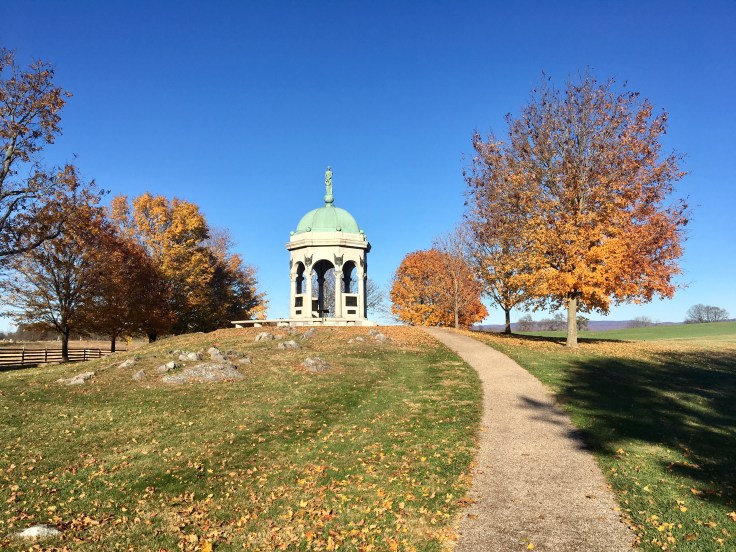
The first major stop is just at the end of the drive from the visitor center: the Dunker Church. A place that should have been filled with peace and warmth became a focal point for Union attacks on the Confederate Army, and after the fighting became a site for medical aid, and by one account, an embalming station used by the Union Army. The church was destroyed, but has since been restored to appear today as it was back then. Just across from Dunker Church is the beautiful Maryland Monument, a domed pavilion with bronze engravings of battle scenes involving the Maryland units.
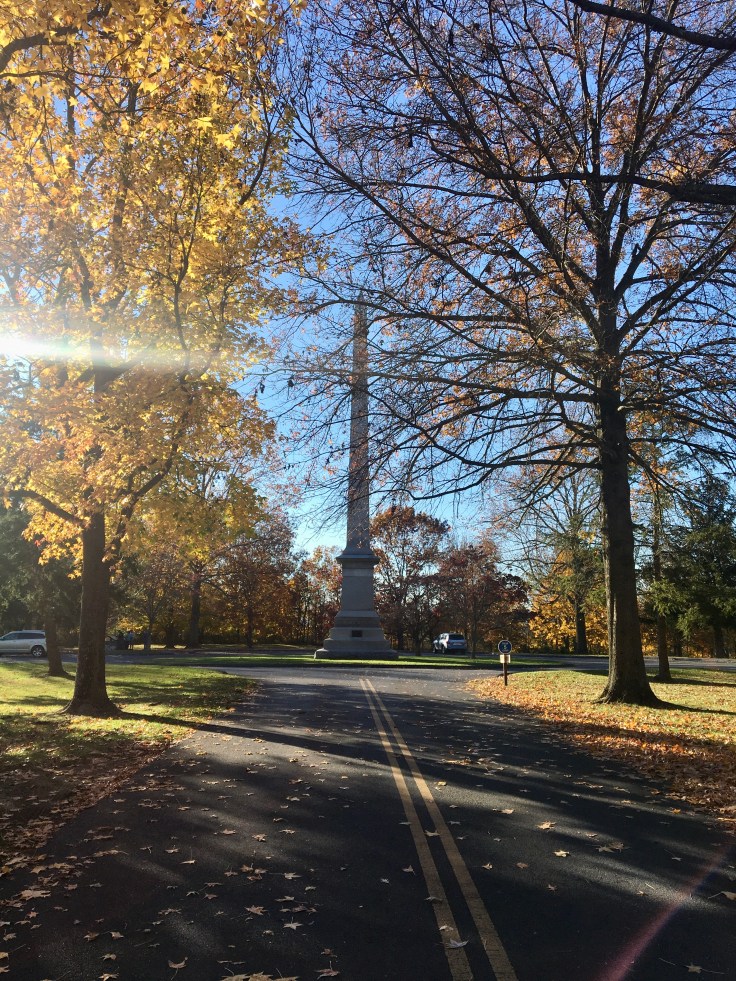
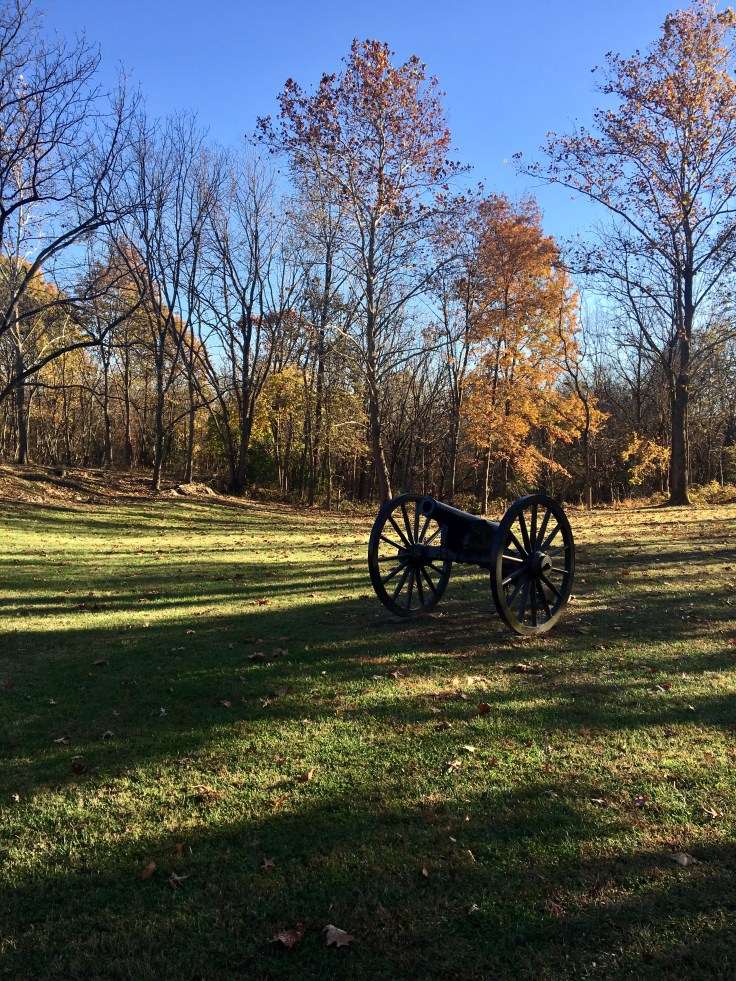
From here, the tour takes you up through the North Woods and East Woods, and back along Cornfield Avenue, where some of the most horrific fighting took place, and into the West Woods where you can find the Philadelphia Monument, the tallest monument at Antietam featuring a 73-foot tall obelisk.
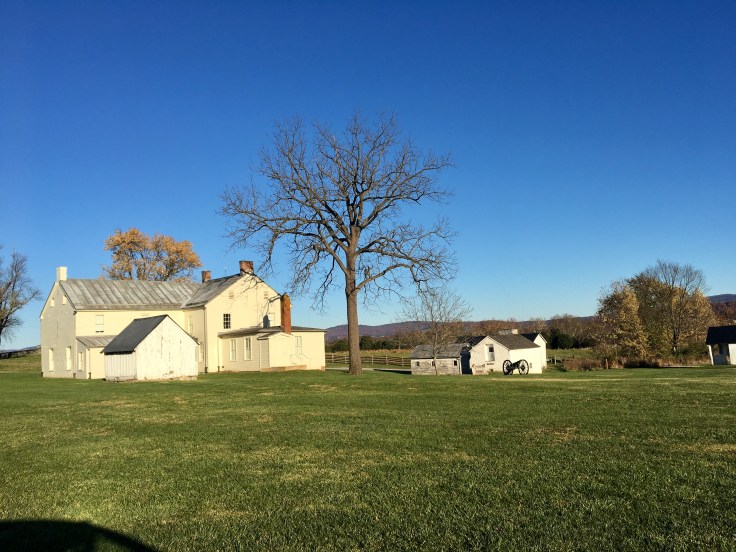
The next stop is Mumma Farm. Confederate soldiers burnt the Mumma family home to prevent their use by the Union Army, the battle’s only deliberate destruction of civilian property. The Mummas rebuilt after the war, so you can see the house and wander through the small family cemetery.
Just below Mumma Farm is another notable battle location of Antietam – the Sunken Road, also known as Bloody Lane. This was a dirt path beaten down from years of wagon travel as it had long been used by farmers to bypass the roads through Sharpsburg prior to the battle. For three hours, the Confederate Army held off Union attacks in this area, lining the Sunken Road with rows of bodies, a haunting image that affected me as I walked the trench-like path. It’s one thing to read about battles or see pictures, but walking the well-preserved location where it actually happened makes it so much more real.
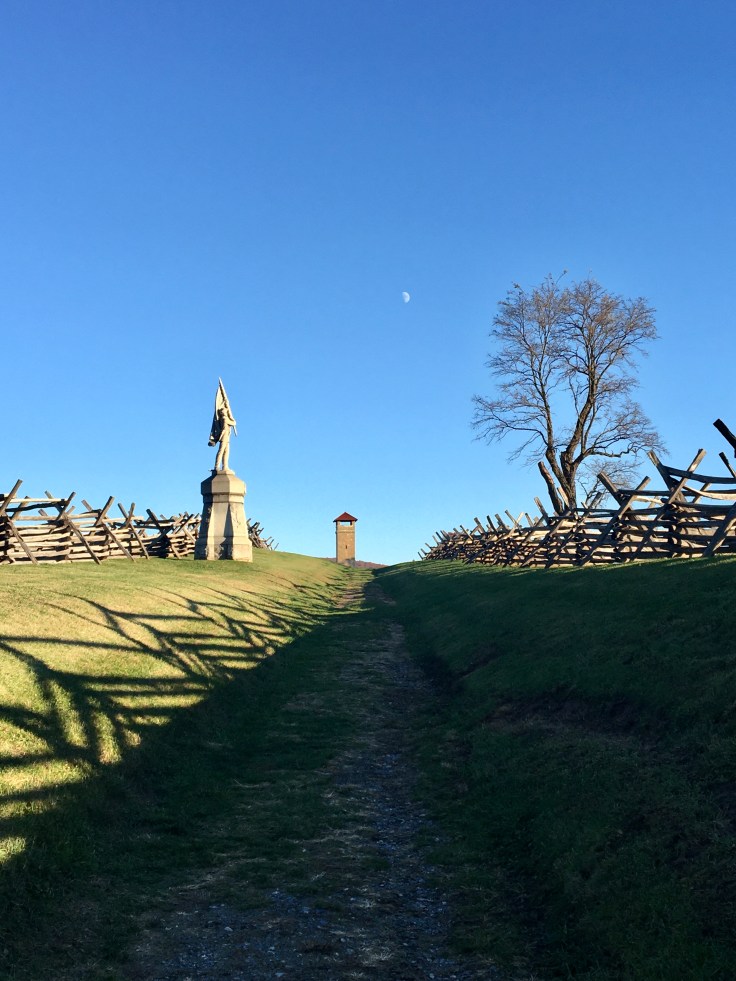
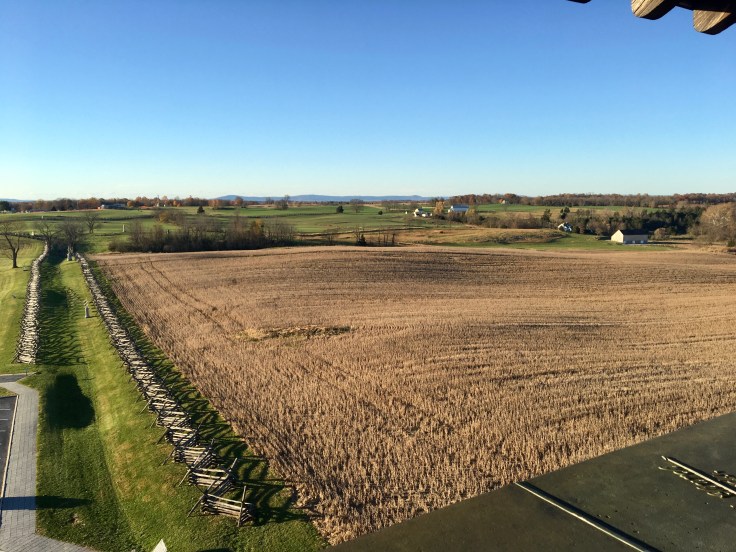
At the end of the Sunken Road is an observation tower, where you can climb the sixty-foot tall tower for a 360-degree view of the battlefield. Not a huge fan of heights, I made it to the top just long enough to snap a few photos before my shaky knees told me I needed to get out.
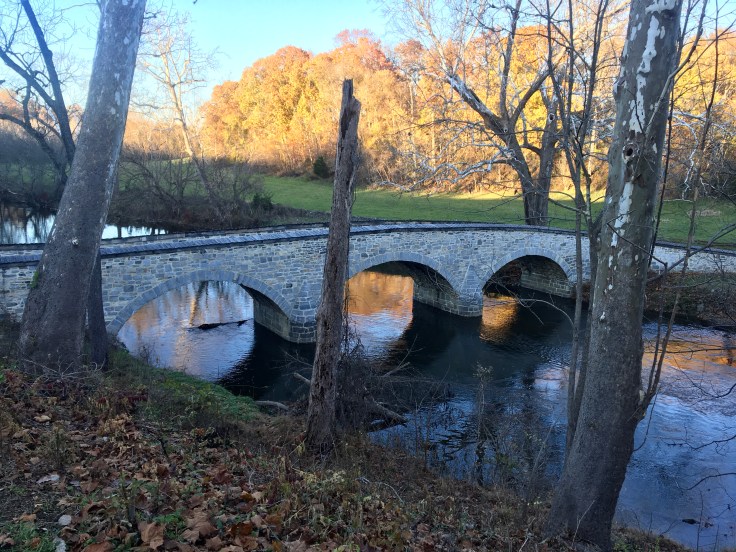
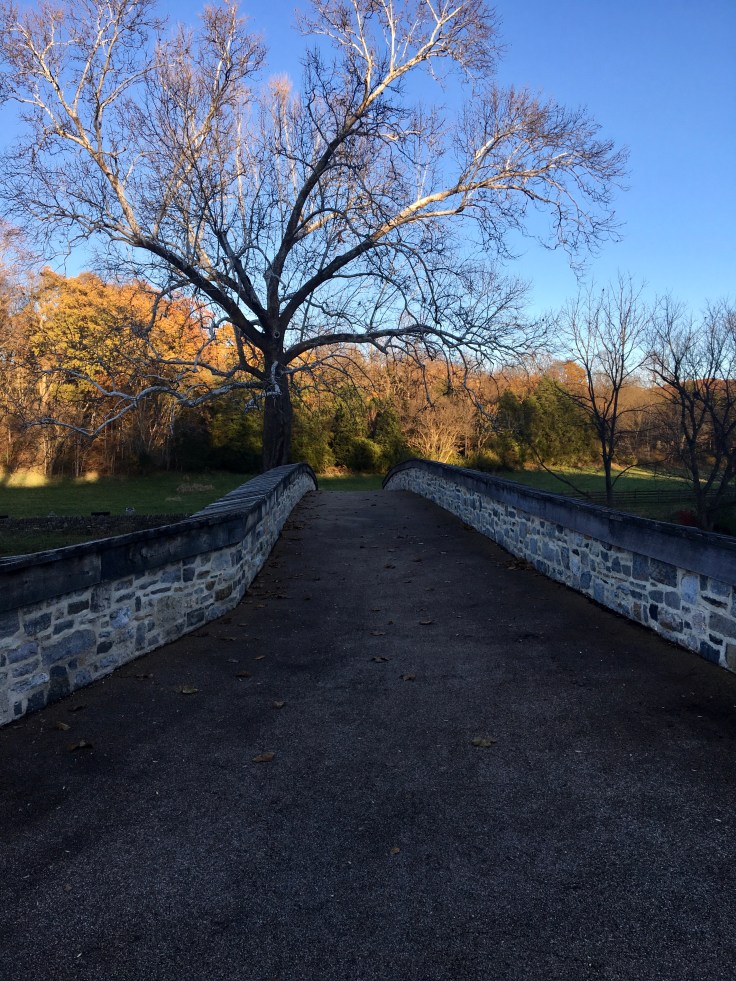
The next stop along the tour is one of the most famous and photographed locations at Antietam National Battlefield – the Lower Bridge, which came to be known after the war as Burnside Bridge. Confederates held this bridge over the Antietam Creek for three hours until Union General Ambrose E. Burnside’s units drove an attack to capture the bridge, forcing the Confederates to retreat back towards Sharpsburg.
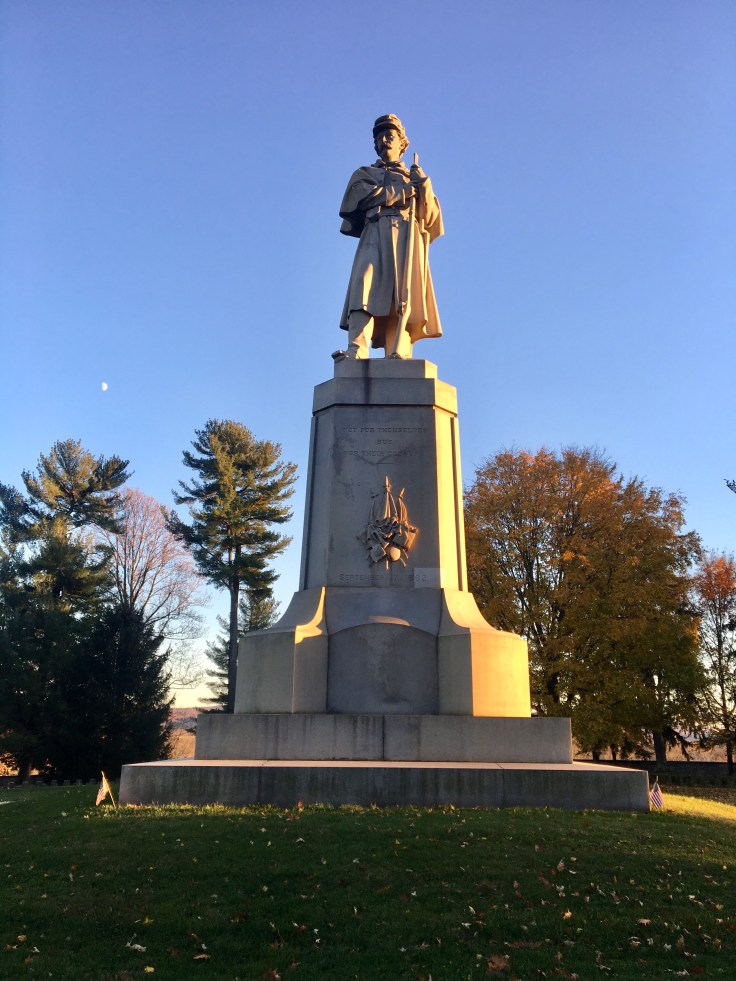
The last stop on the driving tour is Antietam National Cemetery, located at the edge of Sharpsburg. I ended my visit with quiet reflection in the cemetery as the sun was going down, with a visible representation of just a fraction of the lives lost during the American Civil War. The cemetery contains the remains of 4,776 Union soldiers, 1,836 of them unknown, from Antietam, South Mountain, Monocacy, and other battles around Maryland. There are also about 200 graves of local veterans from from the Spanish-American War, World War I, World War II, and Korea. At the center of the cemetery stands The Private Soldier, a 44-foot 7-inch tall monument commemorative of the battle. The inscription on the monument stuck with me as I finished out my somber visit to Antietam: “Not for themselves but for their country. September 17, 1862.”
I learned so much at Antietam National Battlefield and could have spent so much more time there if I wasn’t racing the short daylight hours of mid-November. I’ve visited other battlefields before, but I don’t think I’ve ever been as emotionally moved as I was visiting Antietam and immersing myself in the history. There was so much beauty in the landscape of Antietam, with its rolling green hills, autumn woods and quaint farmhouses, that it was a conflicting feeling to visit and admire this beauty knowing how many lives were lost here on that one September day in 1862, fighting for freedom in our country.
From Antietam my road trip continued into West Virginia. Read more about my West Virginia stops here:

 C to Shining C
Leave a comment