After an amazing few days in Amsterdam and exploring South Holland, I hopped on a train to Brussels. The train trip was a little under 3 hours, and took me into Brussels Central Station. Brussels would be my hub for the next leg of my trip, with day trips planned to Ghent, Bruges, and Luxembourg. I also had plenty of time to explore beautiful downtown Brussels, which people had told me along the way that I would be bored with after a day, especially after being in Amsterdam. While I did end up liking Amsterdam more in terms of the vibe, I still had plenty of fun in Brussels and never had a dull moment.
One thing that caught me off guard visiting Brussels was how unprepared I was for speaking French. I knew that French, Dutch, and German are all official languages in Belgium, but being that I was visiting Netherlands and Belgium in one trip I spend more time learning Dutch phrases. Which was fine for visiting Ghent and Bruges in the northern Flemish region of Belgium, but I found that Brussels was more French-speaking and “Sorry, je ne parle pas français” became my new favorite phrase.
Stay
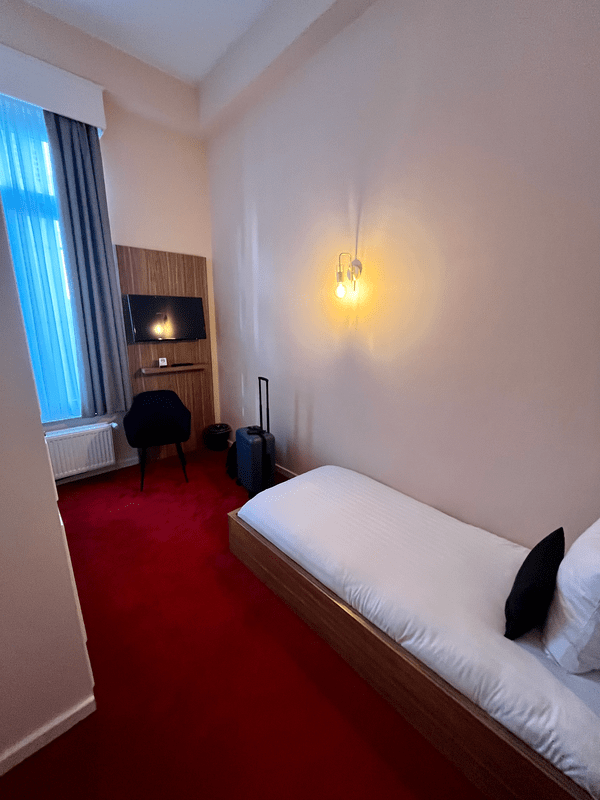
The hotel I chose in Brussels was the La Bourse Hotel. It had mixed reviews online, so I was a bit nervous going into it, but it ended up being perfect for me. While a few areas of the hotel were a bit tired, the room was clean and had everything I needed, and you couldn’t beat the location with it being just a block away from the Grand Place in the heart of Brussels. It was also under a 10 minute walk from Brussels Central Station.
Getting Around
Since I stayed in a central location, I was able to get around Brussels primarily on foot, but did take the metro to get to a few attractions and it was pretty easy to navigate. I do have to say after visiting the fairly flat and low-lying Amsterdam, I was surprised by how hilly Brussels was. It’s still a pretty walkable city, but I was not prepared for the workout of going up and down hills!
On my last day, I had a 6:40am flight, and this was the only instance where I couldn’t use public transit because there was nothing running that time of night to get me to the airport. I ended up scheduling an Uber ahead of time, and realized that I also needed to walk a few blocks to get to the Uber because my hotel was within the perimeters of a pedestrian-only zone. It was a little unsettling walking to meet my Uber at 3am but luckily I was able to schedule the pickup at another hotel just a few blocks away and wait in that hotel’s lobby.
What to See
La Grand Place
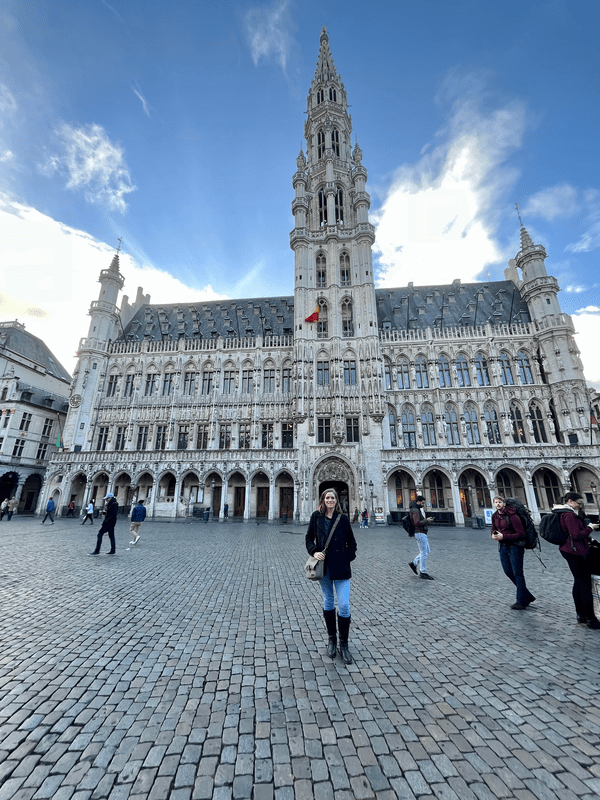
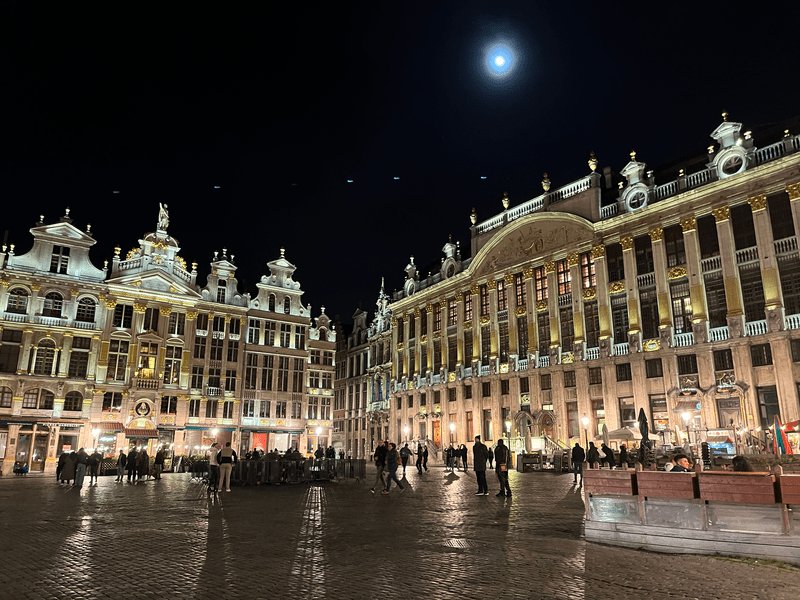
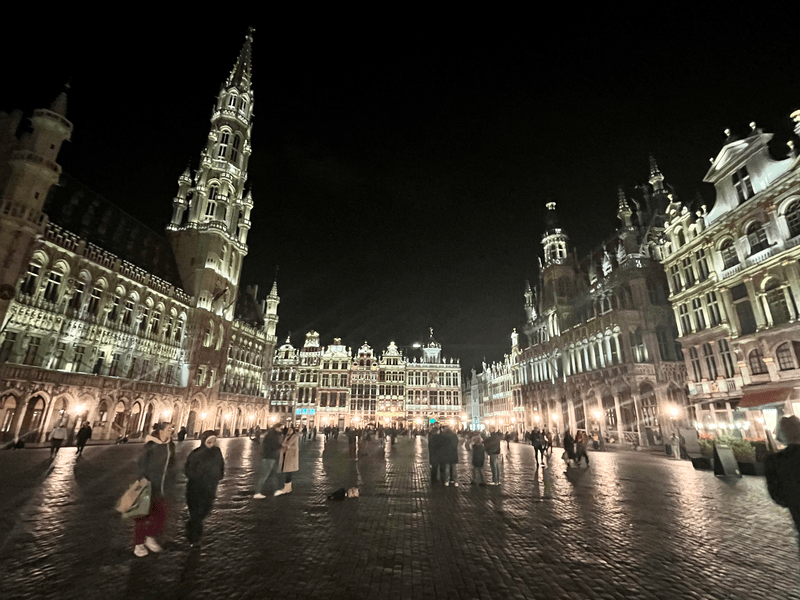
La Grand Place is the central market square of Brussels, and it’s surrounded on all sides by elaborate gothic architecture. The most famous landmark in Brussels sits on the south side of the square: the stunning medieval Brussels Town Hall with its bell tower.
Cathedral of St. Michael and St. Gudula
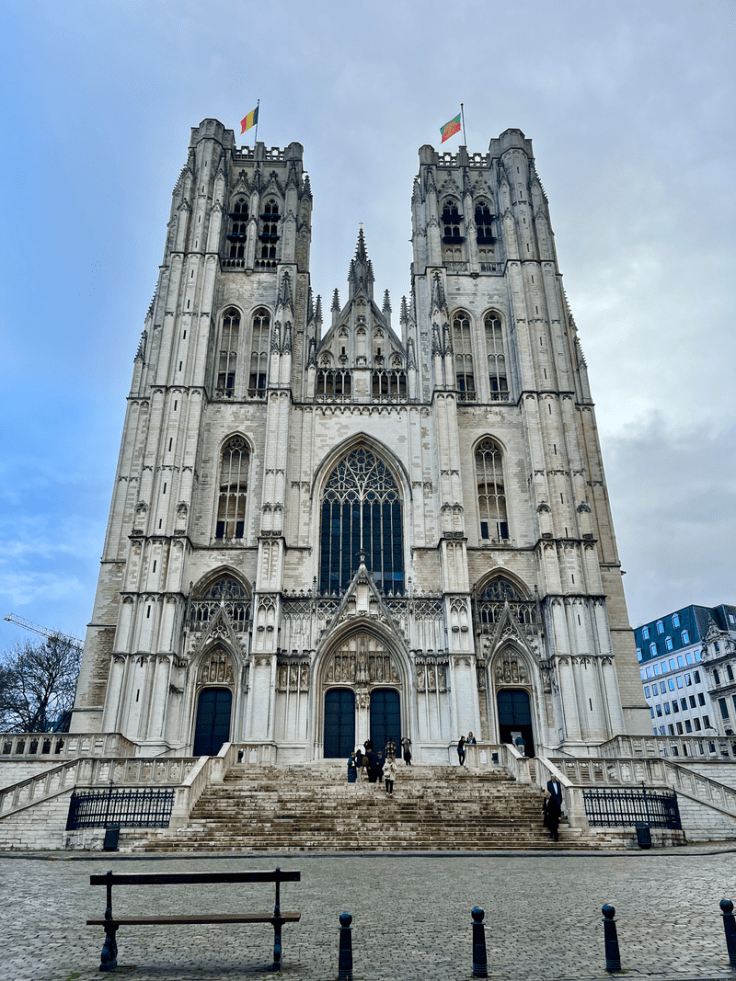
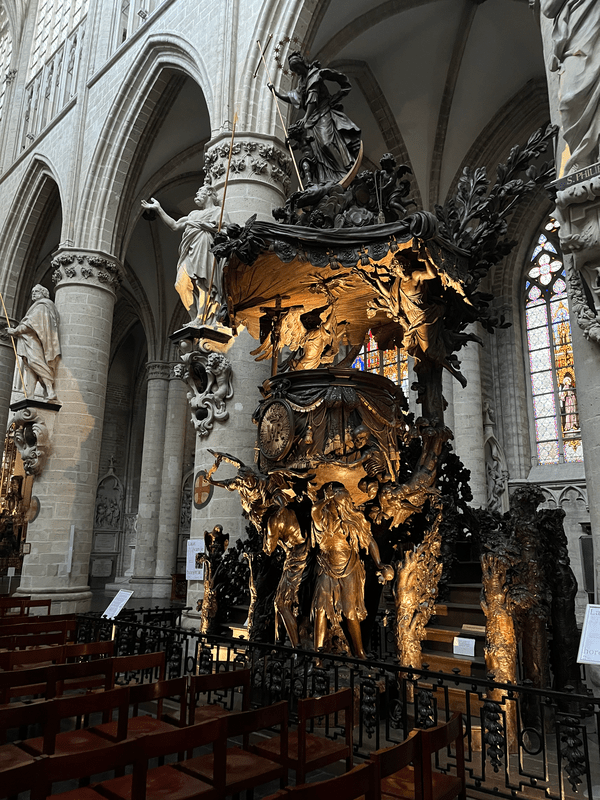
Another significant landmark a short walk from La Grand Place is the Cathedral of St. Michael and St. Gudula, which sits towering over central Brussels with its double bell towers. This gothic Roman Catholic cathedral was built between the 11th and 15th centuries and was designated a historic landmark in 1936. It’s truly beautiful inside and out.
Royal Palace of Brussels
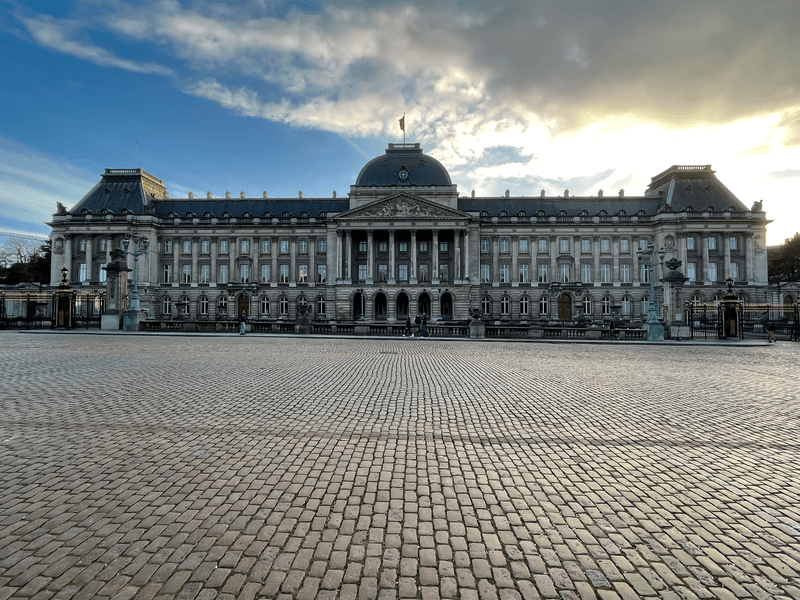
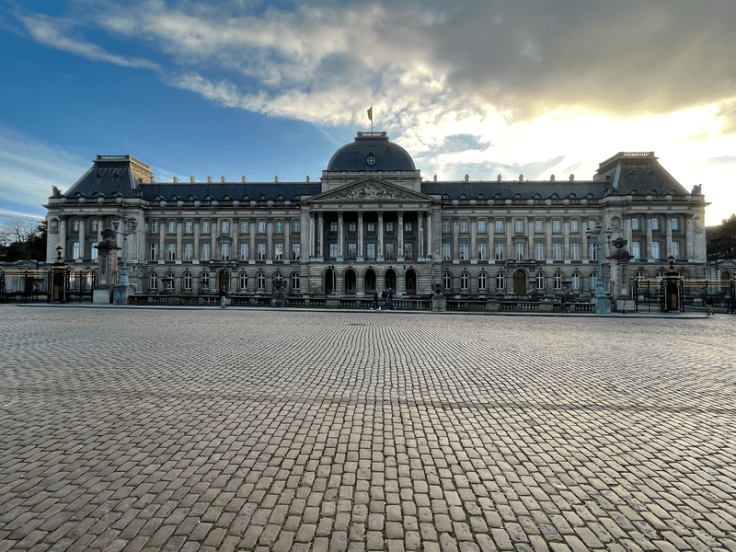
From the Cathedral, I headed for a walk through the Parc de Bruxelles and to check out the Royal Palace of Brussels. This sprawling palace is the administrative residence of the Belgian monarchy, where the royal family have their offices and meet with political representatives and foreign guests. They don’t live here – their family residence is the Castle of Laeken in northern Brussels.
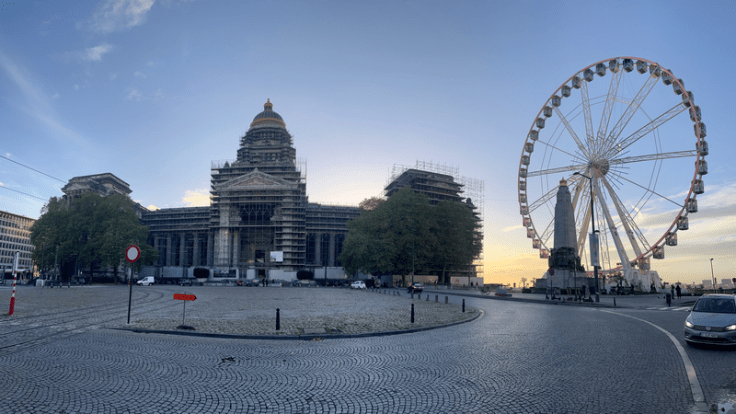
Palais de Justice and the lookout
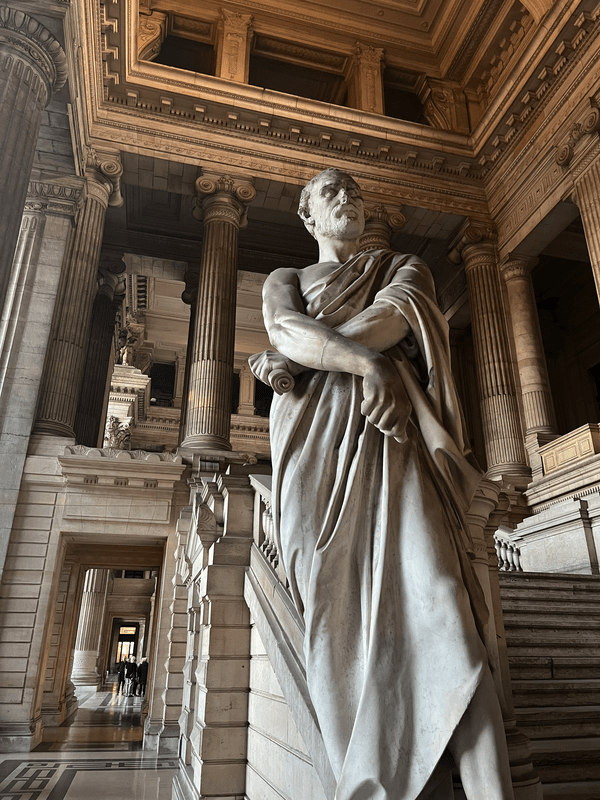
Another impressive (and massive) building is the Palais de Justice, the seat of the judicial courts of Brussels, including the Belgian supreme court. Construction on the Greco-Roman style building was completed in 1883. It sustained damage during World War II and has been under renovation to save it from crumbling from neglect since 1984. The building sits atop the Galgenberg, Dutch for Gallows Hill, where criminals were hanged in the Middle Ages. The hill looks out over the lower town of Brussels with spectacular views, which can be taken in by foot or from a ferris wheel.
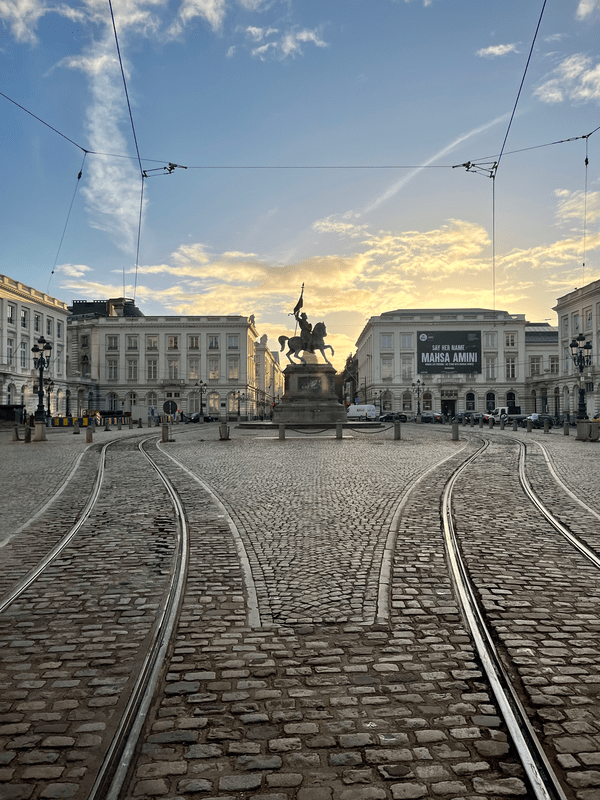
Place Royale, the Musical Instruments Museum, and Jardin du Mont des Arts
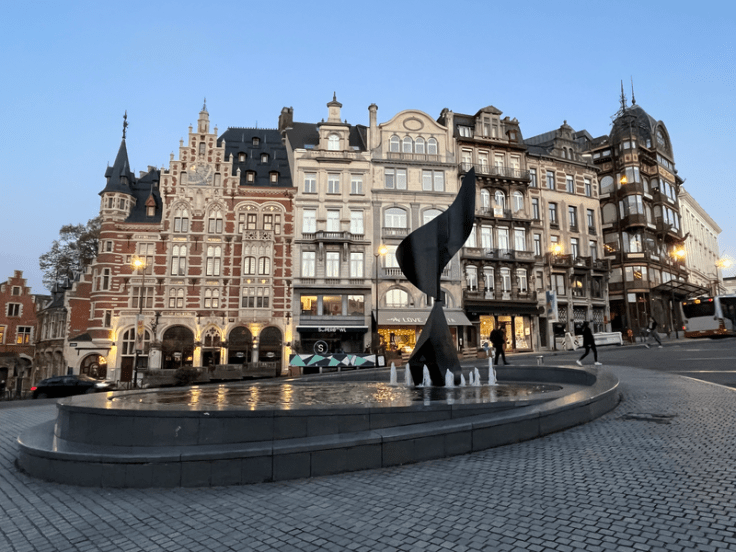
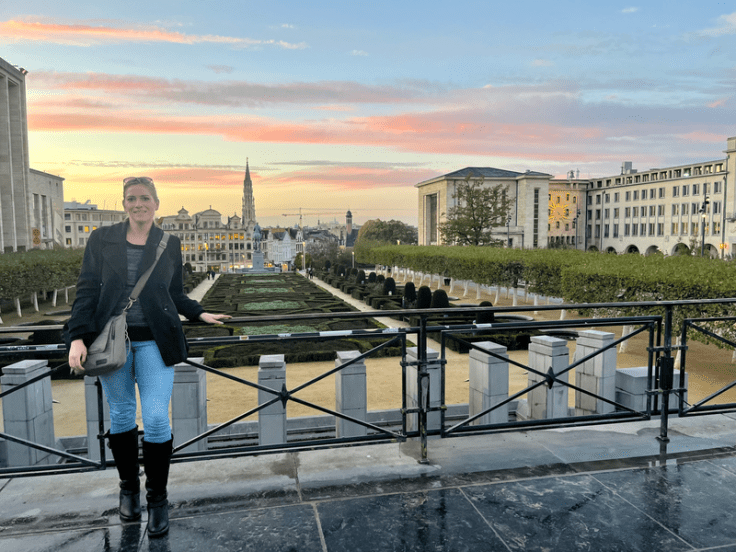
Adjacent to the Royal Palace is a scenic square called Place Royale, which is flanked by museums and features an equestrian statue of French crusader Godfrey of Bouillon. Heading from the Place Royale down Rue Montagne de la Cour, you pass the Musical Instruments Museum, which is housed in the ornate former Old English department store building. This whole strip of buildings is architecturally beautiful and photogenic. A few steps further down the hill, you come to another fabulous view of Brussels over the Jardin du Mont des Arts. I happened to visit at just the right time for an autumn sunset with cotton candy skies.
Mannekin Pis, Jeanneke Pis, and Zinneke Pis
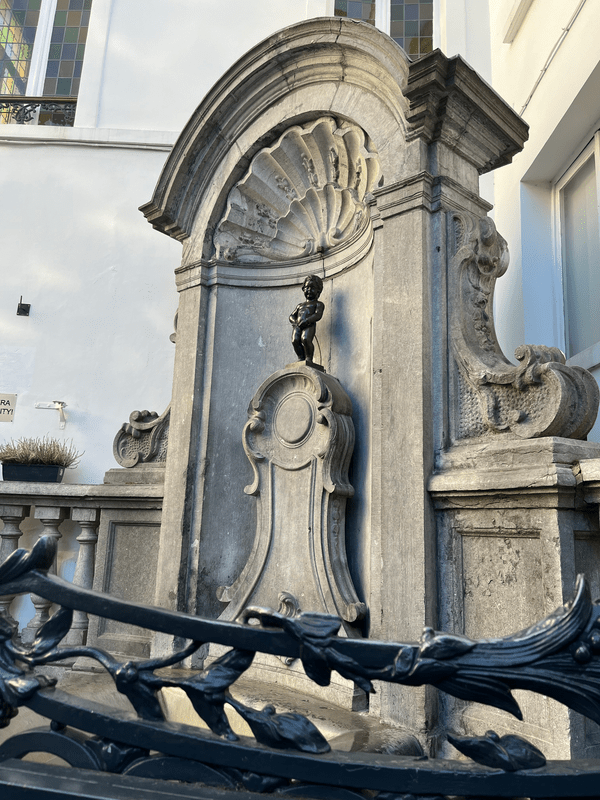
After La Grand Place, the next most famous attraction is Brussels is a small bronze fountain sculpture that sits behind a wrought iron fence on a street corner. It is the Mannekin Pis, Dutch for “Little Pissing Man.” Having been stolen or damaged numerous times, the current rendition is a replica of a statue made circa 1619 by sculptor Jérôme Duquesnoy the Elder. It’s become a Brussels icon, with the statue being dressed for special occasions and a museum nearby dedicated to its many costumes.
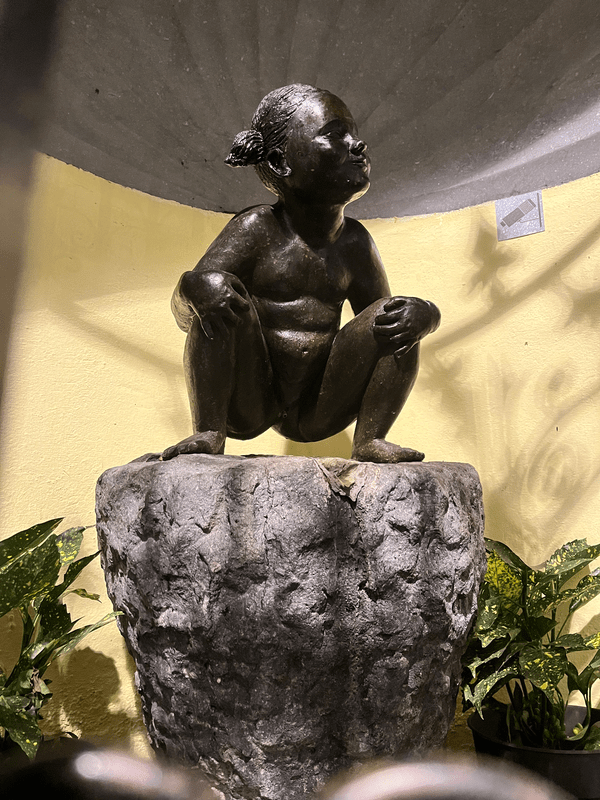
In the 1980’s, a female counterpart to the Mannekin Pis was commissioned, and the Jeanneke Pis, “Little Pissing Joan,” was erected in 1987. Yay gender equality! She squats in a little back alley next to Delirium Cafe, the beer bar renowned for holding the Guiness World Record for most beers on tap. A little plaque posted next to her states that if you love someone, you can throw a coin into the fountain and Jeanneke will protect you. The coins are donated to medical research and to help those in need.
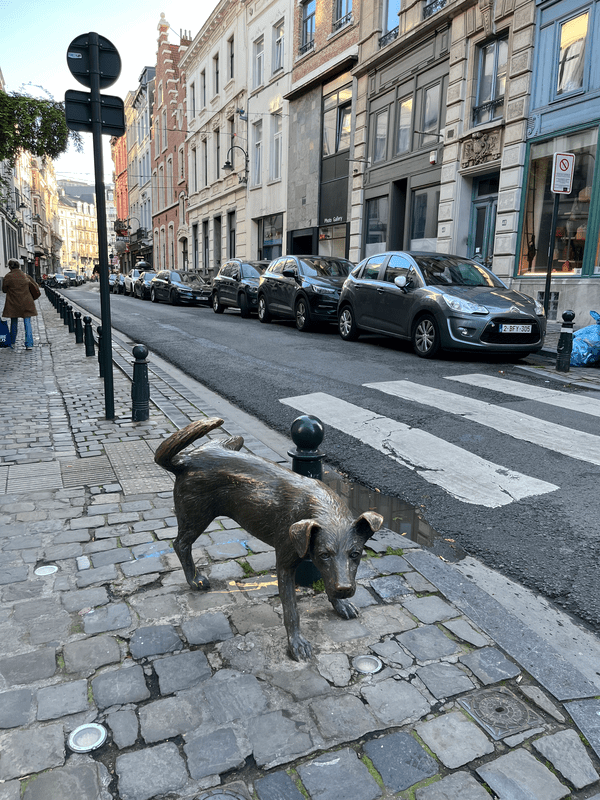
To complete the trifecta of peeing statues, the unassuming corner of Rue des Chartreux and Rue du Vieux Marché aux Grains is home to Het Zinneke, “The Mutt,” also known as Zinneke Pis to show its relation to the Mannekin Pis and Jeanneke Pis statues. This statue was created in 1998 by artist Tom Frantzen, embodying the spirit of Belgian folk humor much like the other two statues.
Sewer Museum
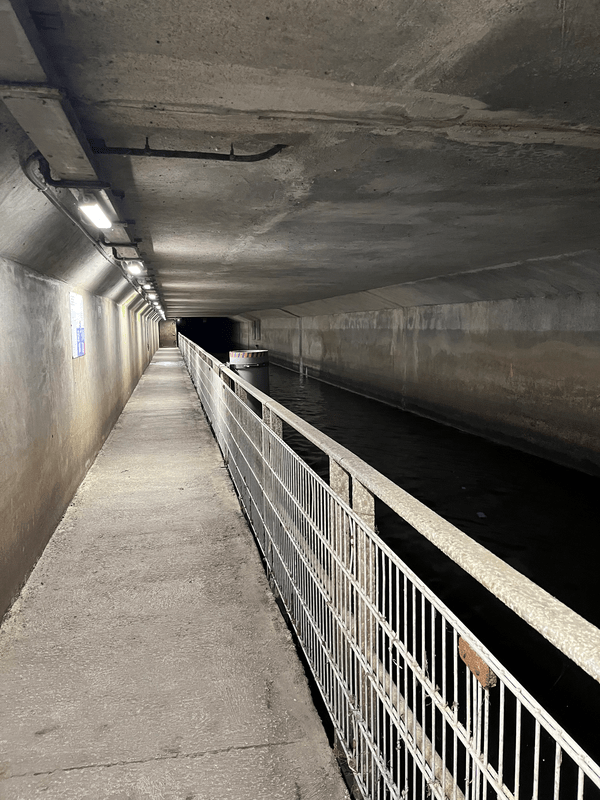
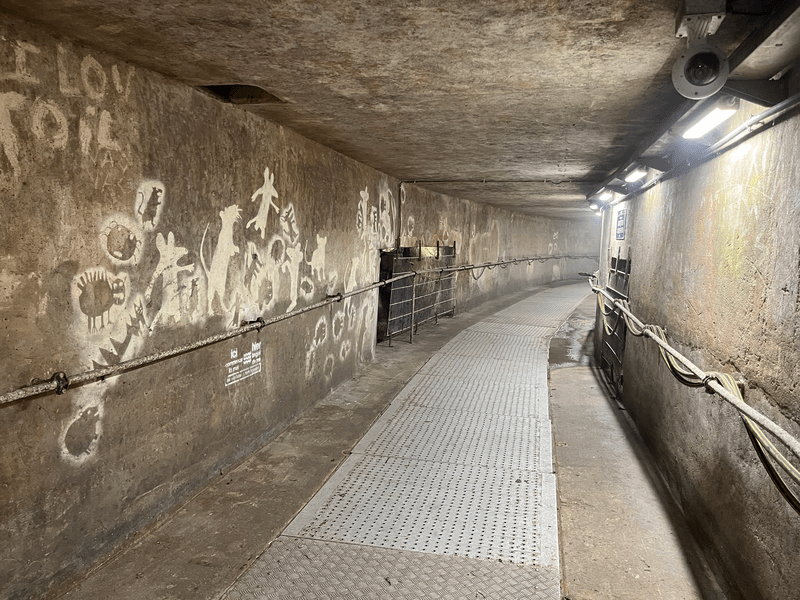
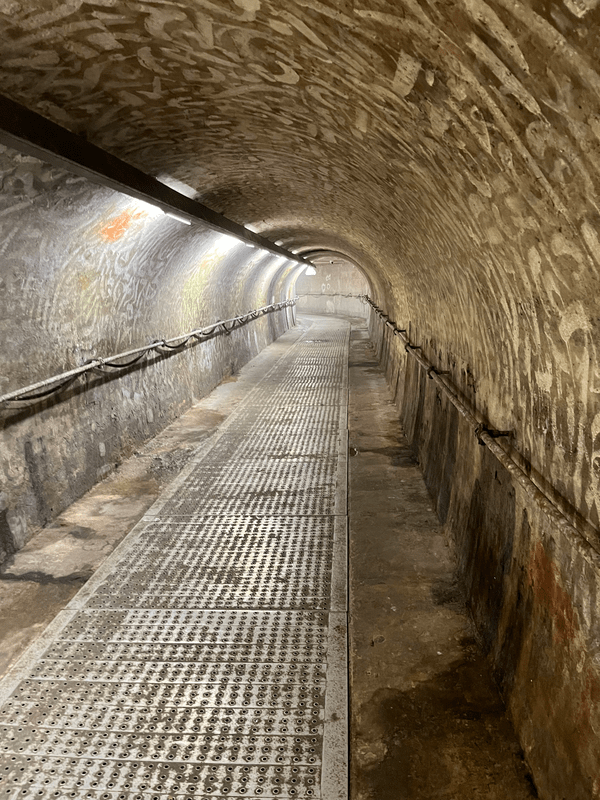
Being the fan that I am of all things quirky, spooky, and off the beaten path, I couldn’t resist checking out the Sewer Museum in Brussels, and I was not disappointed. The museum takes you deep underground, giving you an overview of how the River Senne runs underneath the city as part of its sewer system. The river used to run through Brussels in open air, until it became so polluted and unsanitary that authorities decided to divert it underneath the city in a vaulted tunnel that takes wastewater out of Brussels. Through an amusing audio tour, the museum also goes in depth into what it takes to work in and maintain sewers. And you get to walk through the actual sewer, alongside the River Senne deep underground. When I visited, a school group had just left, leaving me one of the only visitors and making it extra creepy being alone in the sewer tunnels. I was legitimately on edge and walked through that part pretty quickly!
Cantillon Brewery
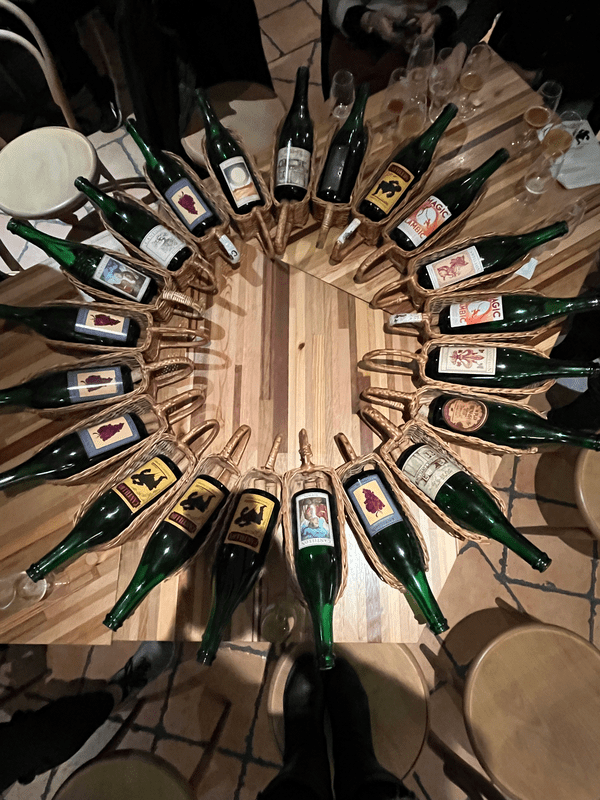
Luckily for me, after my heart-pounding experience at the Sewer Museum, my next stop was only a few blocks away: Brasserie-Brouwerij Cantillon. If you’re a beer fanatic, Cantillon is one of the holy grails of breweries, producing traditional lambic-style beers since 1900. You can tour the brewery’s operations, which is different from your typical brewery tour because of the all-organic method use to produce lambics. Rather than adding specific yeast strains, lambics are made by leaving the wort out in open tanks to let spontaneous fermentation happen through exposure to wild yeasts. The result is a complex beer that is both tart and earthy. The lambic style is specific to the Zenne region of Belgium, and it’s argued that lambics are the champagne of Belgium and that any beer brewed elsewhere in a similar method is just a sour beer, because to drink a true lambic is to taste the history of this region of Belgium.
After the tour, I had a complimentary tasting in the taproom. The other unique thing about Cantillon is that it becomes a social experience. I was invited to sit with another couple from the U.S., and eventually we merged into another group of strangers from all over the world. There were probably a good 12-15 of us sitting around the table, and it turned into an all-afternoon thing! I had so much fun and it’s easily my favorite memory of Brussels.
Atomium
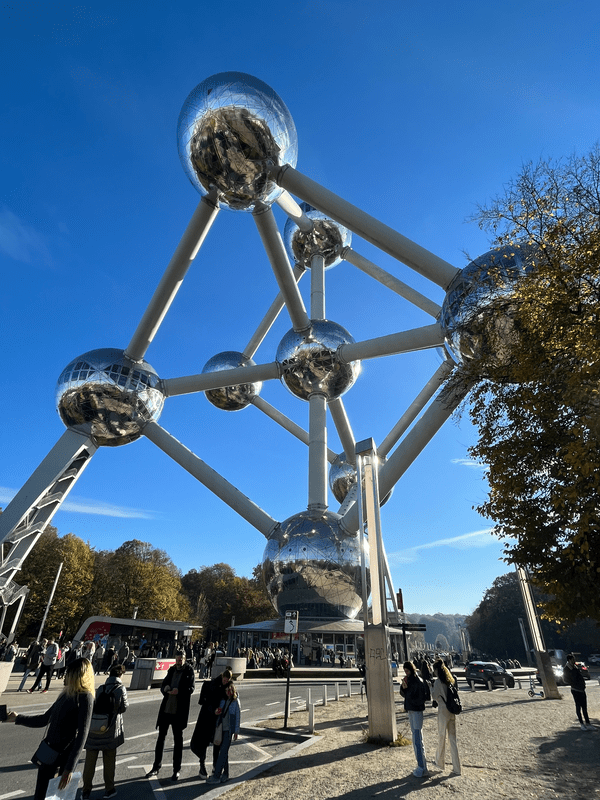
In northern Brussels, the Atomium is worth a metro ride. This building of stainless steel spheres was created for the 1958 World’s Fair and has become a symbol of Brussels. There’s a museum that lets you go inside, but I was just as content to admire the structure from the ground. The Atomium sits right on the edge of Parc de Laeken, so I took a walk through the park afterwards, which contains the Chateau de Laeken where the royal family resides.
Parc du Cinquantenaire and the EU
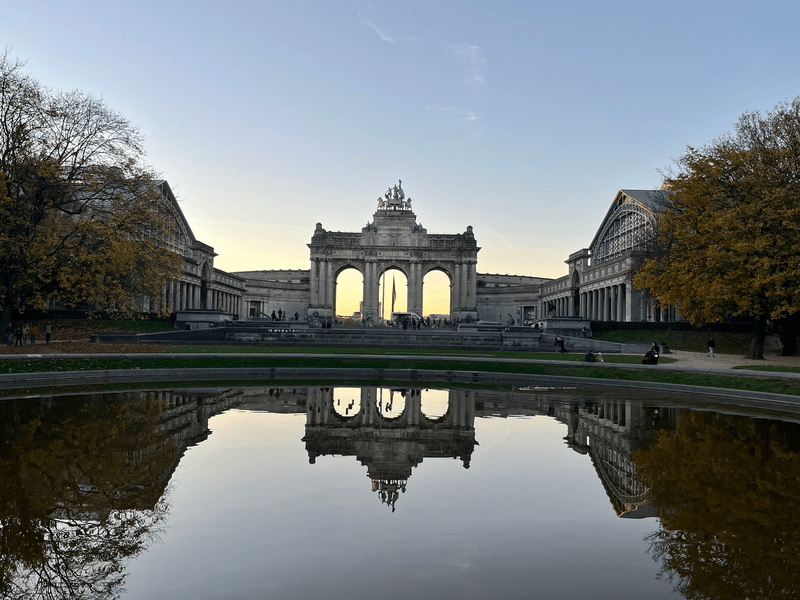
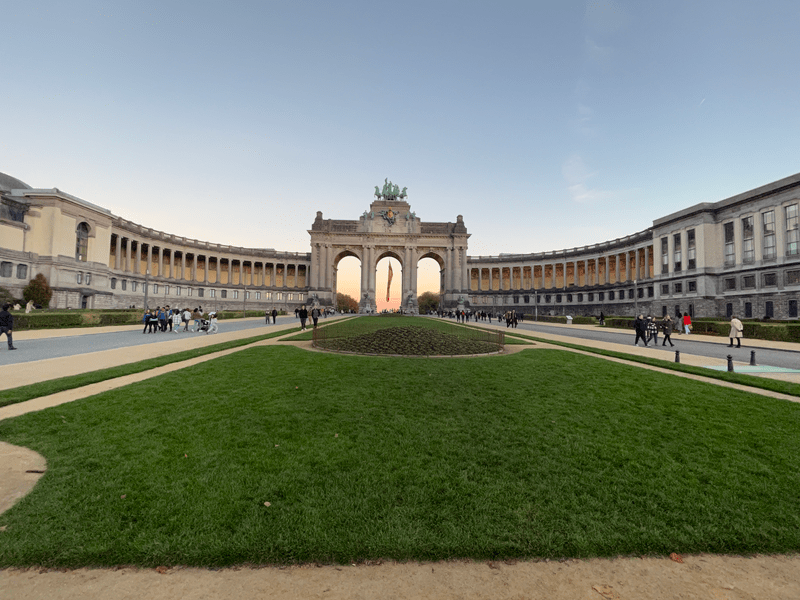
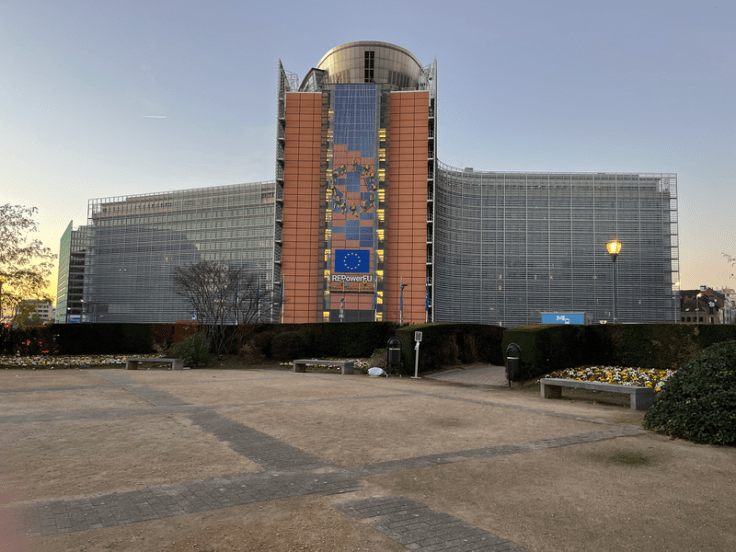
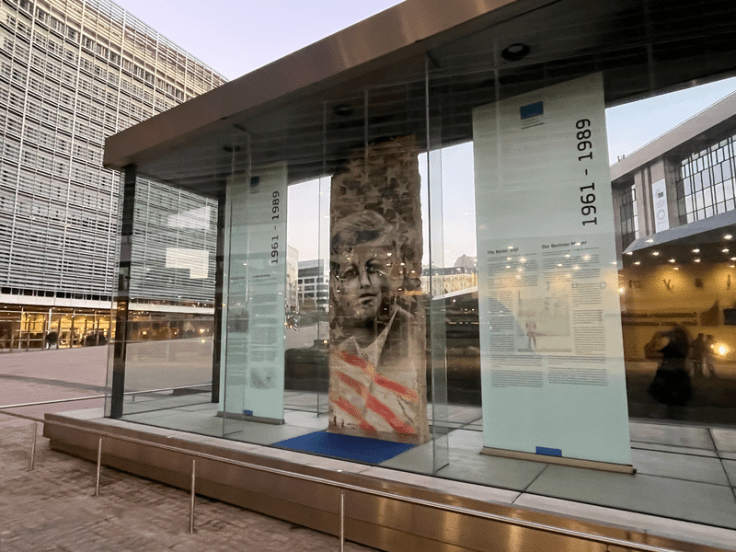
A short metro ride out to the east end of Brussels is the Parc du Cinquantenaire, which features the Arc du Cinquantenaire, a memorial commissioned in 1880 for the fifty year anniversary of the Belgian Revolution. A block away from the park is Le Berlaymont, the headquarters of the European Commission, the executive branch of the European Union. In front of it there is a section of the Berlin Wall.
Brussels was a city full of all my favorite things: history, architecture, quirkiness, chocolate, waffles, fries, and of course beer! (More posts on the food and beer to come). I had so much fun exploring and I know if nothing else, I’ll be back one day to pick up some Cantillon beers.

 C to Shining C