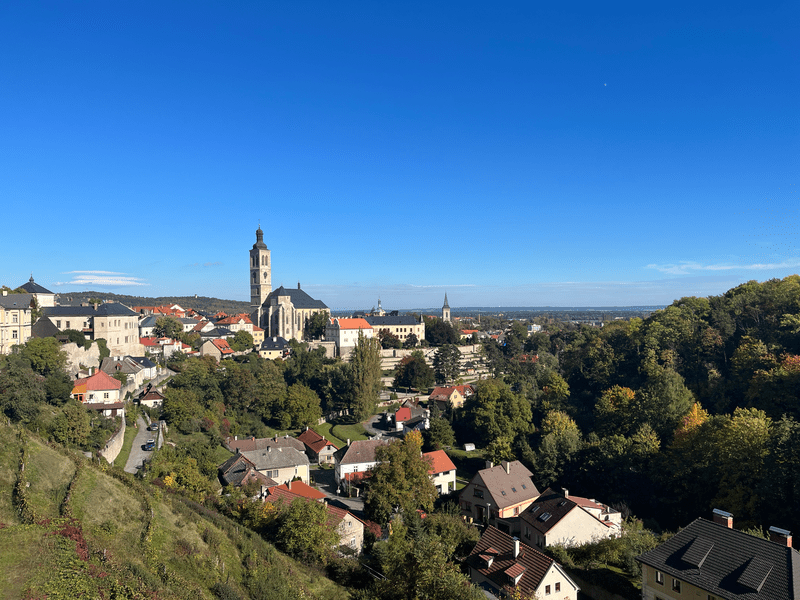
If you’re a fan of the macabre, there is a church in Czechia that is decorated in human bones known as the Sedlec Ossuary. It had been on my bucket list ever since I got into all things paranormal and morbid as a teenager, and with my recent trip to Prague I finally had a chance to make the trip a little outside the city to visit, and at the same time fell in love with the landscapes of the town of Kutná Hora.
Getting There from Prague
Sedlec Ossuary sits in the small suburban Sedlec neighborhood of Kutná Hora. If you have a rental car Sedlec should be an easy hour’s drive from Prague. If you don’t have a car, it’s still fairly easy to get there using public transit and takes about the same amount of time. It took a lot of Googling and piece-mealing info together for me to figure it out, but ended up being actually really easy, so I hope this blog post saves someone else all that stress and research! I took the regional R9 train to Kutná Hora from Praha hlavní nádraží (Prague Main Station). For the most up-to-date R9 timetables, visit the website of Pražská integrovaná doprava/Prague Integrated Transport (PID). I already had a transit pass that covered my travel within Prague proper, but since the trip to Kutná Hora involves a regional train, you need a ticket to cover the additional fare zones that you are traveling through. A 7-zone ticket cost me 70 Czech koruna in each direction (about 6 U.S. dollars round trip at my time of travel). Once I arrived in Kutná Hora, Sedlec Ossuary was about a 15-minute walk from the train station. There are bus lines that run from the train station towards Sedlec as well, but being that it was a gorgeous day when I went and there were plenty of other tourists around, the walk was pleasant and I didn’t feel unsafe walking it as a solo female traveler. If you do take the bus, I’d recommend having some coins handy.
Sedlec Information Center
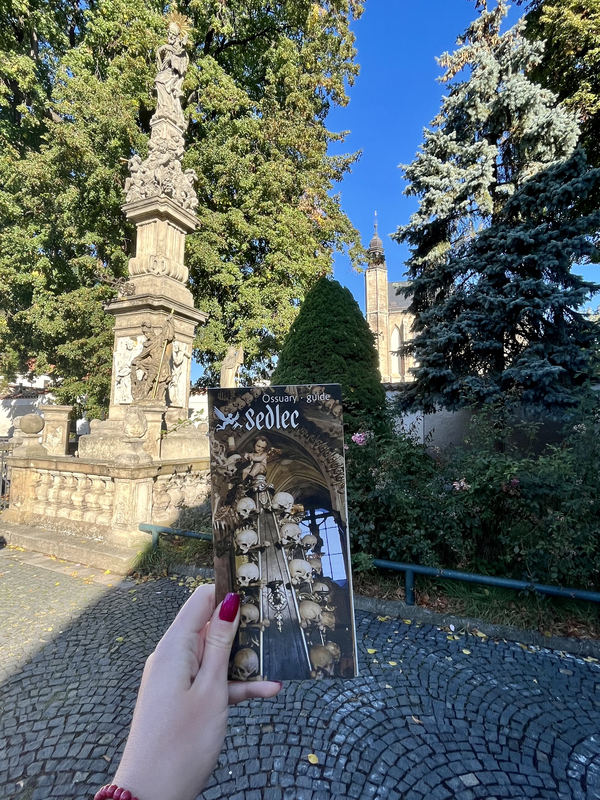
Visiting the ossuary requires a stop at the Information Center first to get your tickets. The Information Center is on your left-hand side as soon as you turn onto Zámecká Street, the street that the ossuary is located on. You can get a ticket that includes just Sedlec Ossuary and the Sedlec Cathedral (Cathedral of the Assumption of Our Lady and St. John the Baptist), but if you’re not on a time crunch I would recommend getting the ticket that also includes St. Barbara’s Cathedral. St. Barbara’s sits on the other side of Kutná Hora but is well worth the visit, and since you are coming all that way from Prague you might as well make a real day trip out of it! The adult ticket for all 3 sites was 320 CZK, about 15.70 USD, at my time of travel. It’s also worth it to pay a little extra to get the self-guided tour pamphlets available at the Information Center in several languages.
The Ossuary is a UNESCO World Heritage site and is one of the most visited places in central Czechia. As such, it can get very crowded, so my recommendation is to get there as early as possible. The Ossuary opens at 9am.
Sedlec Ossuary
A 2-minute walk up Zámecká from the information center is where you find the Sedlec Ossuary, surrounded by the Cemetery of All Saints. The chapel itself is humble from the outside. It was built in the 14th century as part of a Cistercian monastery. The cemetery at Sedlec was at the time the only Christian burial place for citizens of Kutná Hora. With the need for more land and with famine and plagues causing high mortality rates in the 14th and 15th centuries, the cemetery was soon reduced, with exhumed remains being placed in the lower chapel of the church so that they were still below ground as it’s Christian practice for remains to be interred below ground level.
In the late 19th century, a woodcarver named František Rint came to the ossuary and is responsible for the ornate displays of the bones seen today, including garlands, a chandelier, a monstrance, and the Schwarzenberg coat of arms in honor of the family who became caretakers of the ossuary in the 19th century and financed extensive renovations and restorations.
There are some 500 ossuaries throughout Czechia, but Sedlec is the only one in which the bones were displayed in a decorative manner. The displays were not created out of any ill-will, but are simply expressive of the social and spiritual values of that time period in Czech history. The intention is memento mori, a reminder of our mortality and that we all face the same fate and only have our time while we are living to make amends for how we live our lives. The bones in Sedlec Ossuary are believed to be from tens of thousands of medieval Czech citizens. As fascinating and macabre as as the ossuary is, visitors are asked to remember that these are the ancestors of the Czech people and to remain reverent while visiting and refrain from taking photos.
The Cathedral of Our Lady of the Assumption and St. John the Baptist (Cathedral Sedlec)
Across Vítězná Street from the Sedlec Ossuary and Information Center is another UNESCO-designated site, the Cathedral of Our Lady of the Assumption and St. John the Baptist. The Cathedral was also a part of the Cistercian abbey that occupied the lands of Sedlec and was built between 1290 and 1320. The current Baroque Gothic appearance is the result of a reconstruction in the 17th-18th centuries after the cathedral lay in ruin for 279 years after being plundered by the Hussite army in 1421. As the Sedlec monastery was dissolved in 1784 by Emperor Josef II, the cathedral was sold off and became a storehouse and later a tobacco factory. It was used for religious purposes again in 1806. After its 1995 designation as a UNESCO World Heritage site, the cathedral was again restored and reopened to the public in 2009. It today is the parish church of the Kutná Hora and Sedlec Roman Catholics.
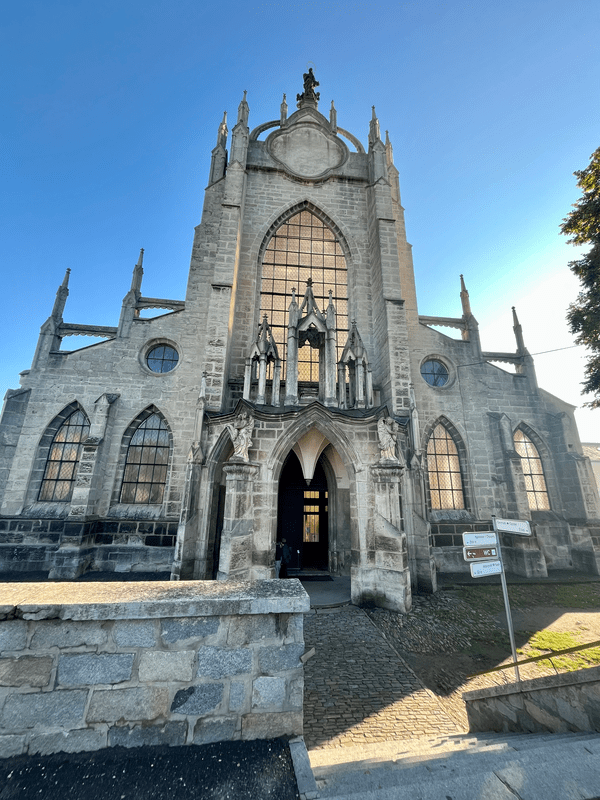
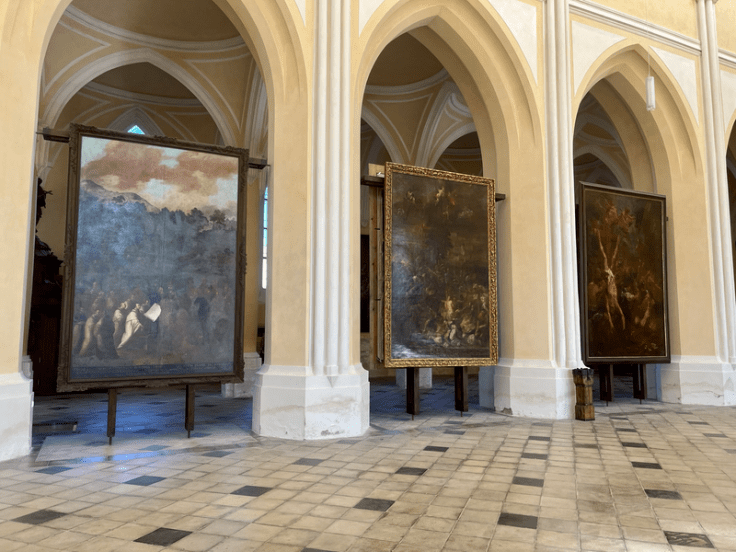
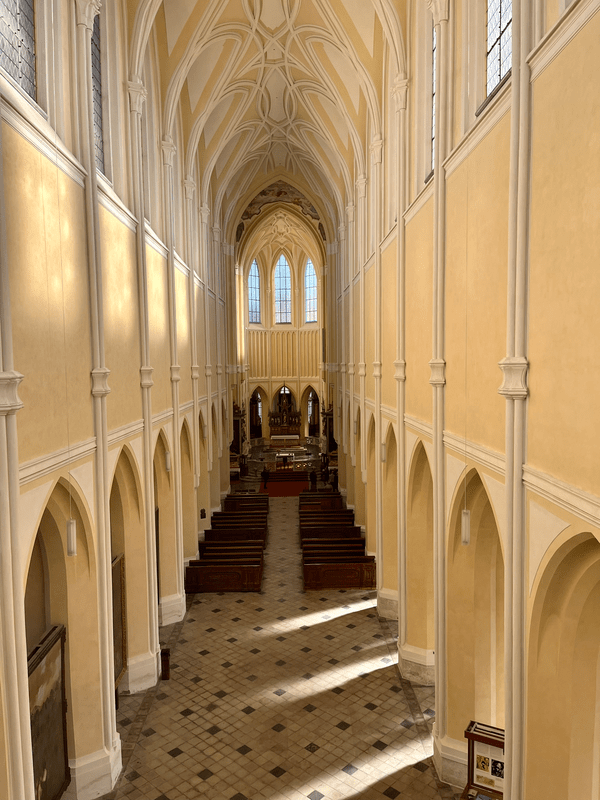
The cathedral is impressive to visit as it contains several original works of fine art by Petr Brandl and Michael Leopold Willmann. You can also venture up into the lofts of the church, which include rotating modern art installations, and connect to the choir which offers fabulous views of the church and the bright light that streams in through its 106 windows.
St. Barbara’s Cathedral
After visiting the Cathedral of Our Lady of the Assumption, I went back out to Vítězná Street and caught a bus down to St. Barbara’s Cathedral. There are several bus lines that will get you there in about a 20-minute ride (I think the one I took was the 802 bus).
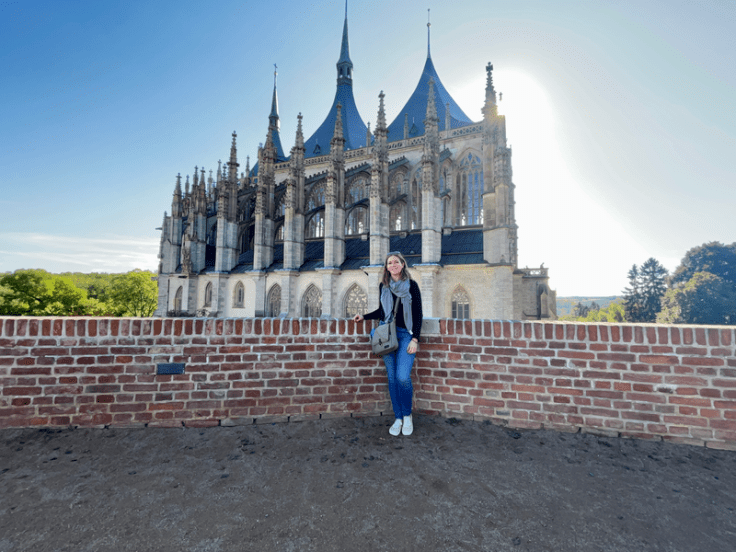
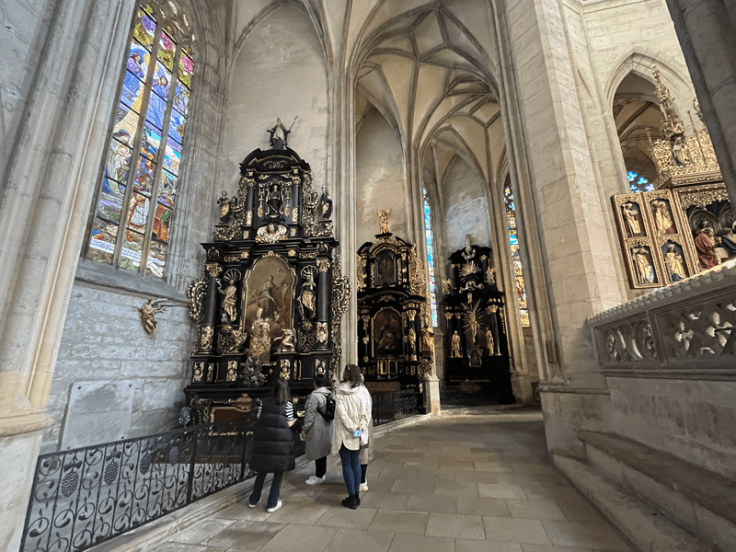
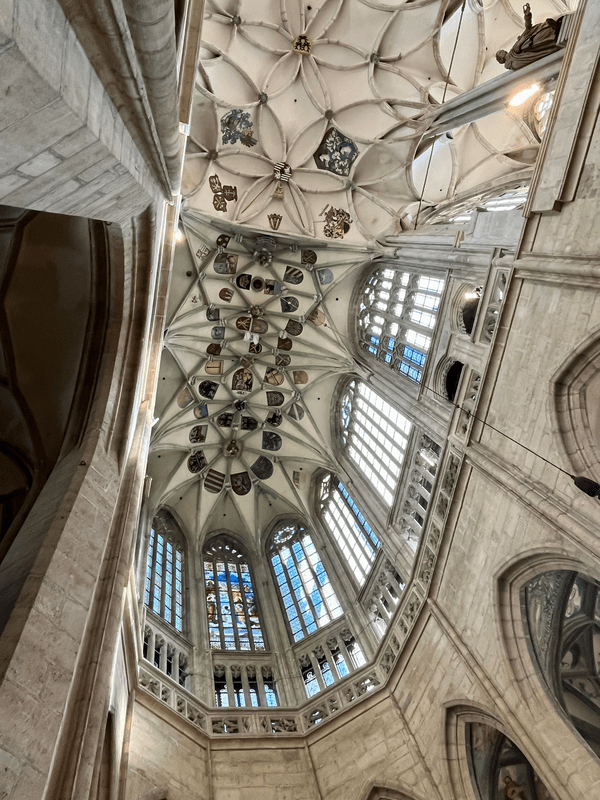
St. Barbara’s Cathedral is absolutely stunning and another UNESCO-designated cathedral. As Kutná Hora was a big silver-mining community, the cathedral was dedicated to the Virgin Barbara, a Christian martyr who was a patroness of dangerous occupations. The cathedral was started in the second half of the 14th century and is most notable for its unique tent-like roof. Its interior includes eight apse chapels encircling the chancel. The vaulted ceiling is interesting too, so look up! It includes emblems and coats of arms of Kutná Hora.
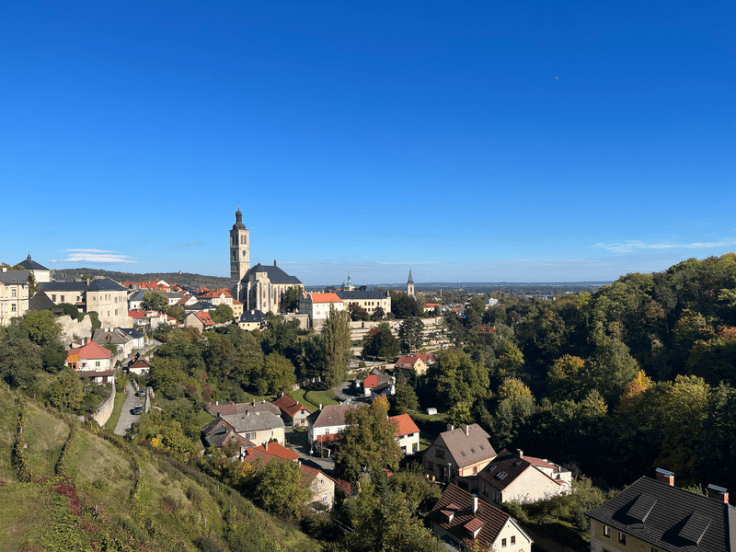
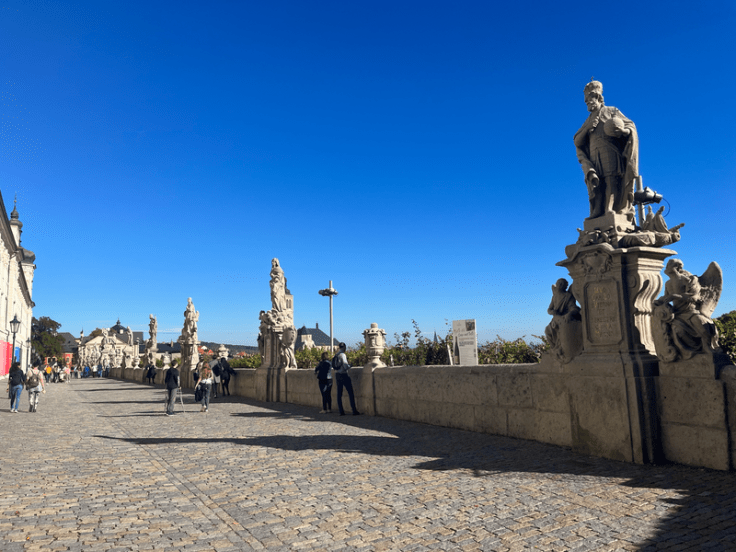
After exploring the Cathedral’s interior, be sure to wander back behind it, and atop the adjacent Corpus Christi Chapel, for some phenomenal views of the countryside. Then continue on down the Baroque statue-lined promenade in front of the GASK art gallery.
Historic Kutná Hora
The heart of Kutná Hora is also itself on UNESCO’s list of World Heritage sites. The town emerged as a result of the discovery of silver ores in its landscape that yielded a prosperous silver mining industry. The town’s name literally translates to “Mountain that can be digged.” Today it’s a wonderful collection of Gothic and Baroque architecture and a quaint town full of cafes and shops.
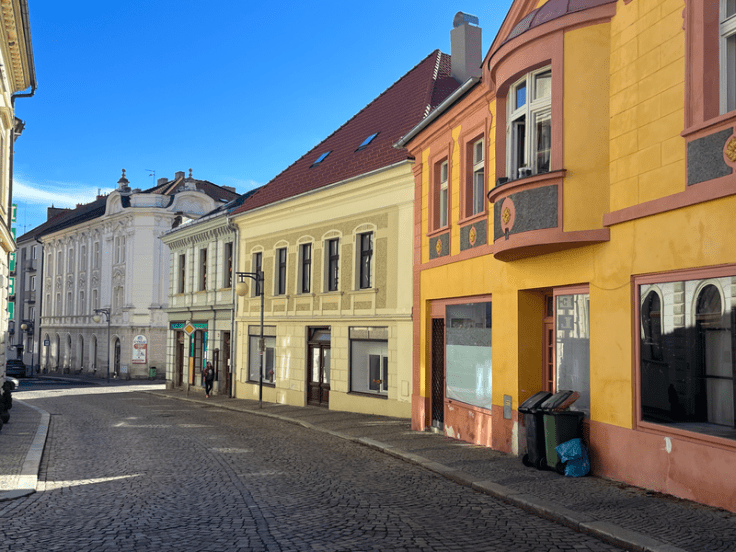
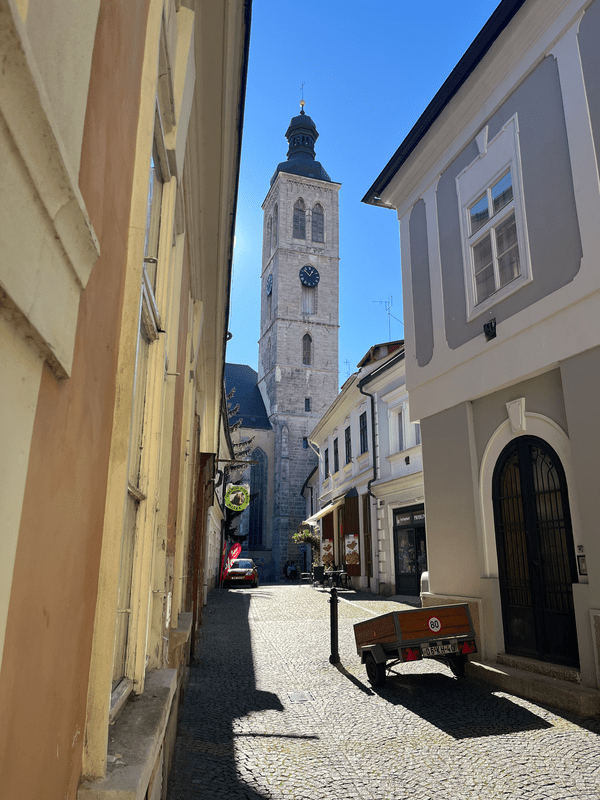
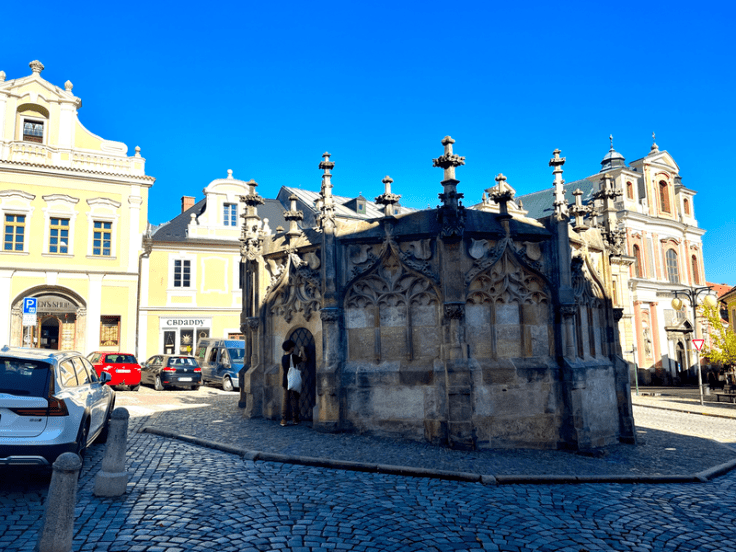
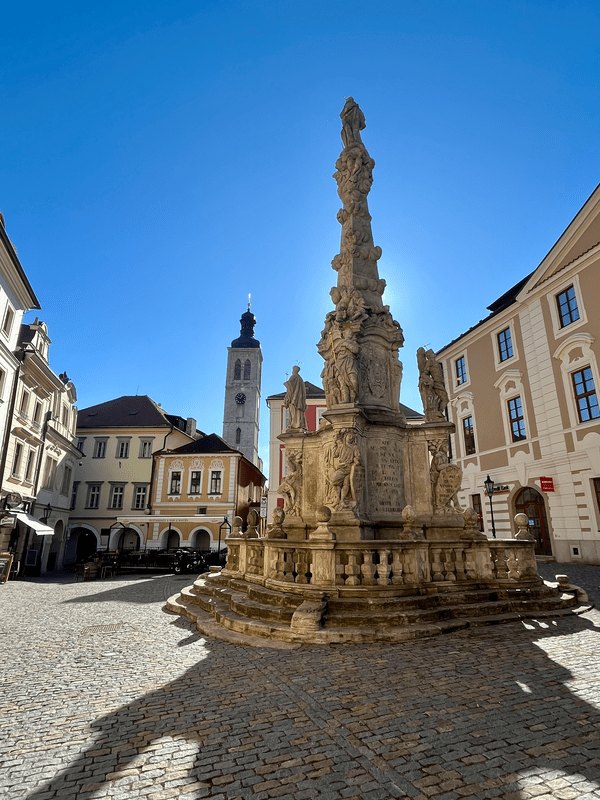
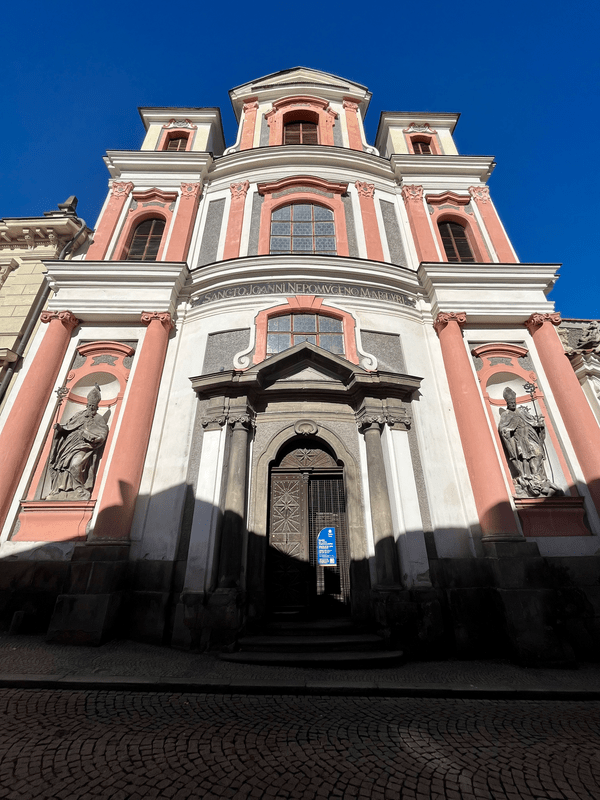
I visited on a Saturday in October, and aside from the Sedlec Ossuary and St. Barbara’s Cathedral which were moderately full of tourists, I found the town to be much calmer and quieter than the hustle and bustle of Prague. After St. Barbara’s Cathedral I spent some time just wandering the town center, seeing sites such as the Gothic Stone Fountain, the Plague Column, and the beautiful facade of the Church of St. Jan of Nepomucký.
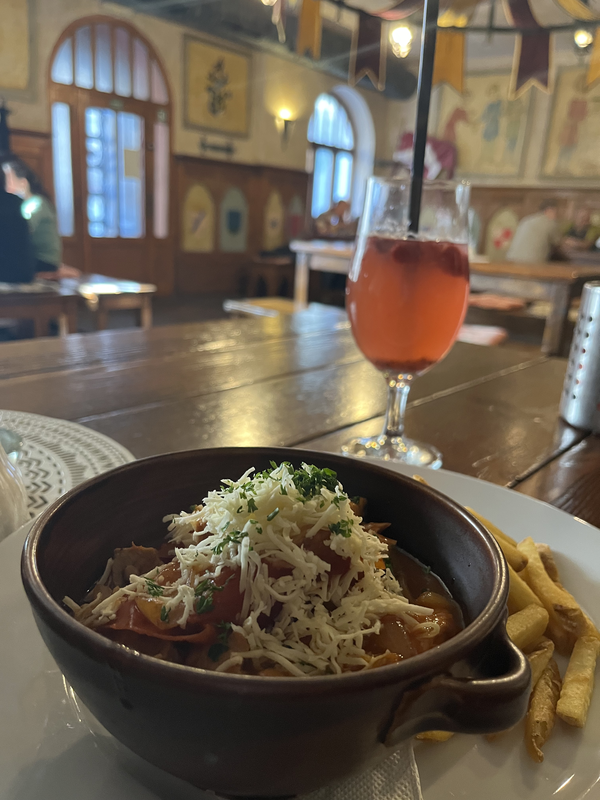
I had lunch at Restaurace U Kata, decorated in a style reminiscent of a medieval pub, and enjoyed Katova pochoutka z vepřového masa se steakovými hranolky – a spicy pork dish with a side of steak fries. So good!
After walking off lunch a bit, I wrapped and caught a late afternoon train back to Prague. There are certainly more museums and things to see in Kutná Hora, but a day was certainly enough to see the Sedlec Ossuary and cathedrals and get a feel for the town. It was well-worth the trek from Prague and I loved every minute of it!

 C to Shining C