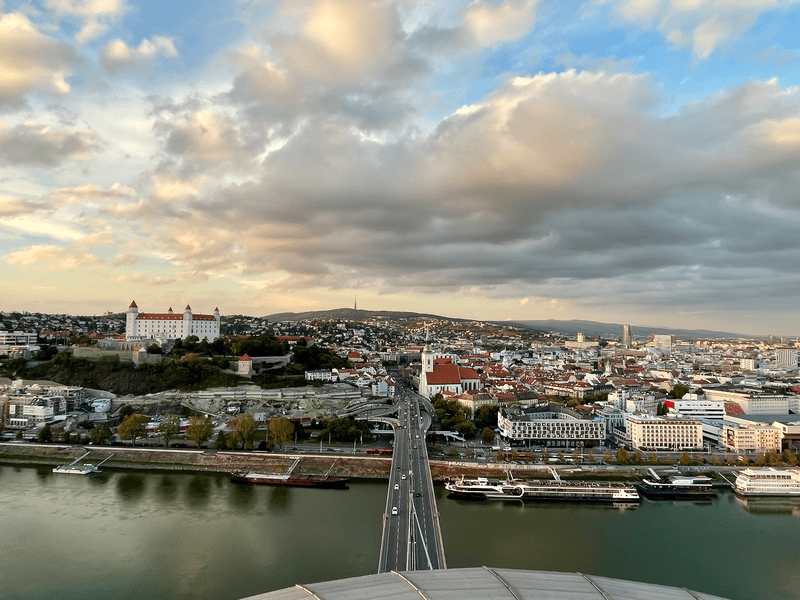
Bratislava is the one city that when I was telling people about my trip, was often met with “Where the heck is that?” The small capital of Slovakia is often overshadowed by the popularity of nearby Vienna, Prague, and Budapest. Bratislava became the capital of the Slovak Republic in 1993 following the Velvet Divorce that dissolved Czechoslovakia into two independent nations, but it is rich in history going back much farther in time, having once been the legislative center and capital of the Kingdom of Hungary.
I have to say that my first impression upon arrival into Bratislava was “What am I getting myself into?” I arrived into the Bratislava Hlavna (main train station) that felt drab and dreary on a gray rainy day, and caught a tram into town, which took me past boxy concrete buildings that were run-down and covered in graffiti. It was quite a contrast after having spent a few days in Prague and Vienna. But I soon remembered that you can’t always judge a city off of a first impression, and the more I explored Bratislava, the more I gained an understanding of its history and came to love it for what it is.
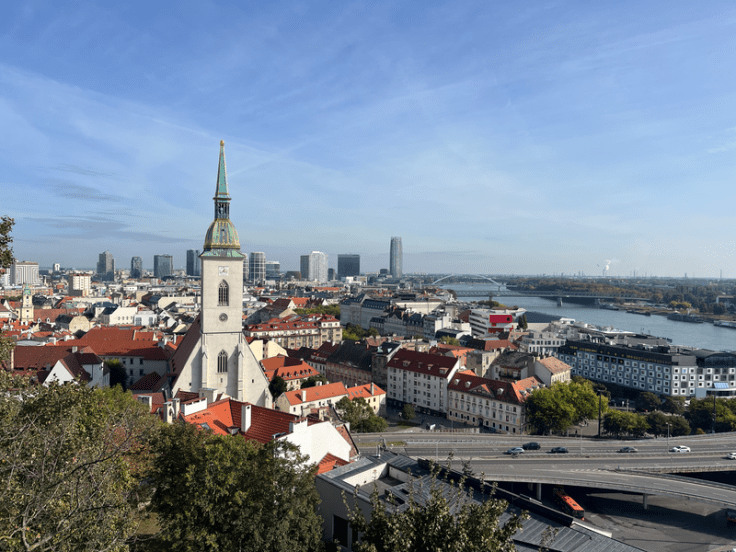
Bratislava differs from Prague, Vienna, and Budapest in that much of its historic downtown was torn down under the communist regime and rebuilt with modern structures. While it does have some remnants of medieval architecture, it is mixed in among communist era construction, making the city a melting pot of various eras of history. Set against a landscape of the Danube River and the foothills of the Little Carpathian mountains, there is so much beauty in Bratislava.
Stay
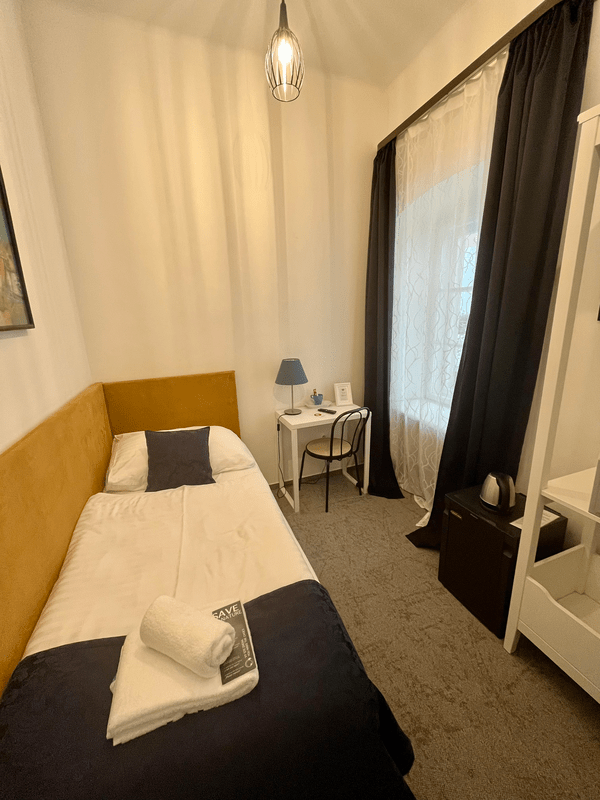
I stayed in a small independent property called the BlueBell Hotel. It was tucked away on a quiet side street called Paulínyho right next to the United States Embassy and several other nations’ embassies. The location could not have been more perfect. It was a block away from the heart of Old Town, a block from the pedestrian walkways along the Danube River, a 15-minute walk from Bratislava Castle, and a 5-minute walk to tram lines connecting to the train station. My room was tiny, but perfect for a solo traveler who is only there to sleep and shower, and the staff at the hotel were extremely friendly.
Getting Around
Bratislava was very easy to get around. For convenience I ended up getting a 72-hour transit pass for 10.80 Euros which allowed unlimited rides on the various tram lines. Most of what I wanted to see in Bratislava was walkable, but I did utilize the tram a few times to get around town.
Things to Do and See
Old Town
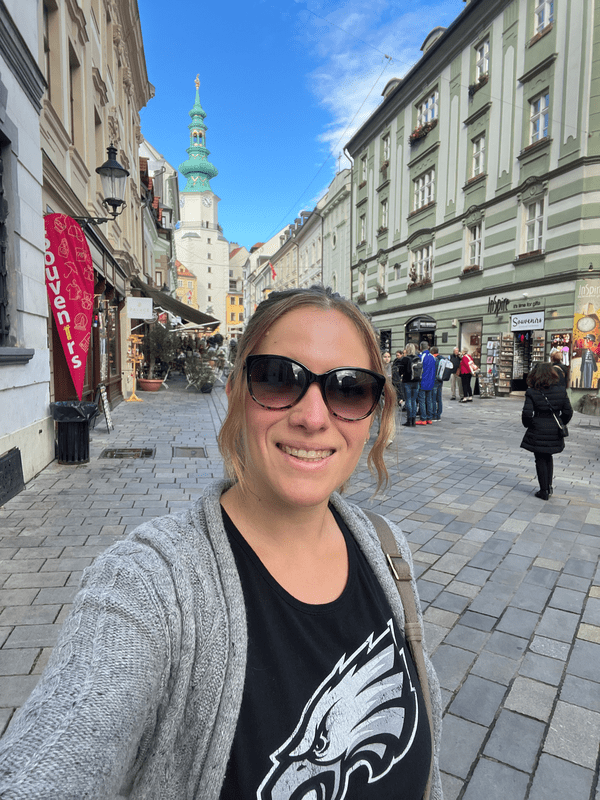
Old Town is the historic center of Bratislava. It has that medieval European city feel with cobblestone streets lined with shops and restaurants and historic architecture. One of the main pedestrian streets is Michalská, which culminates at Michael’s Gate. Built around 1300, this is the only remaining gate from the fortifications that surrounded the city in medieval times.

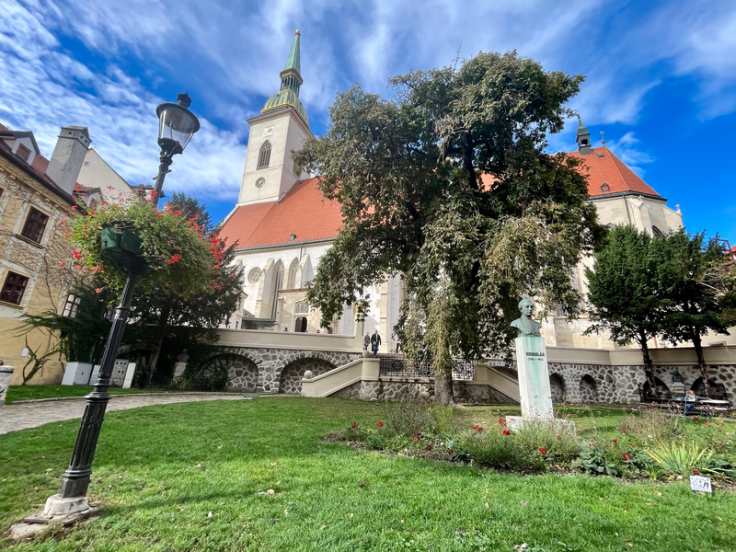
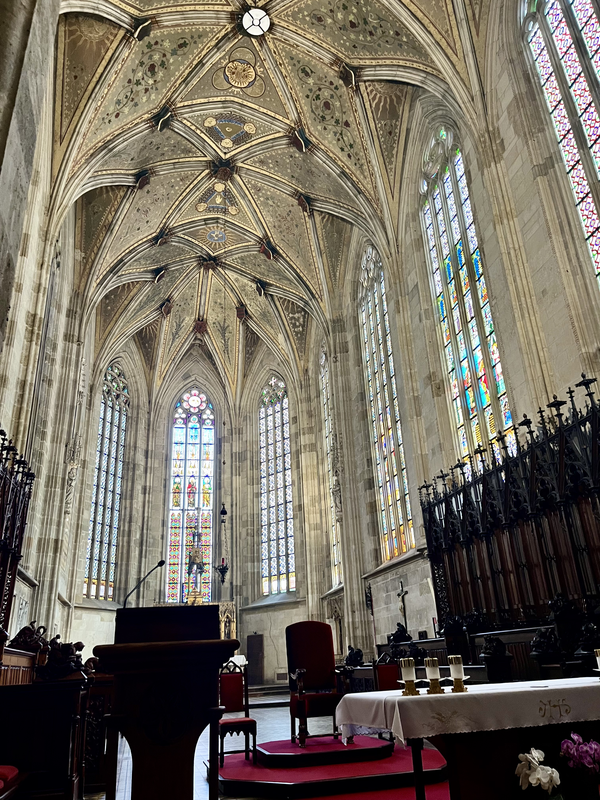
A block off the lower end of Michalská is St. Martin’s Cathedral, the cathedral of the Catholic Diocese of Bratislava which was built over a long stretch between 1311 and 1452. The church became the coronation church for the Kingdom of Hungary, seeing the coronations of 11 kings and queens including Maria Theresa of Austria.
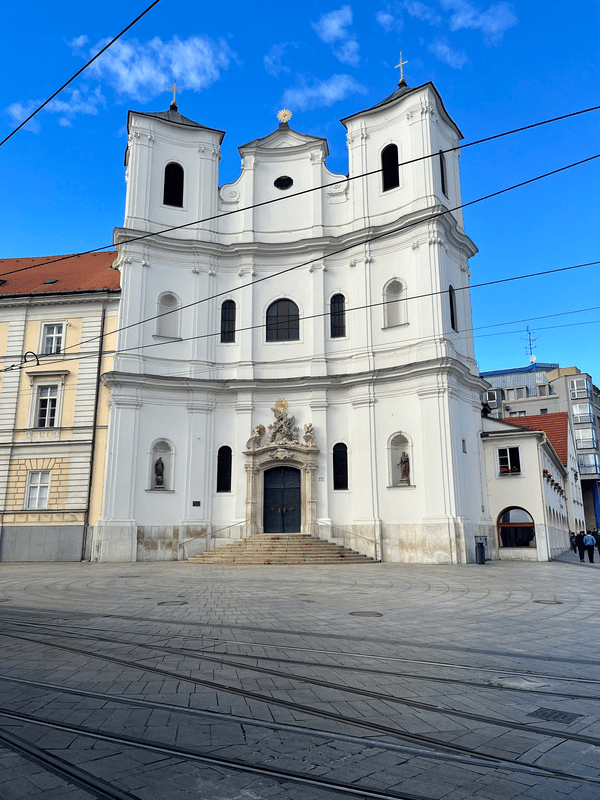
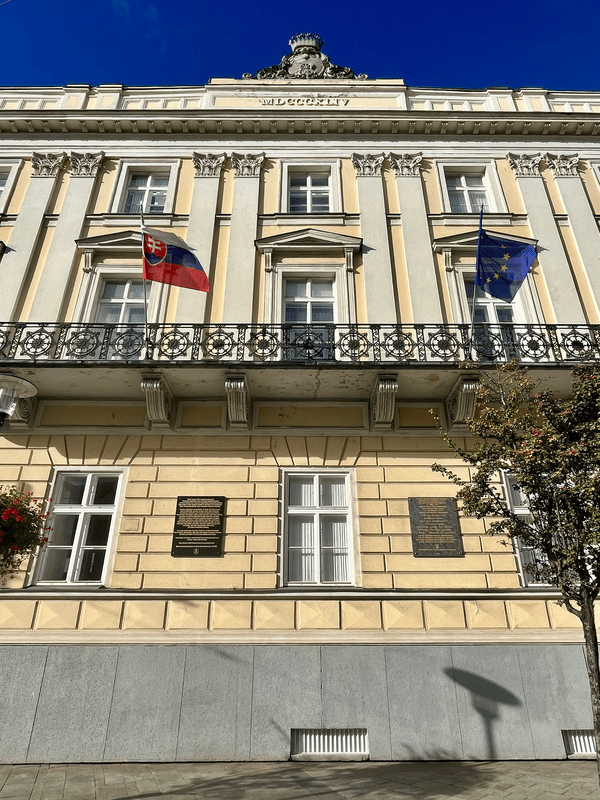
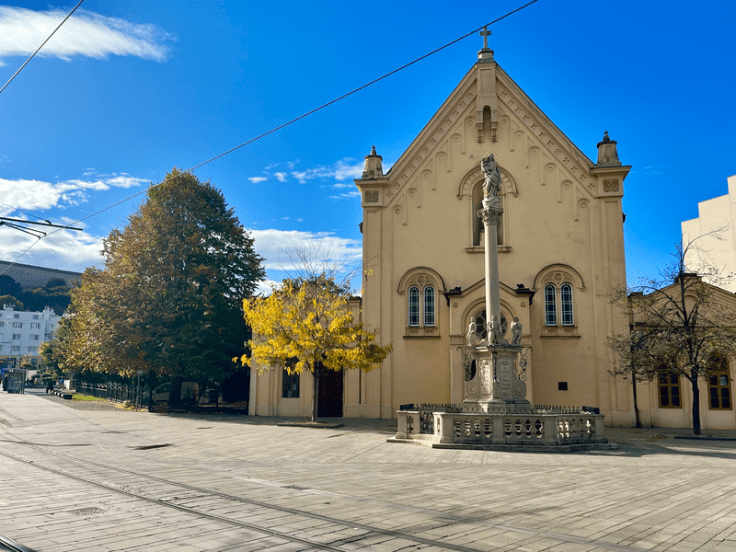
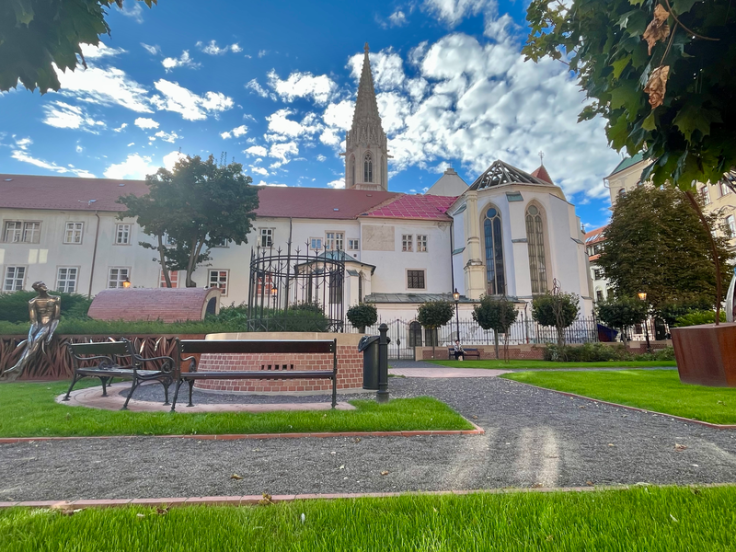
Beyond Michael’s Gate on Župné námestie are a few beautiful buildings, including the 18th century Baroque Trinitarian Church and the National Council building. Continuing down the block, you’ll see the Church of St. Stephen of Hungary with a Plague Column in front of it, and the connecting Capuchin Monastery.
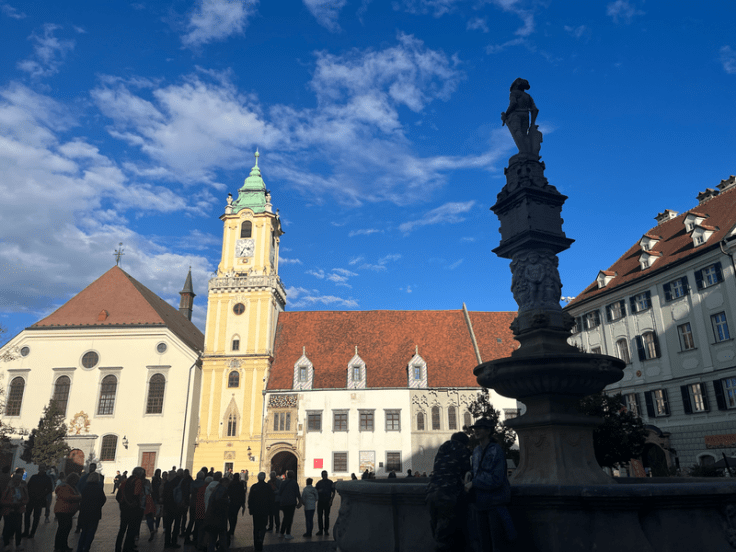
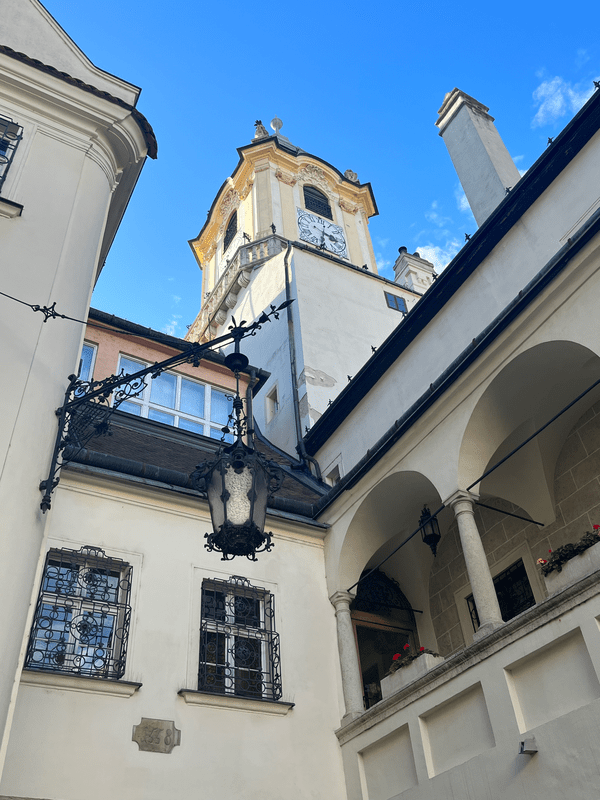
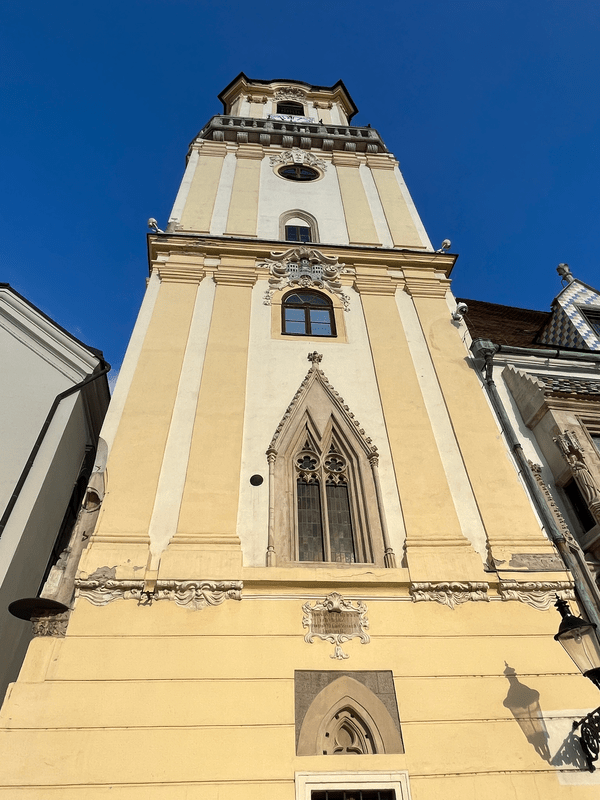
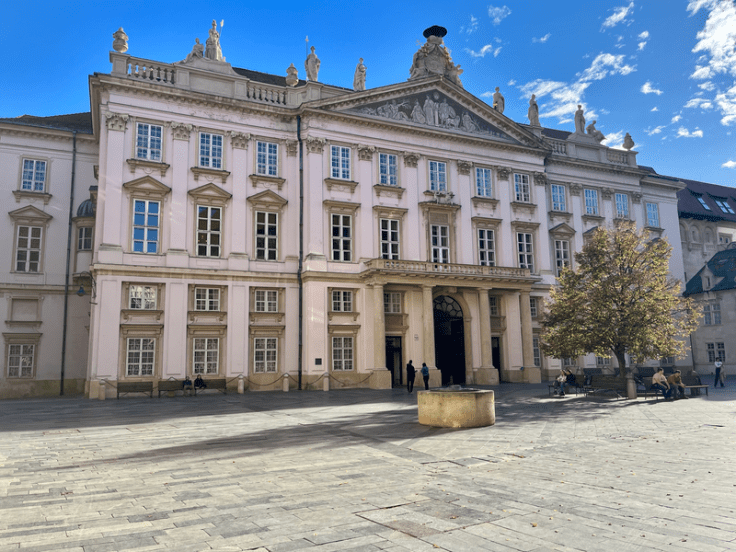
Another scenic square in the heart of Old Town is Hlavné námestie (Main Square), with Roland Fountain at its center. Also on the square you’ll see the Old Town Hall, one of the oldest stone buildings still standing in Bratislava with its tower dating back to 1370. Look closely at the tower and you’ll see a cannonball still embedded in its facade from Napoleon’s army in his attempt to conquer Bratislava in 1809. Old Town Hall today houses the Bratislava City Museum. I didn’t visit the museum, but wandered through the courtyard to the connecting Primaciálne námestie (Primate’s Square) with the gorgeous pink neoclassical Primacial Palace, office of the mayor. Just around the corner is Church of the Annunciation, Bratislava’s oldest functioning church, consecrated in 1297.
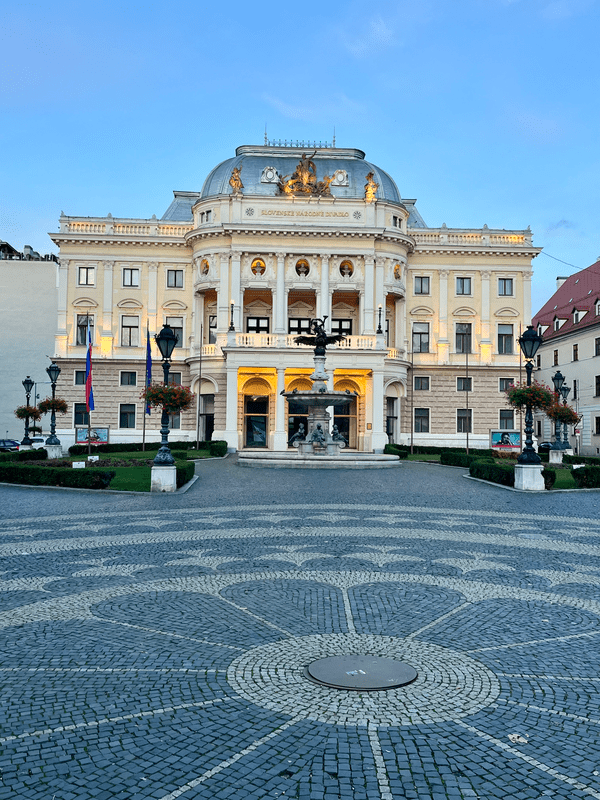
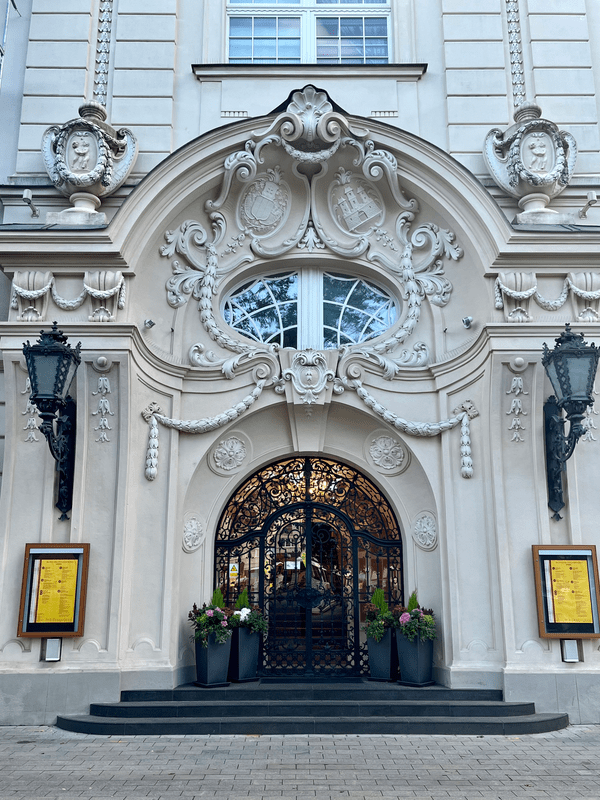
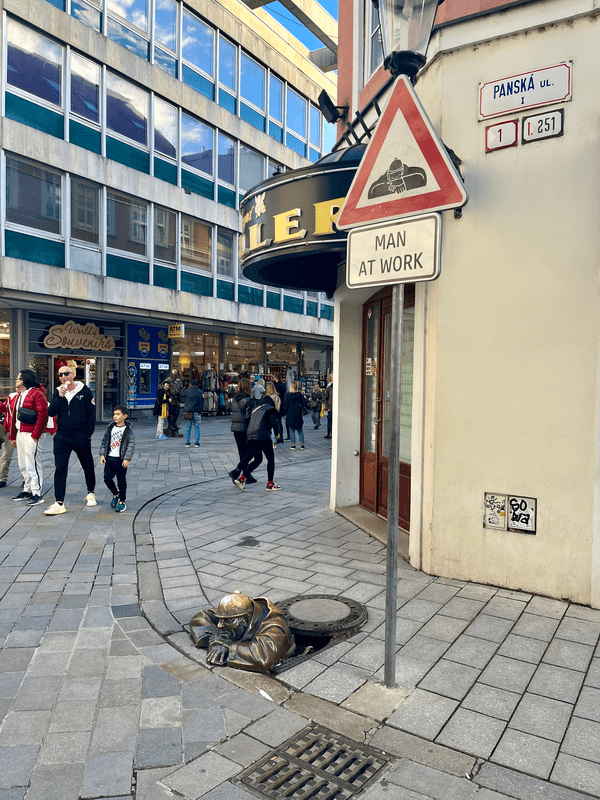
Another fabulous piece of architecture found in Old Town is the Neo-Renaissance 1886 building of the Slovak National Theater, found at one end of Hviezdoslav Square. Also on the square is Reduta, the home of the Slovak Philharmonic Orchestra. A block away from the square on Panská, another popular pedestrian street, you’ll find an icon of Bratislava named Čumil, a bronze statue of a sewer worker taking a rest who has become a popular photo spot.
Bratislava Castle
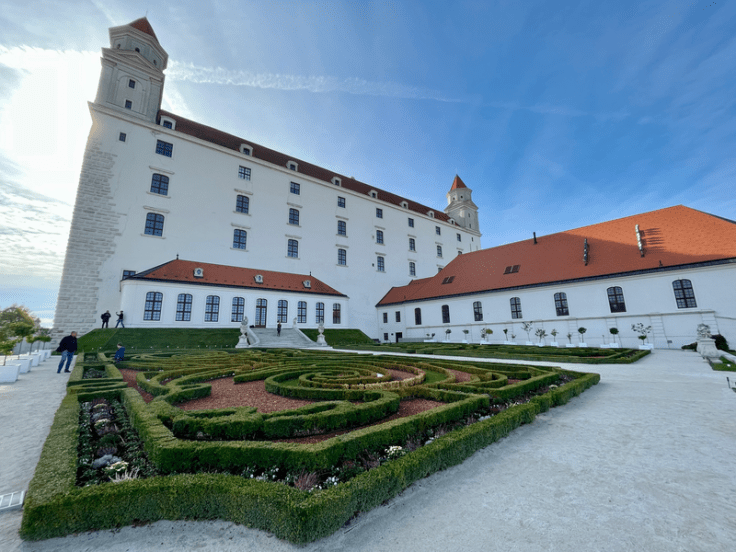
One of the most iconic images of Bratislava, the Bratislava Castle sits atop Castle Hill 85 meters above the Danube overlooking the city. It’s not a very long walk to get up to the castle from Old Town, but make sure you are in good walking shoes. With all that there is to see between the castle and the grounds, I spent a half day up there, arriving first thing in the morning and staying until lunchtime.
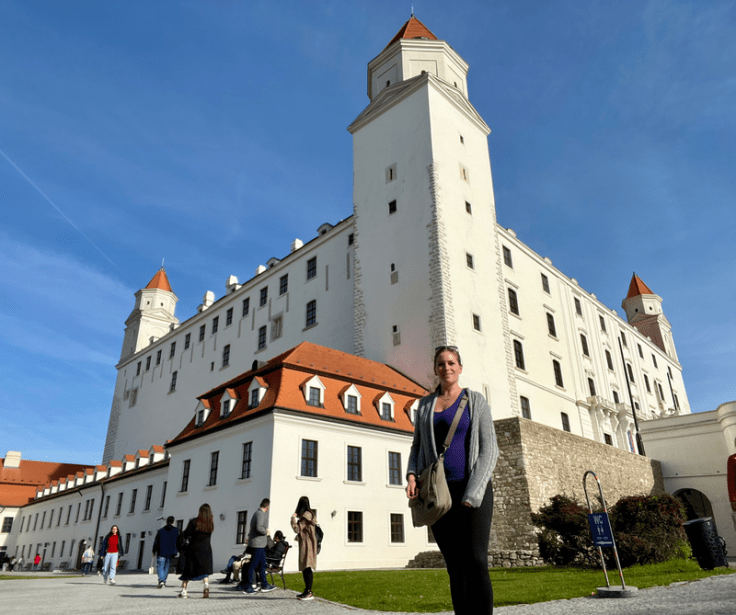
The first record of a castle on this site was in the year 907, although the current castle was built in the early 15th century and later served as the seat of Hungarian emperors. The castle suffered a fire in 1811 and fell into a state of disrepair, but was renovated into its current appearance in the latter half of the 20th century.
The castle houses the Slovak National Museum, with artifacts and exhibits on the history of Slovakia in a Baroque interior that was part of renovations done during the reign of Maria Theresa in the 1700s. You can also go up in the Crown Tower, the oldest part of the castle, for panoramic views of Bratislava, and even see clear to Austria and Hungary. Just take the steps slow – they’re quite steep and narrow!
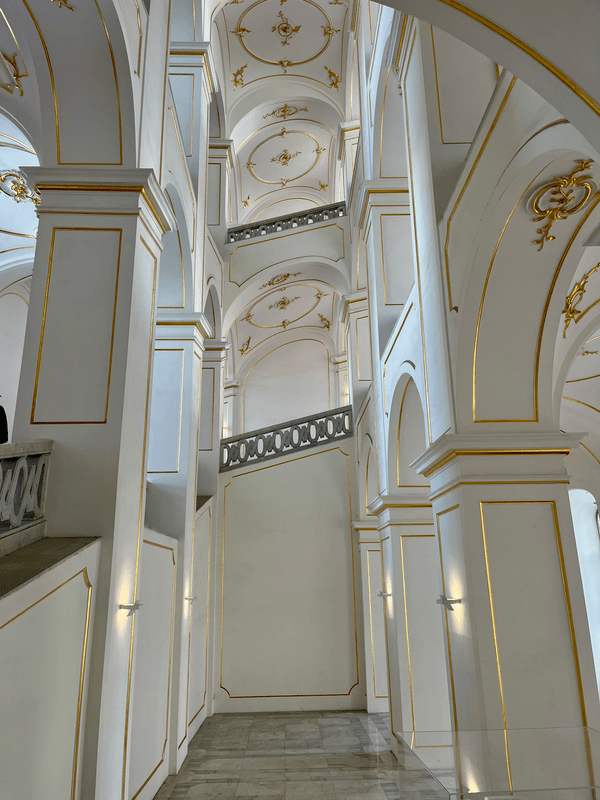
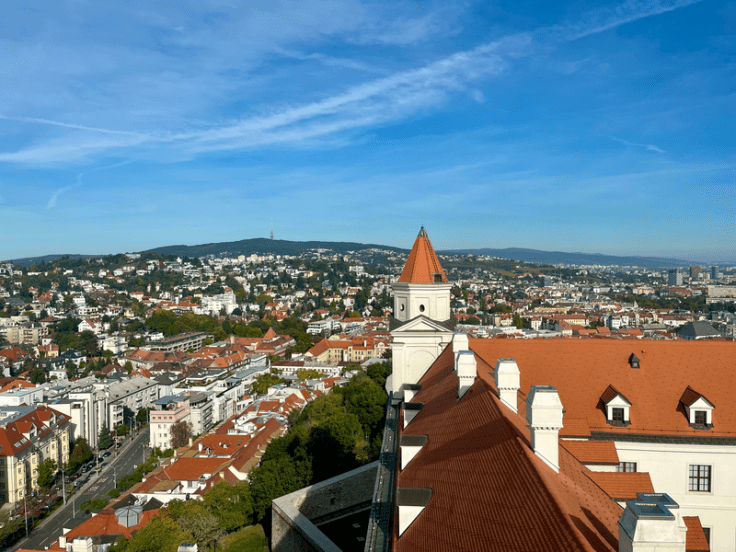
When you’re done touring the museum, be sure to take some time to walk around the grounds as well. There’s plenty more to see, including a charming Baroque garden and stunning views of the city. The grounds are open until 10pm, so I recommend returning in the evening for some night views. Bratislava looks lovely lit up!
Church of St. Elisabeth – “the Blue Church”
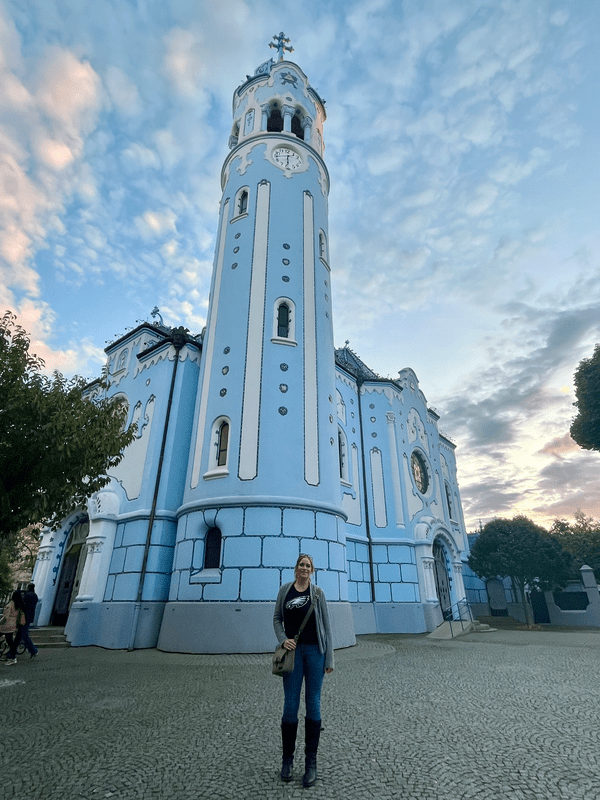
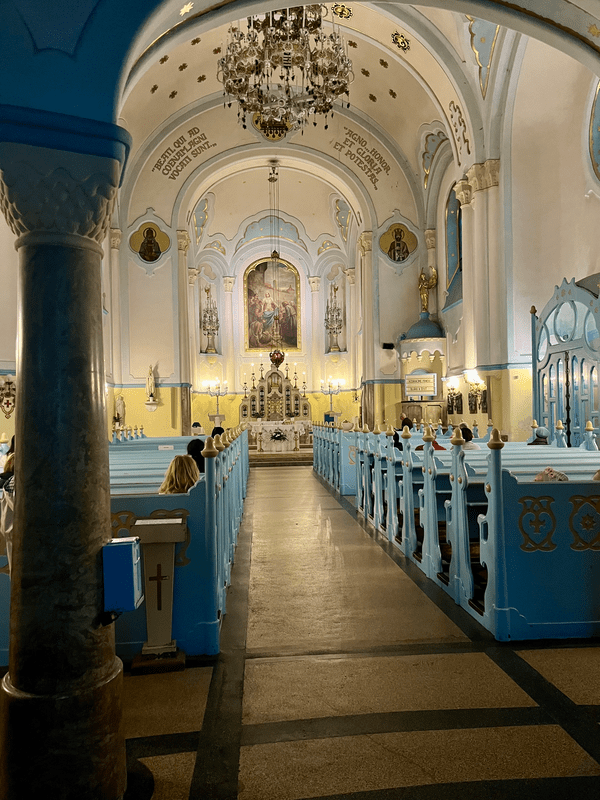
Look up Bratislava on Instagram and you’re bound to see endless pictures of influencers in front of the “Blue Church,” a beautiful small church known for its pastel blue facade built in 1908-1913 in the Hungarian Secssionist style . The pastel blue is seen throughout the interior details as well.
Presidential Palace
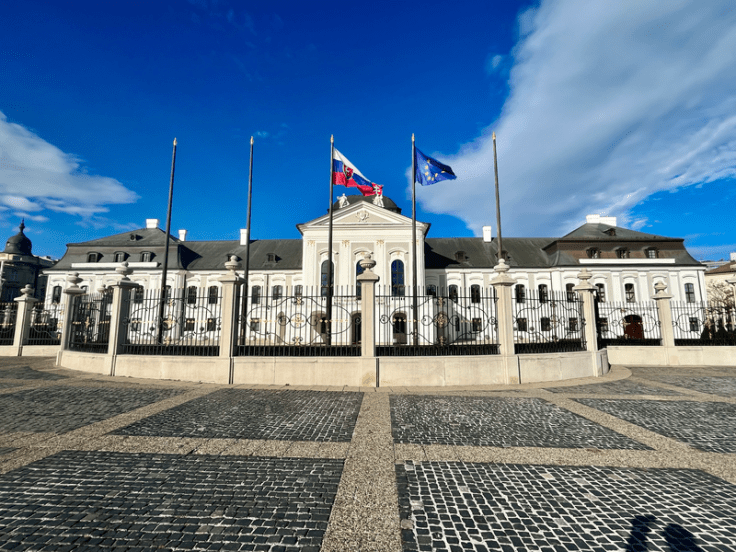
On Hodžovo námestie just a few minutes’ walk from the heart of Old Town sits Grassalkovich Palace, home of the president of Slovakia built in 1760. It’s an impressive palace, and its gardens are open to the public as a park, although they were closed for maintenance while I was there.
Communist Era Architecture of Bratislava
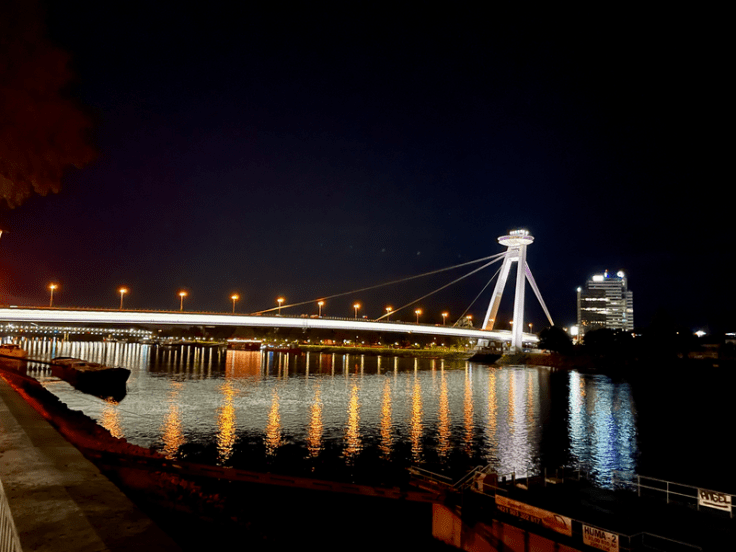
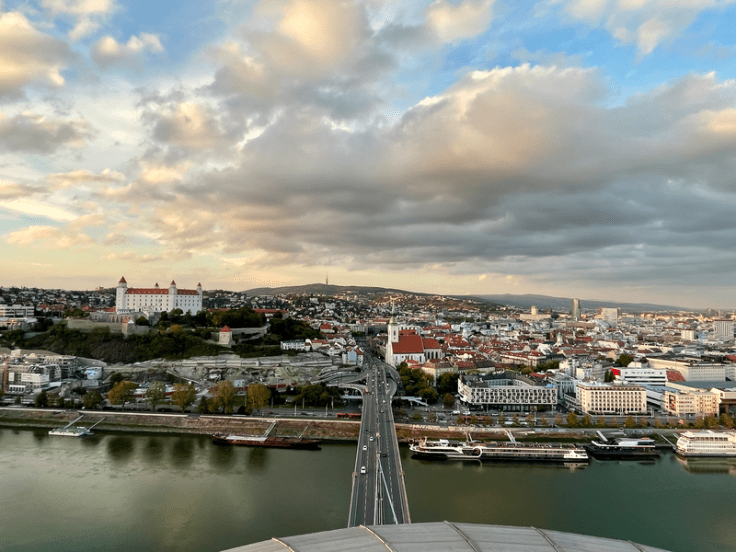
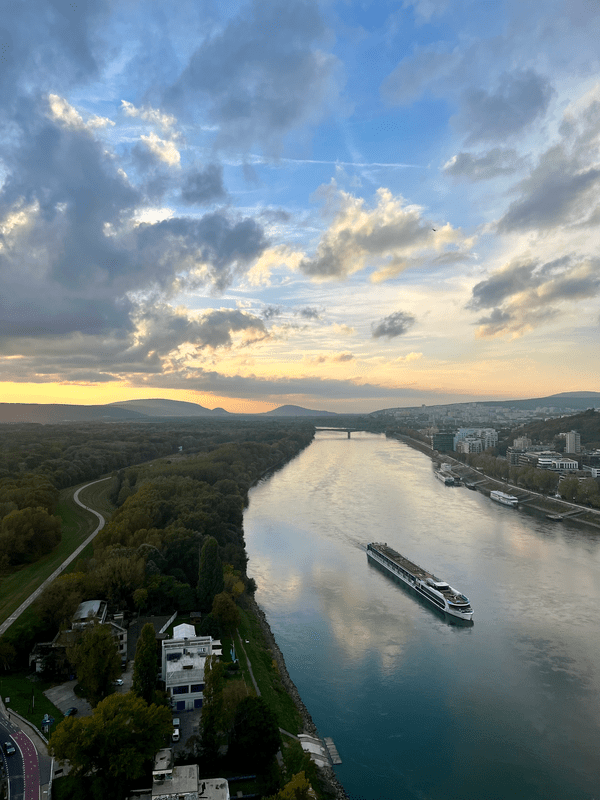
At first glance out over the Danube River, you might think Bratislava is being attacked by the aliens from War of the Worlds. Most SNP (Bridge of the Slovak National Uprising) has come to be known as the “UFO Bridge” because of the observation tower that sits at the Petržalka end of the bridge. The bridge was built in 1972 and unfortunately the construction of the road leading up to it took out a large section of Old Town, including the majority of the Jewish Quarter. There is a pedestrian-friendly path along the side of the bridge, and going up in the UFO Tower observation deck is a must. You can choose to dine or have a drink at the restaurant, or just get an observation deck-only ticket, which was 12 euros when I visited. The views of Bratislava and the Danube are breathtaking.
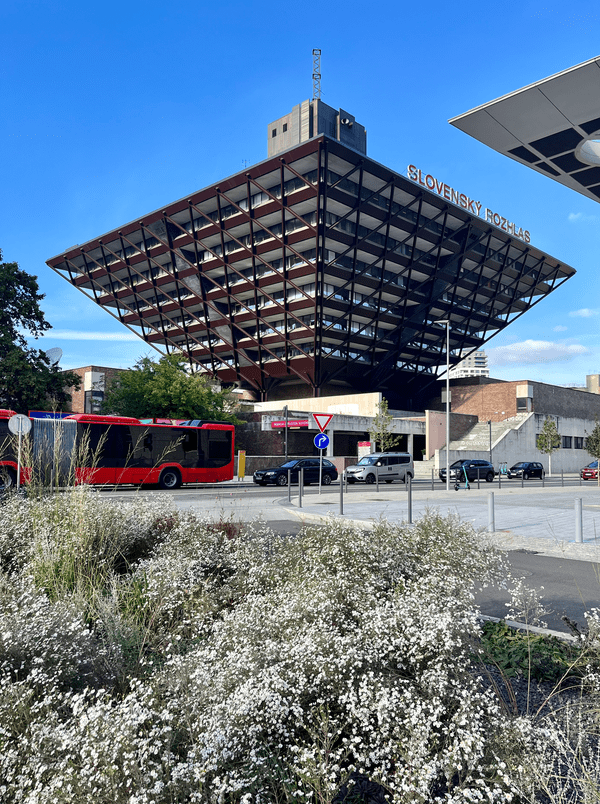
Another gem of Communist Era architecture in Bratislava is the Slovak Radio building, which resembles an upside-down pyramid and currently houses the headquarters of the Radio and Television of Slovakia (RTVS). It’s had mixed reviews, being considered a prime example of contemporary architecture by some, and an ugly reminder of communist oppression by others. Love it or hate it, it is an official Slovakian Cultural Heritage Monument.
While there were definitely plenty of tourists in the Old Town of Bratislava, it was much quieter and less overwhelming than the tourist areas in Prague and Vienna. At night the streets were very quiet, aside from the restaurants along the main streets of Old Town. I found Bratislava to be very tourist-friendly, offering free Wi-Fi throughout the downtown and even free bathrooms in places. It seems like a city that is working on growing its tourism, and I recommend going even if just for a day trip from Vienna. While Bratislava is a small city and one and a half days were plenty of time for me to see all the key downtown sites, there are definitely some museums and day trips to sites surrounding Bratislava that I would have done if I had more time there.
On my way out of town, that “drab and dreary” train station that I had arrived in was bright with sunlight, and that completely matched my mood after spending a day and a half exploring Bratislava. With its unique blend of history, its friendly people, and the delicious food I had there (more to come on this in a separate post), the first impressions from my arrival day didn’t hold up. Bratislava stole a piece of my heart in its own way.

 C to Shining C