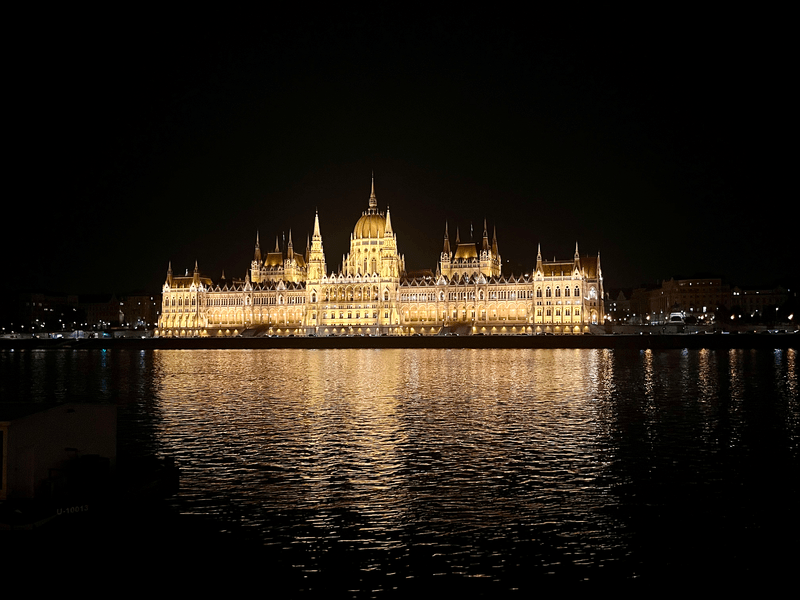
Budapest, Hungary is a city of many personalities, as a result of the unification of the towns of Buda, Óbuda and Pest in 1873, with Buda and Óbuda on the west side of the Danube River linked to Pest on the east side by several bridges including the famed Chain Bridge. The Buda side is quieter, with the Buda Castle District, scenic hillside vistas, and quaint residential neighborhoods. The Pest side is the economic and commercial heart of Budapest, with downtown shopping and restaurants and the iconic Hungarian Parliament building.
Stay
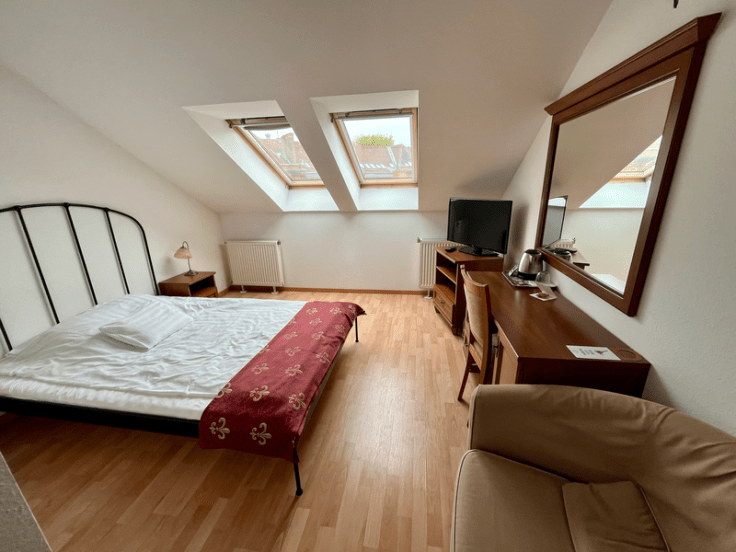
In Budapest I stayed in the Kalvin House, located just south of the central downtown area on the Pest side. The hotel is close to metro, tram, and bus lines but also walkable to downtown sites and just steps from Central Market Hall. My room was on the fourth floor, which I had to either take five flights of stairs or a questionable elevator to get to, but I did like being on the fourth floor for the skylight windows in my room! Other than the scary elevator, my stay was great.
Getting Around
I got a 72-hour transit pass for the duration of my stay in Budapest for ease of getting around, which cost 5500 Hungarian forint, the equivalent of about $15.40 USD at my time of travel. I utilized public transit quite a bit while I was here to save my feet since my hotel was on one end of town and since I had a lot of ground to cover in only 2 days. There are tram lines that run north-south on both sides of the river and make it easy to get where you need to go quickly.
Things to Do and See
Castle Hill District
I dropped my bags at the hotel on the afternoon I arrived into Budapest and headed across the river to the Buda side. I took the funicular up the hill to the Buda Castle complex (note: the funicular is not included in the Budapest public transit passes). The funicular has been in operation since 1870 and offers great views in the few minutes it takes to get up the hill.
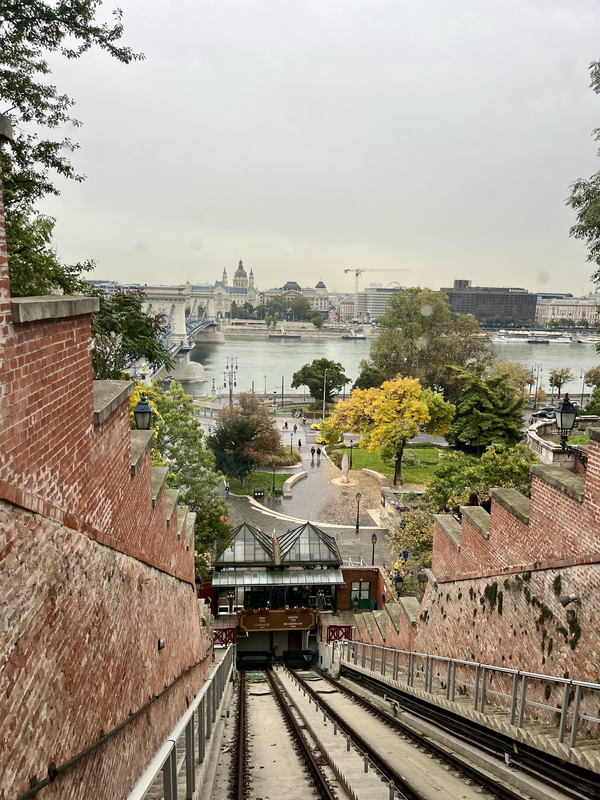
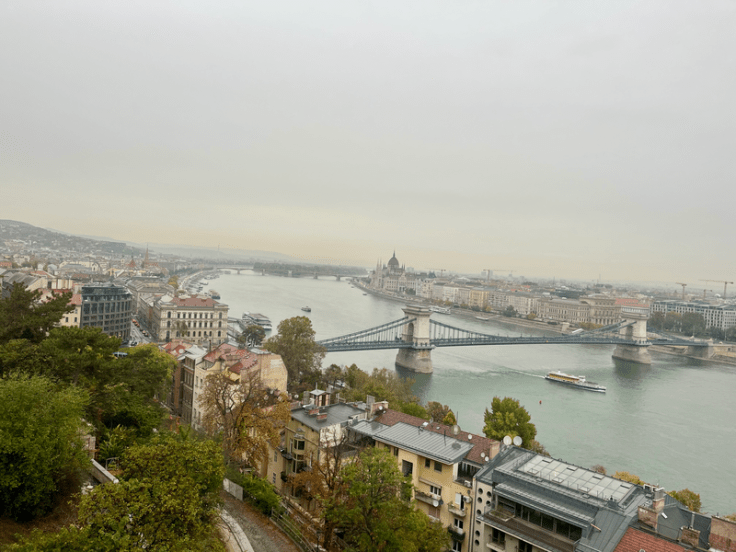
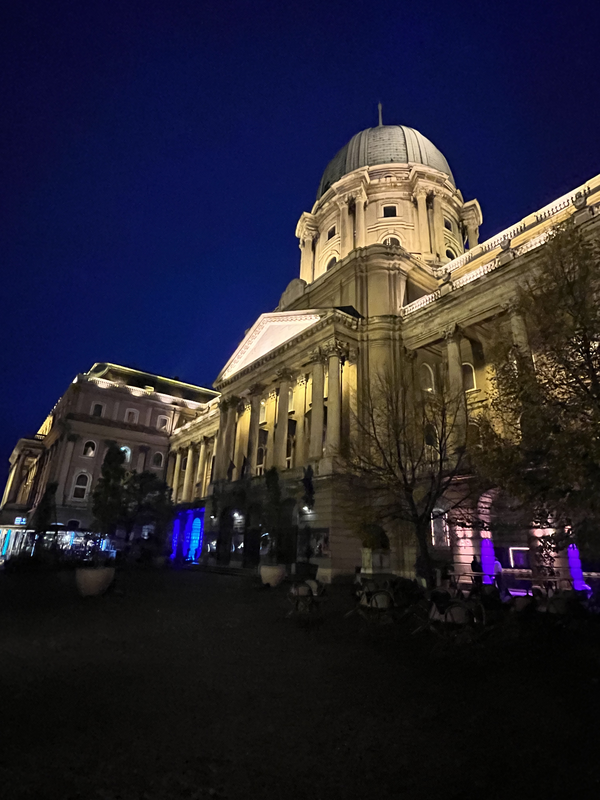
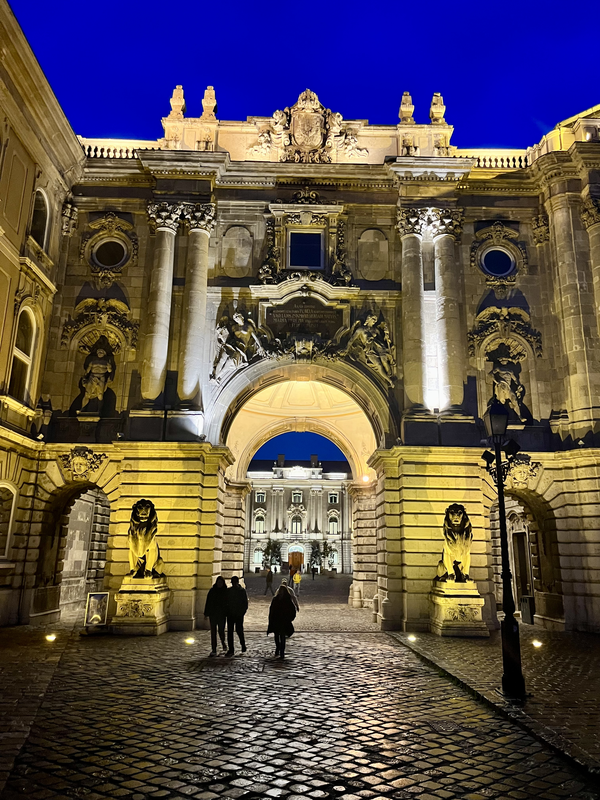
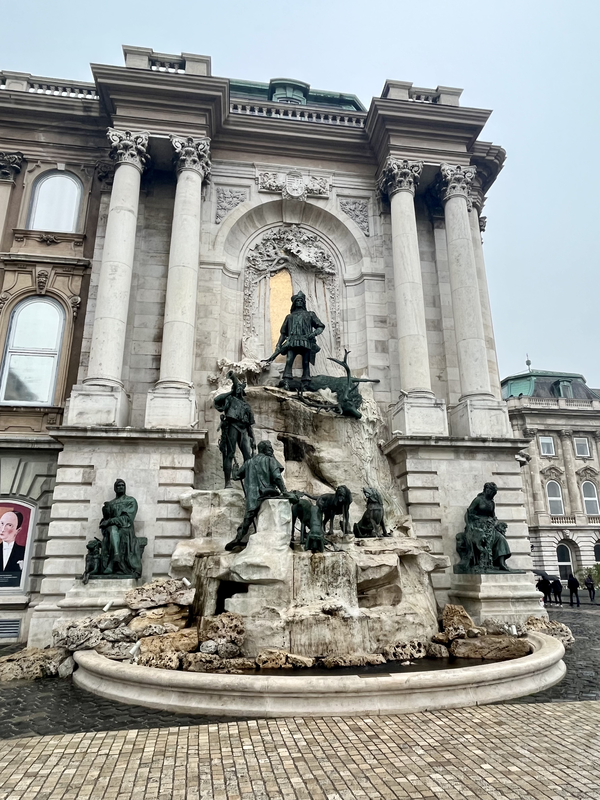
Buda Castle was built between 1749 and 1769 and today houses the Budapest Historical Museum and Hungarian National Gallery, but I didn’t have time to do either museum on this visit. There was still plenty to see around the grounds, like the gorgeous Neo-Baroque Matthias Fountain, which is like Budapest’s own little Trevi Fountain.
I visited Matthias Church, which from the outside looks like your typical Gothic cathedral, but is unique in its interior with ornate colorful patterns adorning every surface. The current church was built in the late 14th century and has been the site of two coronations of kings of Hungary.
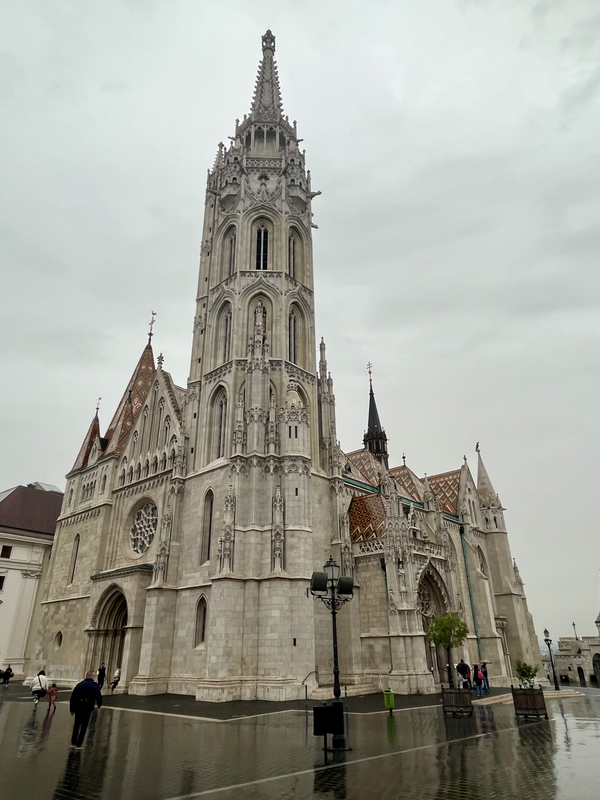
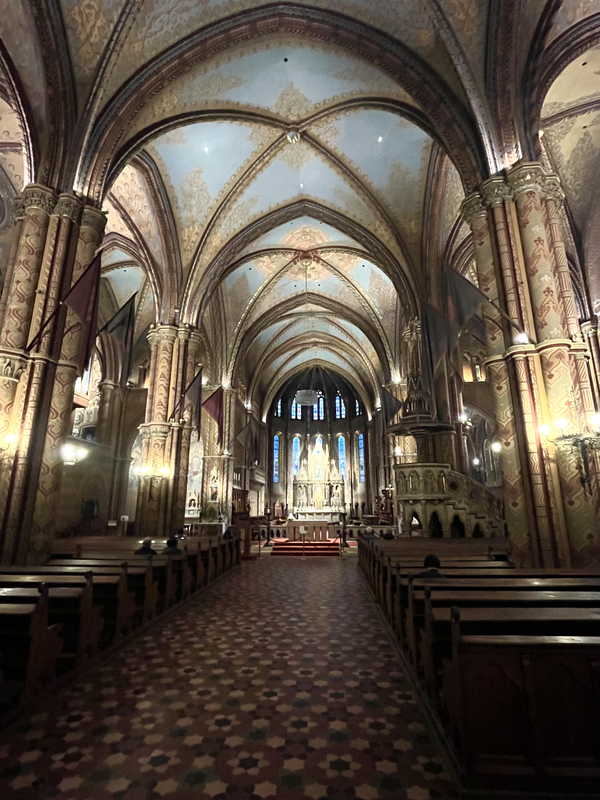
Just beyond the church is the Fisherman’s Bastion with spires and turrets that look like something out of Hogwarts. These structures are more recent than they look, having been built between 1895 and 1902 to commemorate the 1000th birthday of the Hungarian state. Today it’s one of the best places to take in panoramic views of Budapest and the Hungarian Parliament across the river. I was there right around sunset to watch the Parliament building light up for the night.
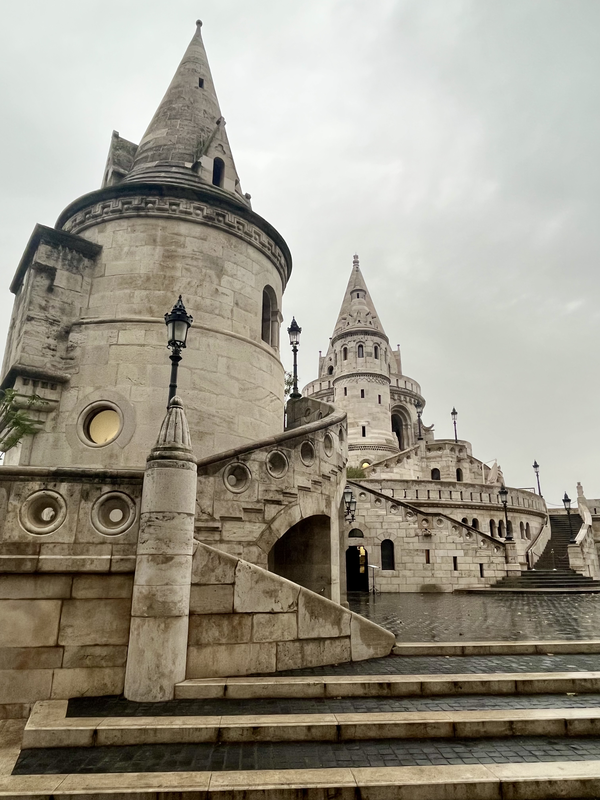
Perhaps my favorite part of the Castle District was wandering the quiet neighborhood streets with no agenda, just going where my curiosity took me, admiring the architecture. I loved all the colorful medieval doors and randomly started taking a series of photos which I think make a pretty cool collage.
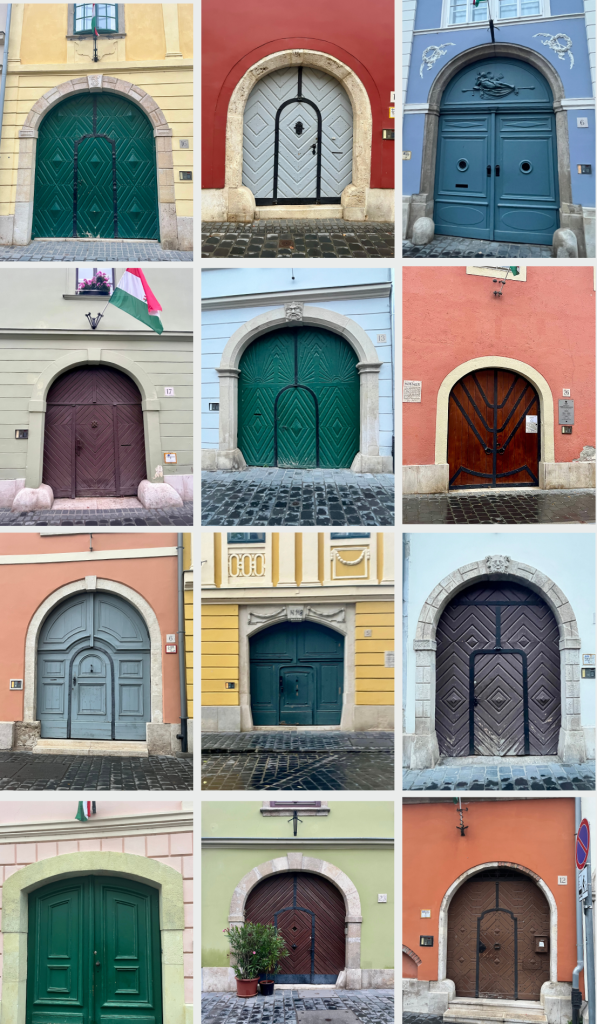
Széchenyi Chain Bridge
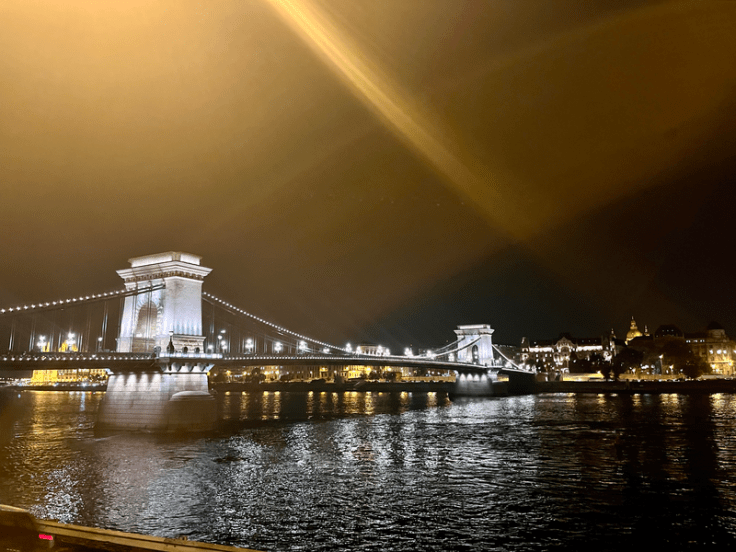
The Széchenyi Chain Bridge is one of the most important locations in Budapest, as it was the first permanent bridge across the Danube in the city when it opened in 1849, uniting the Buda and Pest sides of the river. The bridge is a suspension style, with the roadway hanging from cast iron chains, giving it the name of “Chain Bridge.”
Hungarian Parliament
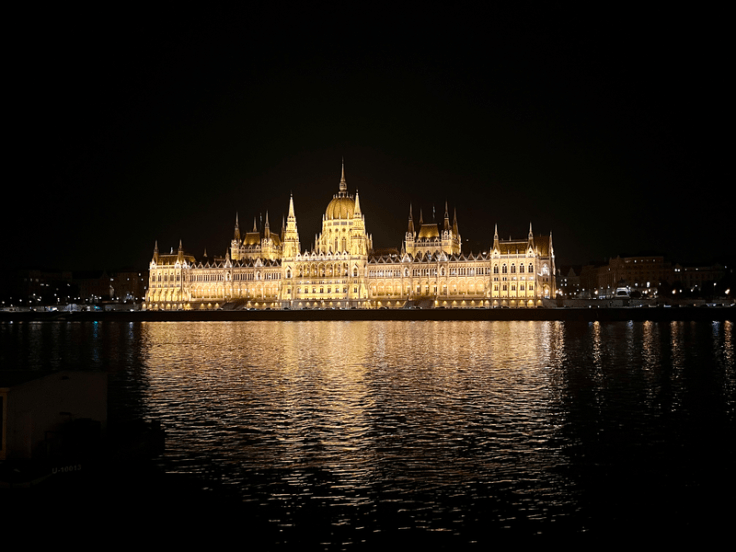
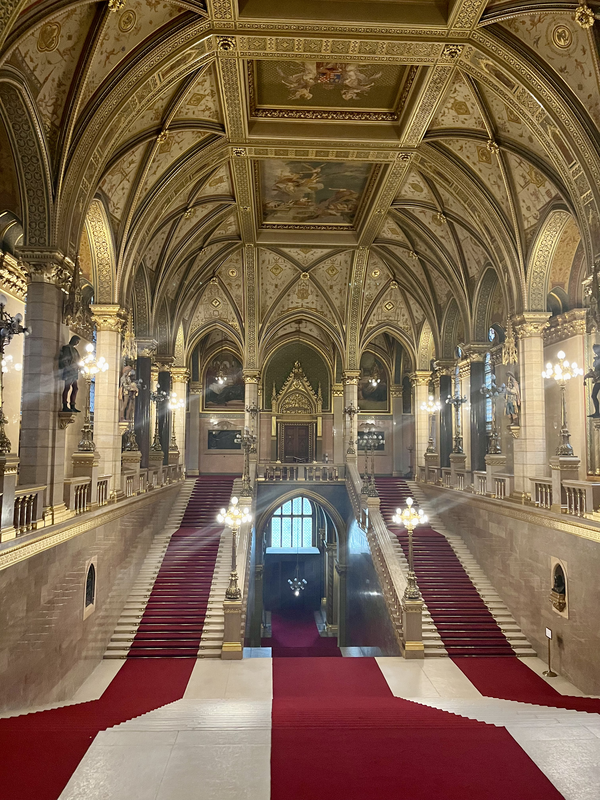
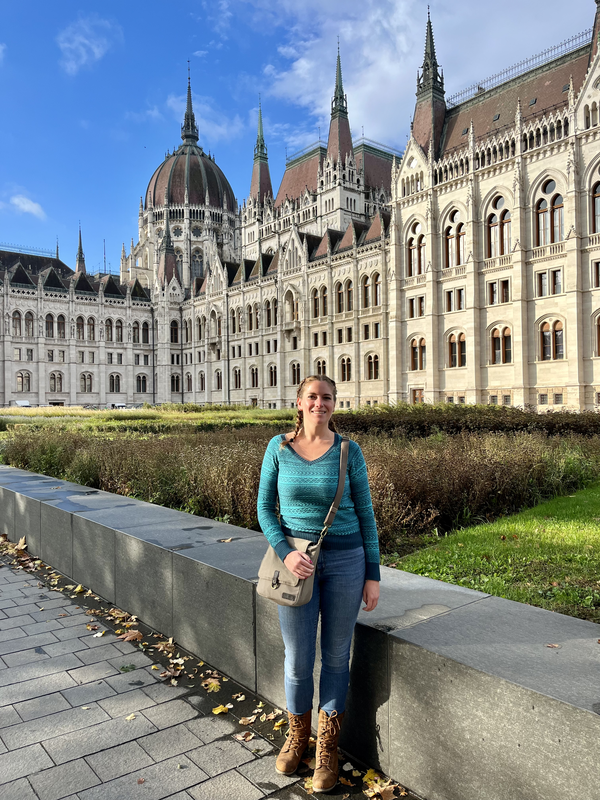
Easily the most recognizable building in Budapest, the Hungarian Parliament sits on the Pest side of the Danube. The domed Gothic Revival building was completed in 1904 and is to this day the seat of the National Assembly of Hungary. It is open for guided tours only since it is an active government building. It’s recommended to book your visit well in advance as only a limited number of walk-in tickets are available each day. When I visited in October, I hadn’t gotten an advance ticket but had no problem getting a walk-in ticket first thing in the morning. It can be more difficult to get tickets during the peak summer tourism months.
Shoes on the Danube
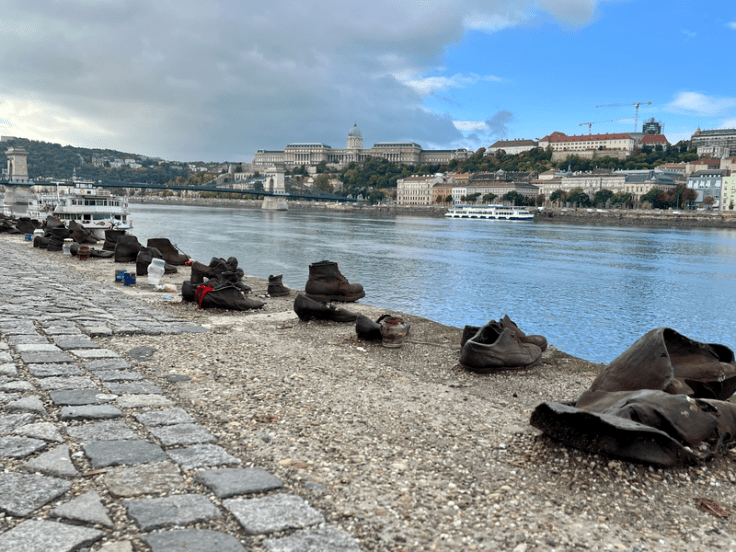
A short walk down the Danube from Hungarian Parliament is the Shoes on the Danube memorial, a series of shoe sculptures dedicated to Jews who were executed by a fascist Hungarian militia during World War II. Since shoes were of value, they were ordered to take off their shoes before being shot at the edge of the Danube. The memorial is a haunting and somber reminder of the horrors of the holocaust.
St. Stephen’s Basilica
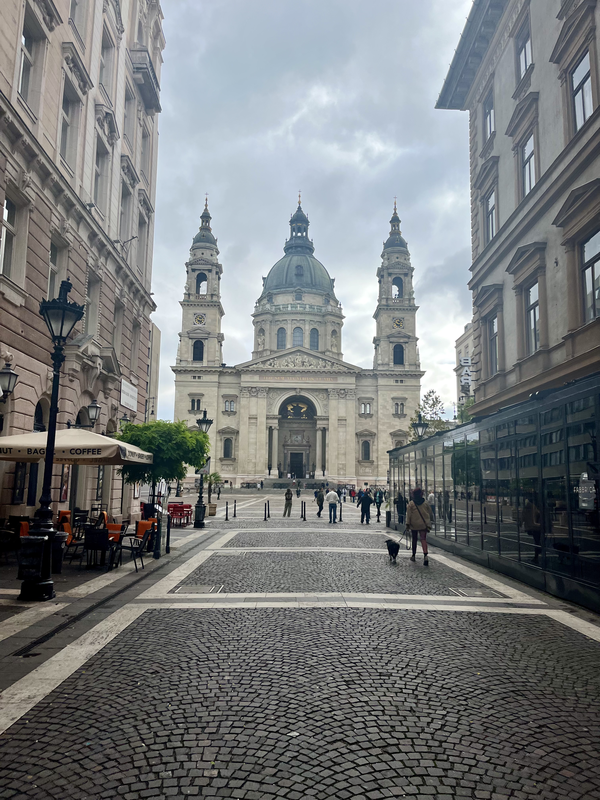
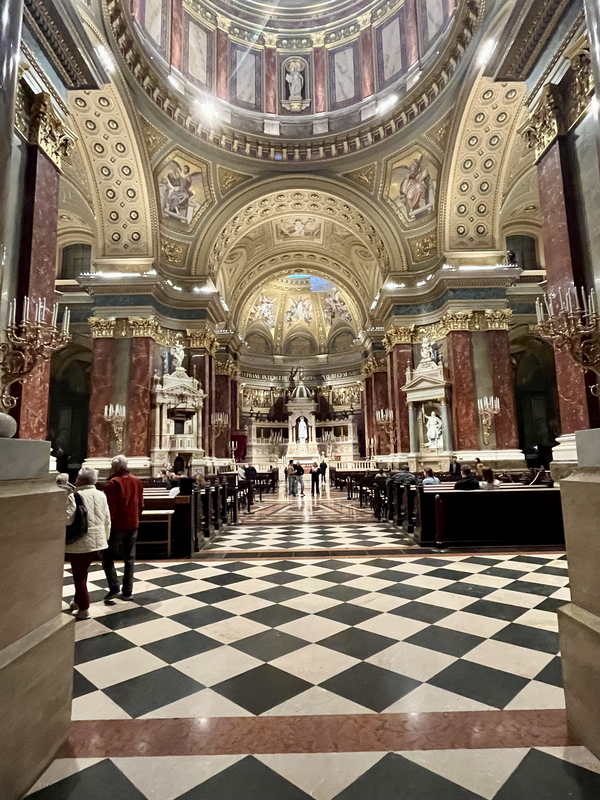
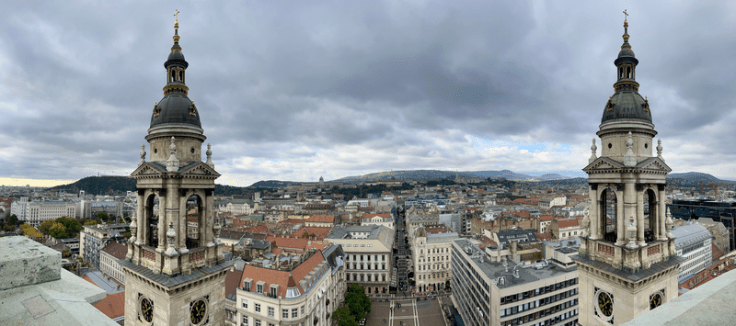
Szent István-bazilika (St. Stephen’s Basilica) is located in the heart of downtown Budapest and is the largest church in the city. It was completed in 1905 after 54 years of construction and is named after Stephen, the first King of Hungary. It is one of the tallest buildings in Budapest, sharing the title with the Hungarian Parliament Building. Touring the basilica allows you to go up onto the panoramic terrace around the dome for 360-degree views of Budapest.
Central Market Hall
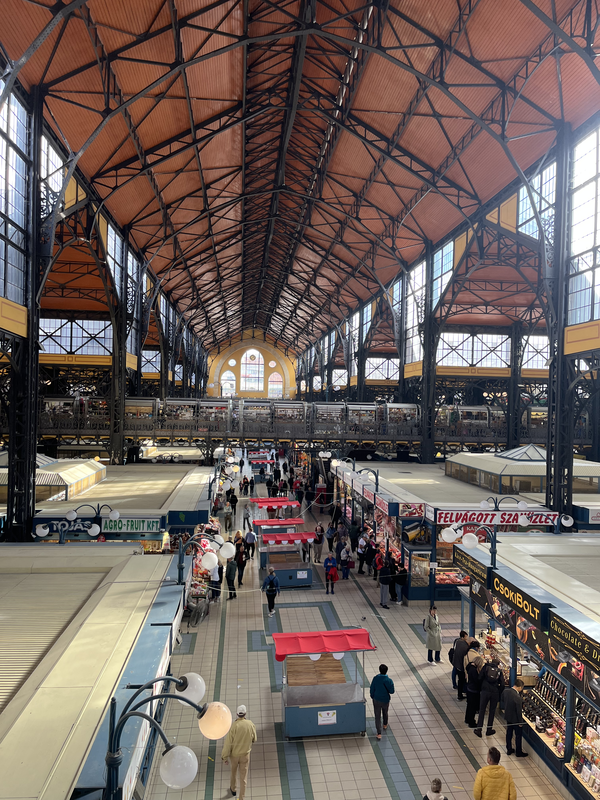
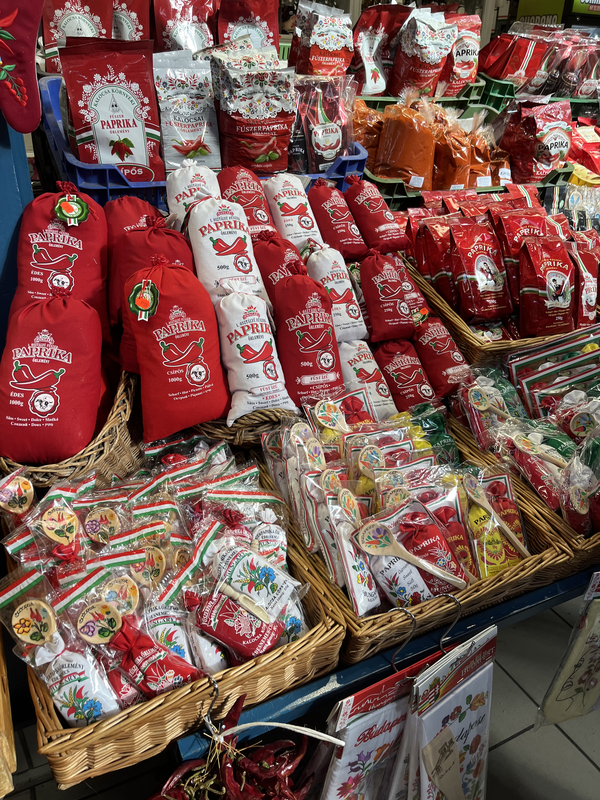
Central Market Hall is located on the south part of downtown on Fővám tér and is a large historic marketplace where you can buy produce, salami, Hungarian paprika, and artisenal goods and souvenirs. I had a great time wandering through and found that the vendors were flexible on some of their pricing. When I went to buy some paprika, the vendor was cash-only and I stood there counting every last forint that I had only to realize I was short by the equivalent of 1 or 2 USD, to which the vendor just took what I had and said it was fine. Upstairs in the market, I was admiring some traditional Hungarian lace table runners, and having used up all of my forint, had confirmed with the vendor that I could use a credit card. When he went to ring me up, he asked if I happened to have any Euros on me. I did, but just short of the cost of the table runner, which he said was fine and accepted my Euros. So I got a good deal on both of my purchases within Market Hall!
Thermal Baths
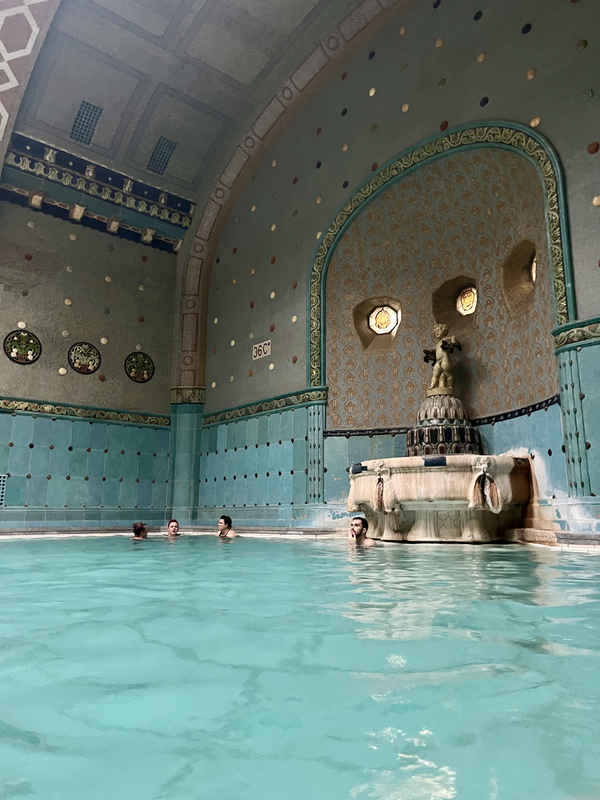
Budapest is built in an area that is rich with geothermal springs, and as such, has come to be known as a “City of Spas.” There are several thermal baths throughout the city where you can take in the soothing warm mineral waters. The more “Instagrammable” one is Széchenyi Thermal Bath. It’s located a little ways outside of the downtown area, so in the interest of time, I went to the Gellért ones which were about a 10-minute walk from my hotel over the Szabadság Bridge. I was there on a weekday afternoon in October and there were a decent amount of people there but it wasn’t overwhelmingly crowded. I could have stayed in the baths all day! If I did anything differently, I would have brought my own flip flops and towel. I hadn’t packed any since I was traveling in only a carry-on for this trip, and ever since the pandemic the spas don’t rent these, so my only choice was to buy them for more than they are worth.
Cave Church
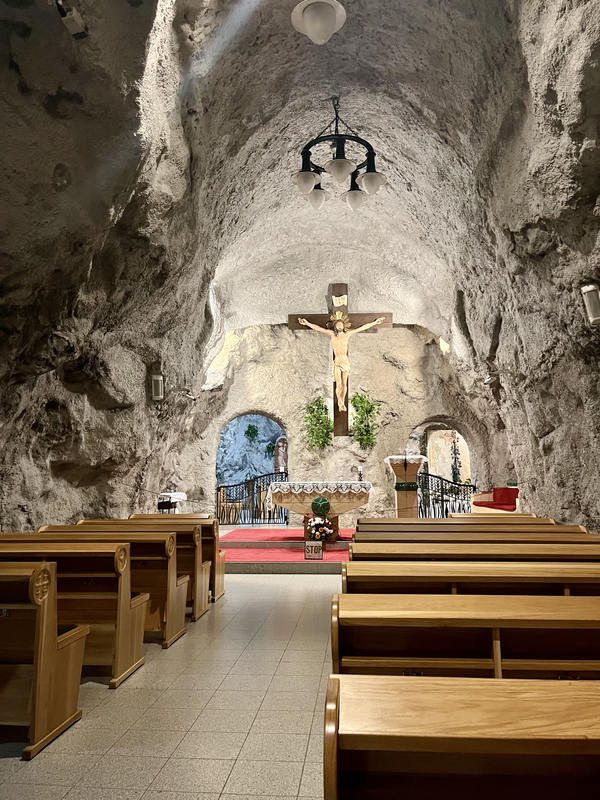
Just across the street from the Gellért Thermal Baths is a unique church, Sziklatemplom (Cave Church) built in a prehistoric cave in Gellért Hill. The church was constructed by the Pauline monks and opened as a chapel and monastery in 1926. In 1951, the chapel was raided under Soviet occupation of Budapest and the monastery superior condemned to death. The cave reopened after the disintegration of the Iron Curtain and was restored to the Pauline order.
Ruin Bars
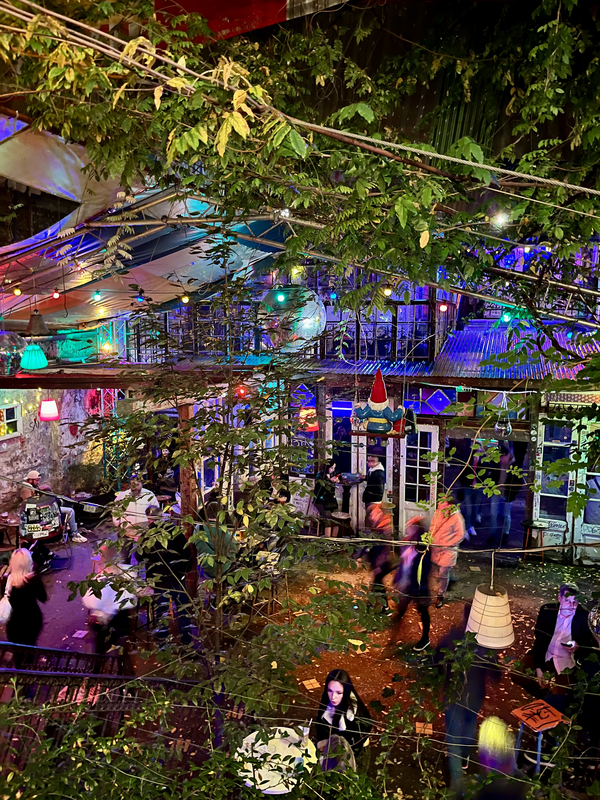
Since about 2000, ruin bars have become a popular nightlife spot in Budapest. These bars are opened in previously abandoned buildings, mostly in the city’s old Jewish Quarter. I enjoyed an evening at Szimpla Kert, one of the first and most popular of the ruin bars. The place was abuzz with activity while I was there, including live music.
With plenty of history and architecture, quiet colorful neighborhoods, eccentric ruin bars, rejuvenating thermal spas, and delicious cuisine, there is something for everyone in Budapest. An easy train ride from Vienna, it’s a great place to spend a few days.

 C to Shining C