Aside from Vienna being a city I’ve always wanted to visit, my recent trip there was tennis-motivated as I’m working through a bucket list of traveling for tennis tournaments and decided this was the year to attend the Erste Bank Vienna Open. The Open is held in late October every year, and this was a great time to travel to Vienna. The weather wasn’t too cold although I had quite a few rainy days. I flew in and out of Vienna for this trip, taking trains to go visit the neighboring capital cities of Prague, Czechia; Bratislava, Slovakia; and Budapest, Hungary during the 13-day trip.
Vienna (Wien) is the capital of Austria and one time capital of the Austro-Hungarian Empire, which left it full of intricate palaces and Baroque and Romanesque architecture. It’s a culturally significant city, having once been home to classical musicians such as Beethoven and Mozart, and renowned psychoanalyst Sigmund Freud. Vienna today is elegant and refined, with its central arteries lined with restaurants and high end shopping.
Stay
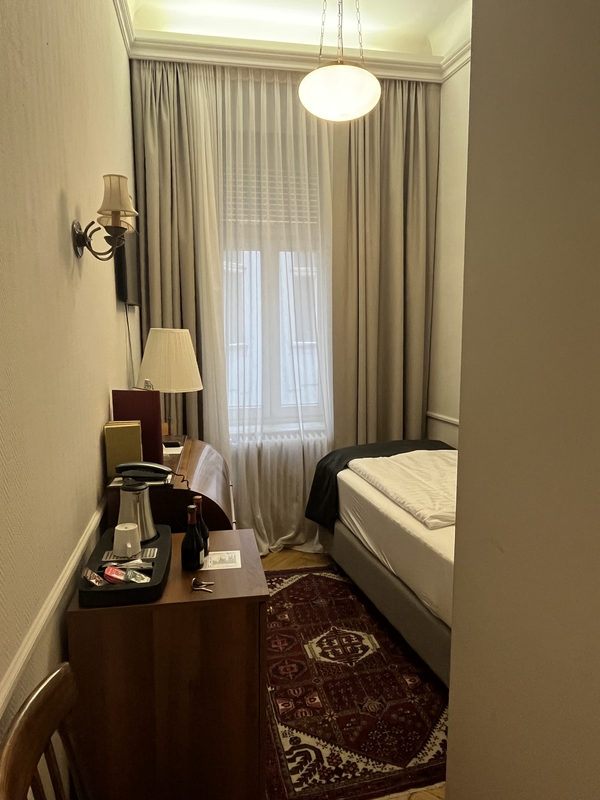
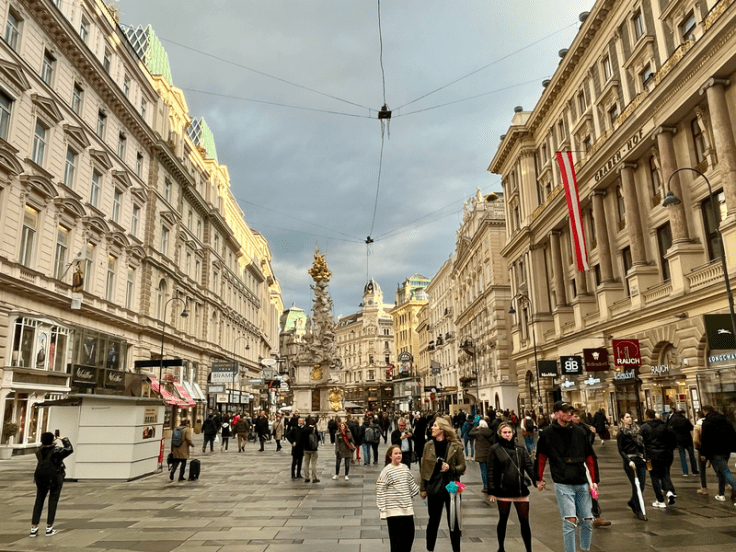
During my longer stay in Vienna, I was at the Boutique Hotel Nossek. This small independent hotel couldn’t have been more centrally located – it’s on Graben, a popular pedestrian square lined with shops and restaurants. Despite the hustle and bustle out on the street, my room was quiet and cozy, and my stay included breakfast.
On the front end of my trip, I also stayed at the Motel One Wien-Hauptbahnhof for one night before departing for my stays in Prague, Bratislava, and Budapest. This modern hotel is located right across the street from the Vienna main train station, which was convenient for catching my early morning train to Prague, but also still close enough to walk into central Vienna for some sightseeing.
Getting Around
Vienna has a large footprint. Many of the sites in the central downtown area, Innere Stadt, are easy to see on foot, but there are some sites like Schönbrunn Palace and Belvedere Palace that are a little further out. Vienna is highly connected with a great transit system, with buses, trams, and five metro (U-Bahn) lines that run underground, as well as being a major hub for regional trains operated by Austrian Federal Railways (ÖBB). During my longer stay, I used a 72-hour transit pass to get around which cost 17,10 Euros (about $18.90 in USD in October 2023).
There are various options for getting to and from the airport. From my inbound flight, I took an ÖBB train from the airport to Wien main train station for only about 4 euros. For my outbound flight, because of railwork and the time of day that I had to get to the airport (very early morning), I took the Vienna Airport Lines (VAL) bus for 9,50 euros which departed from Morzinplatz a few minutes’ walk from my stay at the Hotel Nossek.
Things to See and Do
The Hofburg – Sisi Museum
At the recommendation of a dear friend, the book Sisi: Empress On Her Own by Allison Pataki was what I chose to read on this trip since I had a lot of time on planes and trains. I became a Sisi fan in the process. Empress Elisabeth, known as Sisi, was an intriguing character. She married into the imperial family not knowing what it meant to be an empress and not necessarily wanting that responsibility, and therefore was often misunderstood and scrutinized by the media and the Austrian people for her behavior. It wasn’t until after her assassination that she became a beloved icon. The book Sisi: Empress On Her Own was the perfect companion for this trip. Not only was Sisi’s love and desire for travel obviously relatable for me, but the book helped me to put a lot of the places I saw on this trip into a historical context.
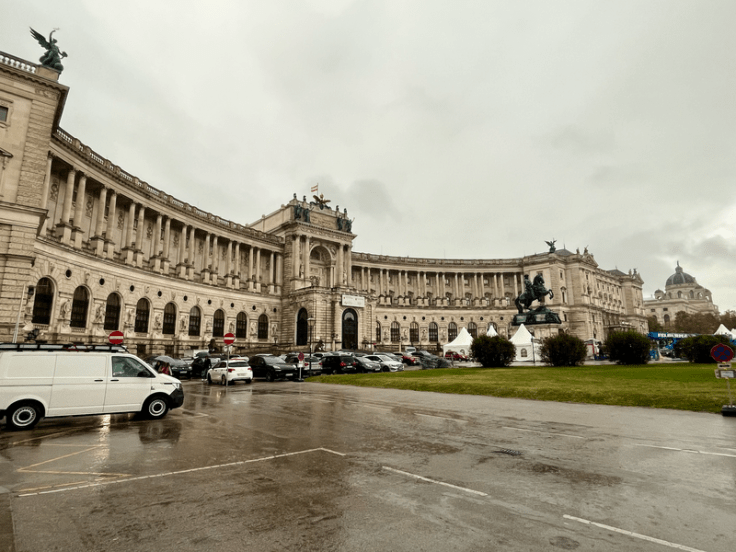
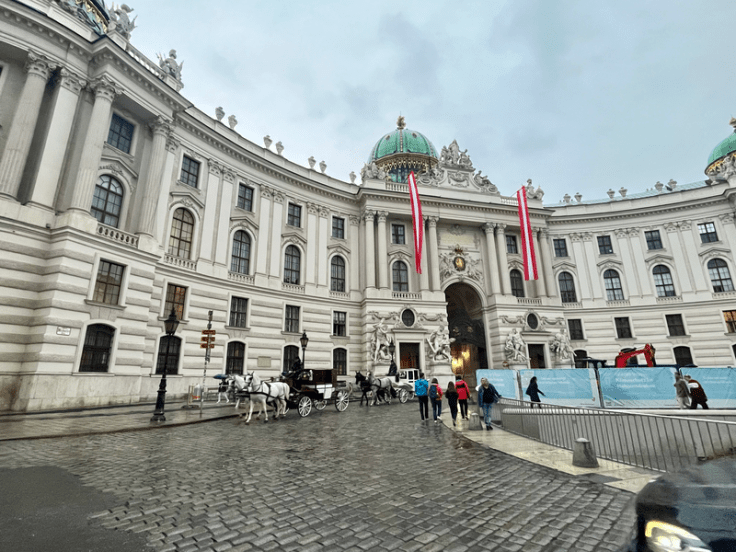
The Hofburg is the former imperial palace of the Habsburg dynasty, built in the 13th century. With a ticket to the Sisi Museum, you can tour the elaborate imperial apartments where Franz Joseph I and Sisi resided, although this was Sisi’s least favorite place. She much preferred to spend her time at her palace Gödöllö in Hungary, or at Schloss Schönbrunn, the imperial summer palace located on the outskirts of Vienna.
Spanish Riding School
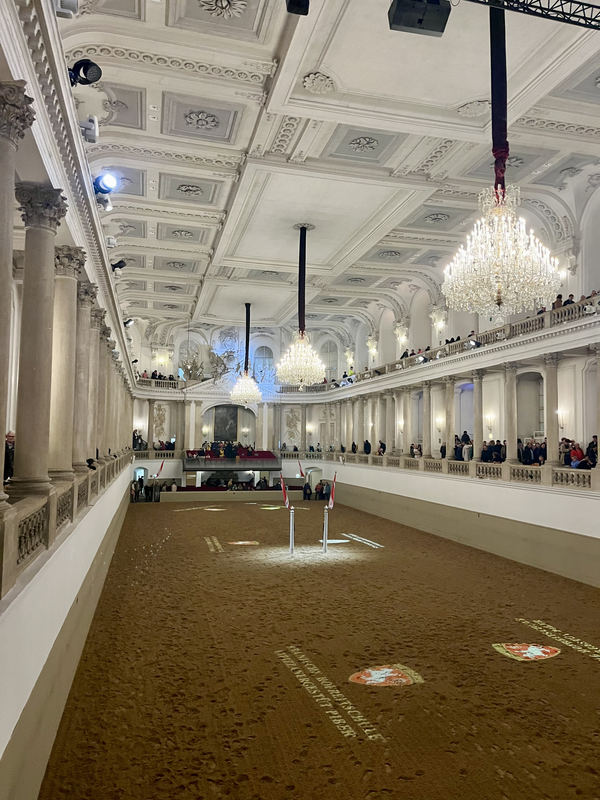
A must-visit part of the Hofburg complex is the Spanish Riding School, where you can see a performance of Lippizaner stallions. The tradition of Haute Ecole, a form of dressage, has been practiced here for over 450 years. I purchased a ticket for the standing room only section, which was a budget-friendly way to see a show, but it’s recommended you arrive early to get a good spot. Across the street from the SRS, you can also see the horses in their stables.
Other Sites around the Hofburg
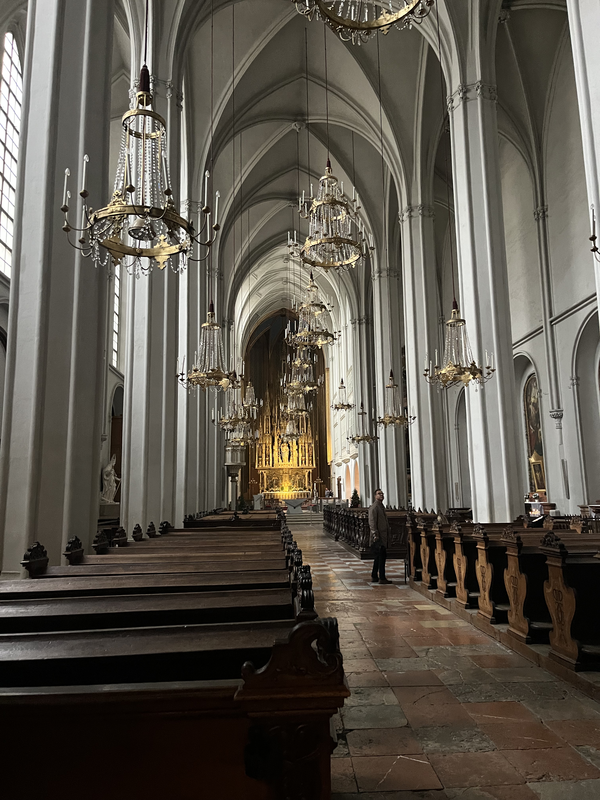
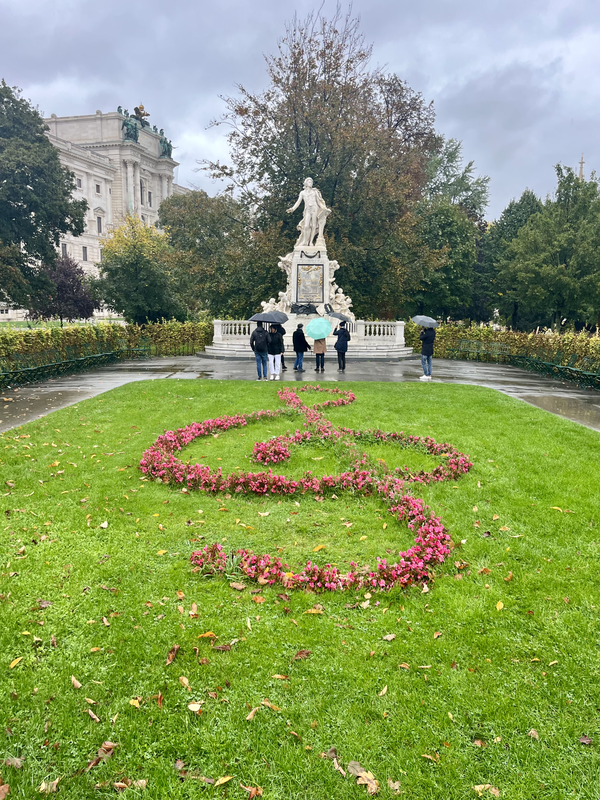
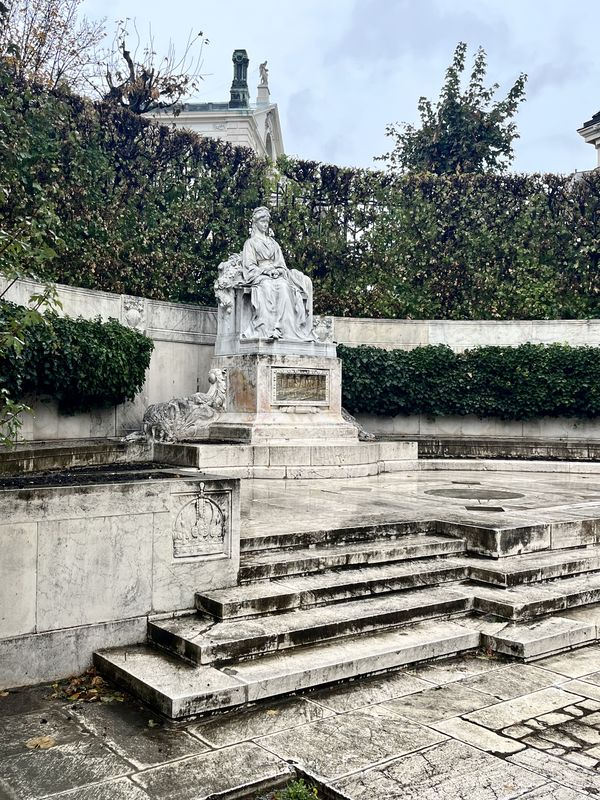
The Hofburg complex is full of additional museums and things to see, such as the Weltmuseum, the Austrian National Library, the Kunsthistorisches Museum and the Naturhistorisches Museum. You can also visit Augustinerkirche, the church in which Empress Sisi and Franz Joseph were married. There are a few gorgeous garden areas in the area as well. The Burggarten contains a statue of Mozart, and in the Volksgarten you can find a statue of Empress Sisi tucked away in a quiet corner.
Schloss Schönbrunn
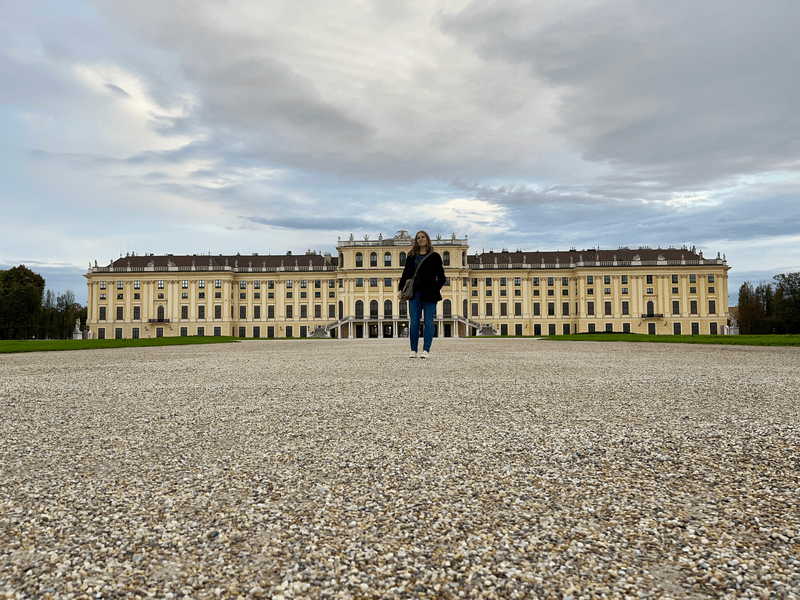
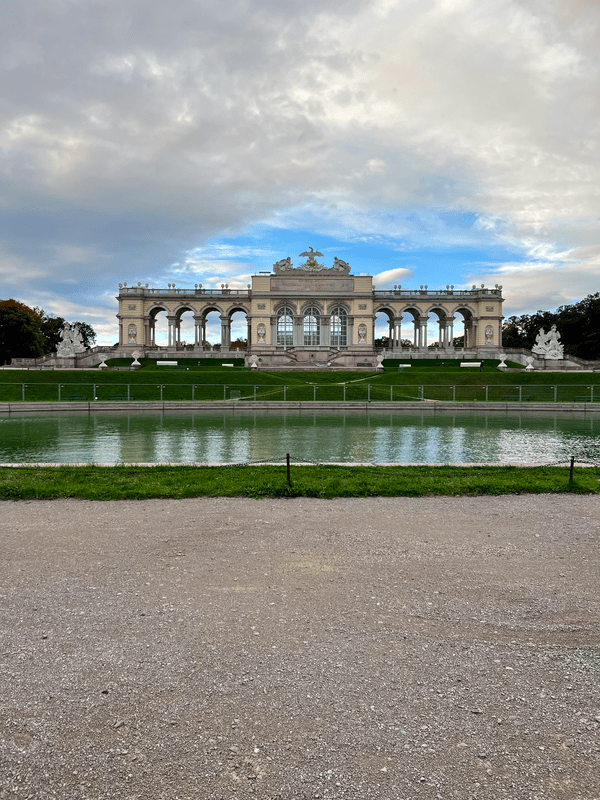
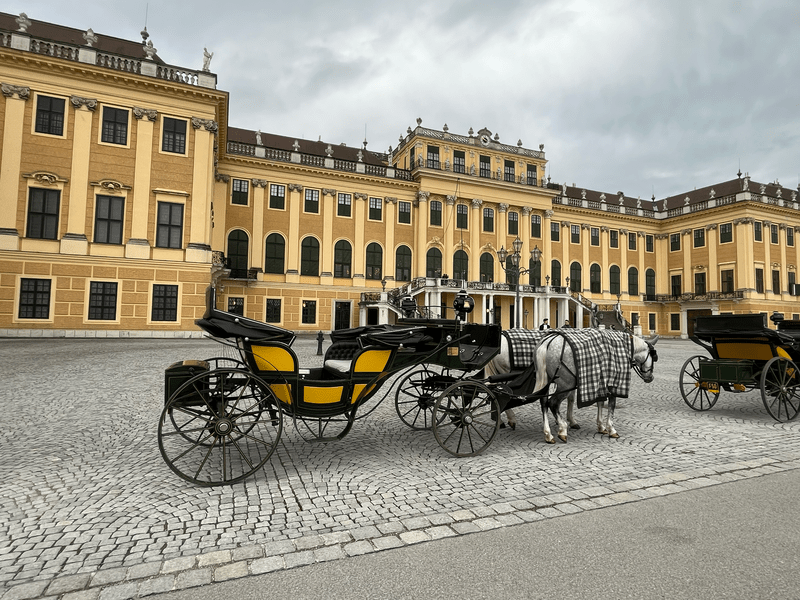
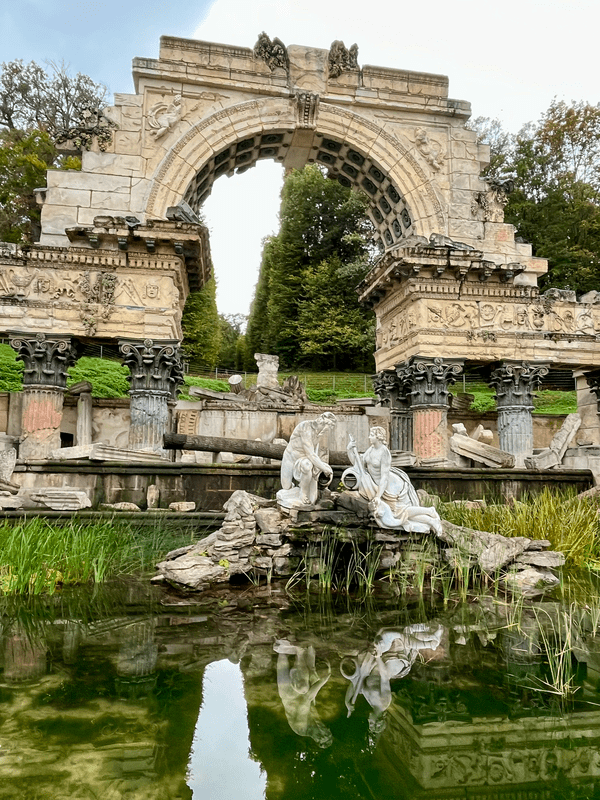
I continued tracing Sisi’s steps with a visit to the imperial summer palace at Schönbrunn. Sisi found comfort in green spaces and fresh air rather than being in the midst of the city’s hustle and bustle at the Hofburg, and one of her favorite pastimes was being on horseback and participating in fox hunts. I had bought a “Sisi Ticket,” which was one ticket that covered both the Sisi Museum at the Hofburg, and the imperial apartments at Schönbrunn.
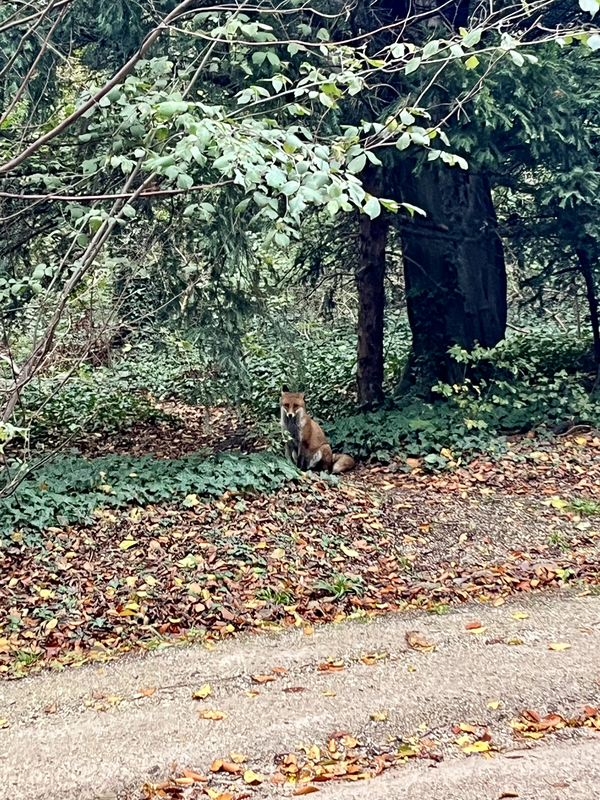
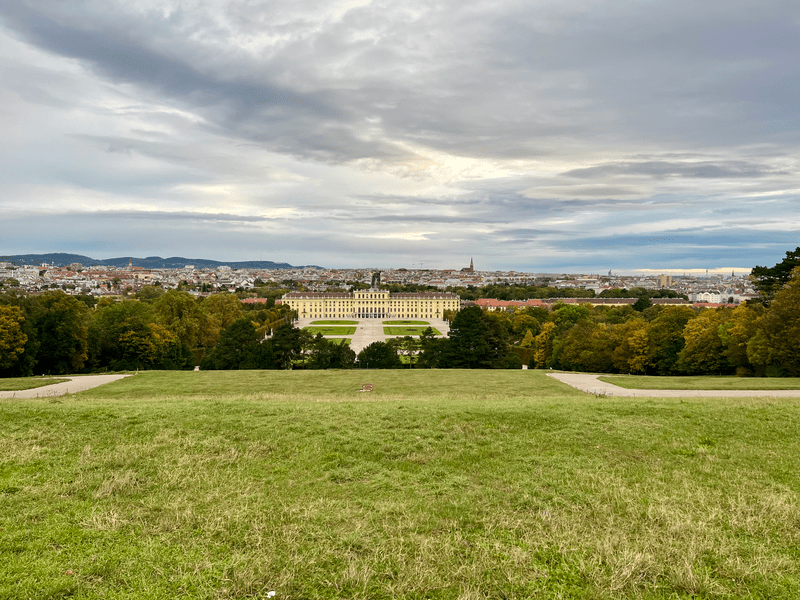
I arrived to Schönbrunn first thing in the morning, before the museum was open. The grounds are open earlier and are a popular spot for walking and running. Early in the morning just after sunrise, all was quiet and peaceful as I walked up the hill to the Gloriette for stunning views out over Vienna and the palace. On one of the trails on my way up I saw a man walking with what I thought was a dog following him, and thought nothing of it until the “dog” ducked off to the side and the man continued on. As I got closer I realized that the dog was actually a red fox that had been stalking the blissfully unaware man down the path. It brought a smile to my face seeing the fox, who let me come cautiously close enough to snap a picture, as I thought about Sisi and her time enjoyed hunting foxes on horseback.
Kapuchinkirche
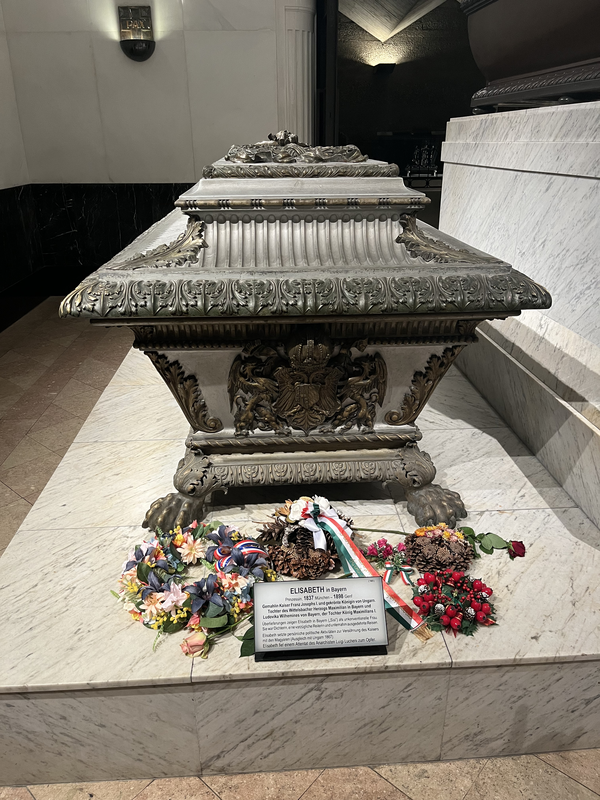
Concluding the Sisi saga, I visited the Capuchin Church, which contains the Imperial Crypt, the final resting place for 145 members of the Habsburg dynasty, including Franz Joseph I and Sisi among the 12 emperors and 18 empresses entombed there. The crypt contains elaborate metal sarcophagi of various time periods and styles. The most recent entombment was just weeks before I visited – Archduchess Yolande of Austria, wife of Archduke Carl Ludwig, was entombed on October 7, 2023.
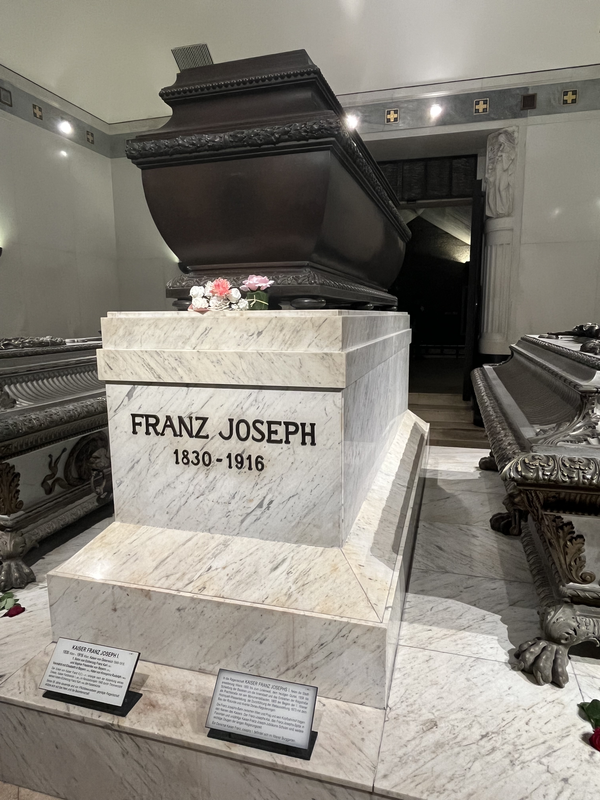
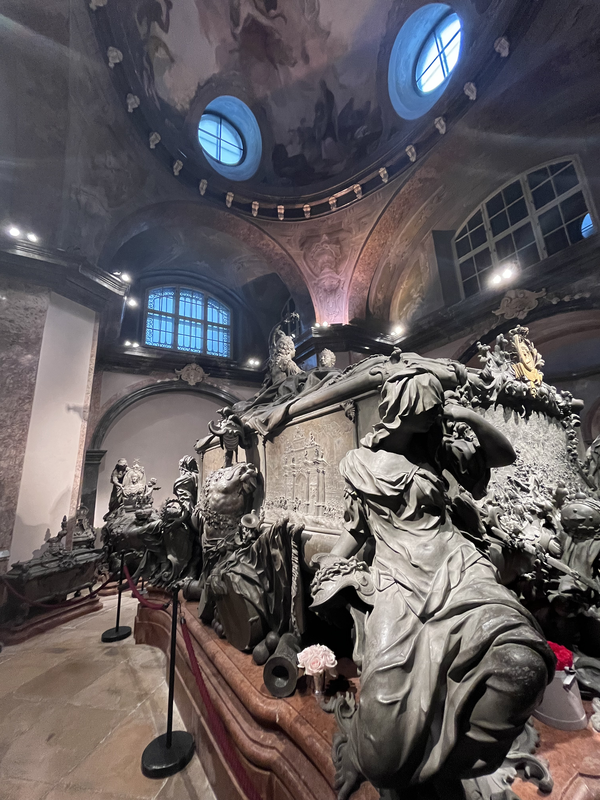
Stephanskirche (St. Stephen’s Cathedral)
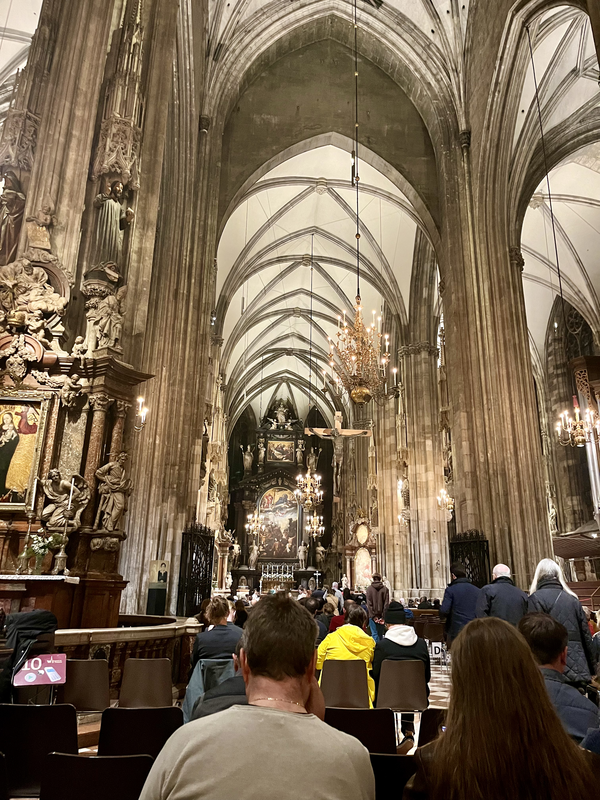
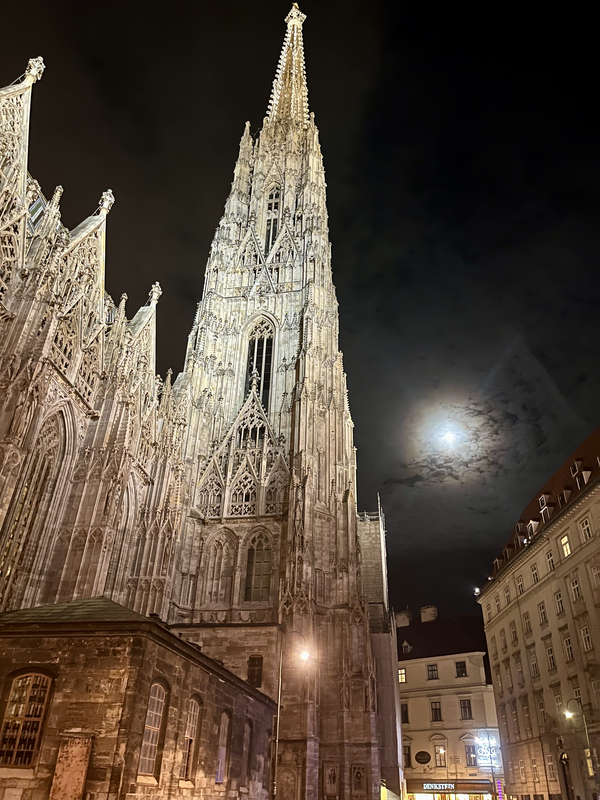
St. Stephen’s Cathedral sits at the heart of Vienna’s Innere Stadt, and is the primary church of the Roman Catholic Archdiocese of Vienna. The current Gothic cathedral was mostly built during the 1300’s on the ruins of two earlier churches, although its towers were completed much later. A must when visiting the cathedral, especially if you are a fan of the macabre, is taking the tour of the catacombs that lie beneath the church grounds. In addition to the tombs of bishops and the Ducal Crypt of urns containing remains of members of the Habsburg dynasty, the catacombs also contain a mass grave of over 11,000 people from the cemeteries that surrounded the earliest churches at this location.
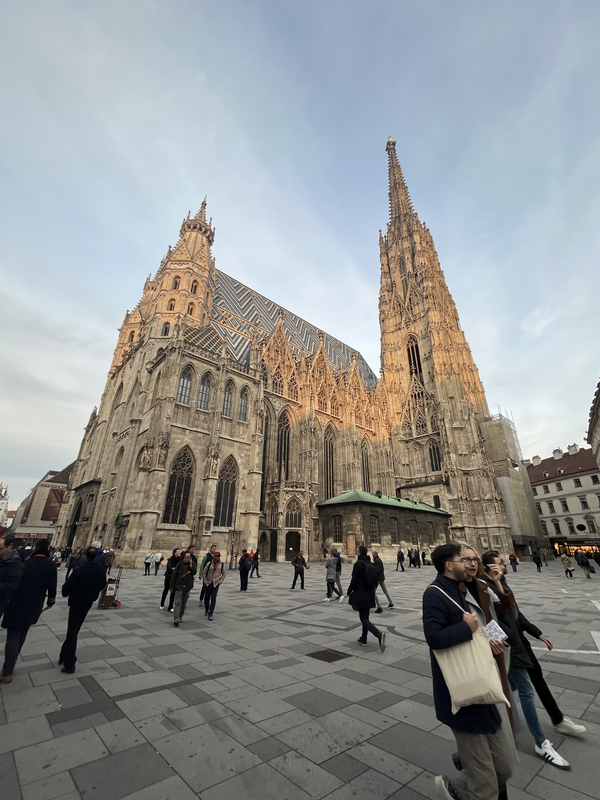
Many churches throughout Vienna will host classical music concerts in the evenings. I had the chance to attend one in St. Stephen’s Cathedral with the music of Vivaldi’s Four Seasons. There’s just something about the acoustics in a church that makes classical music even more beautiful!
Karlskirche (St. Charles Church)
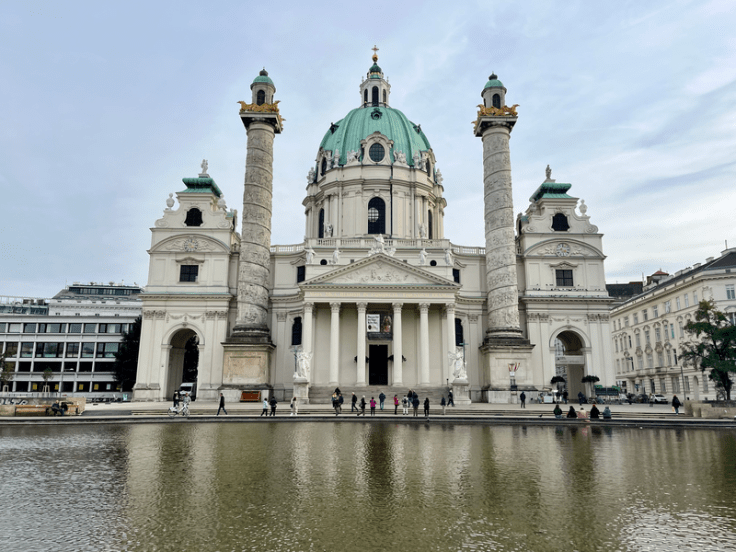
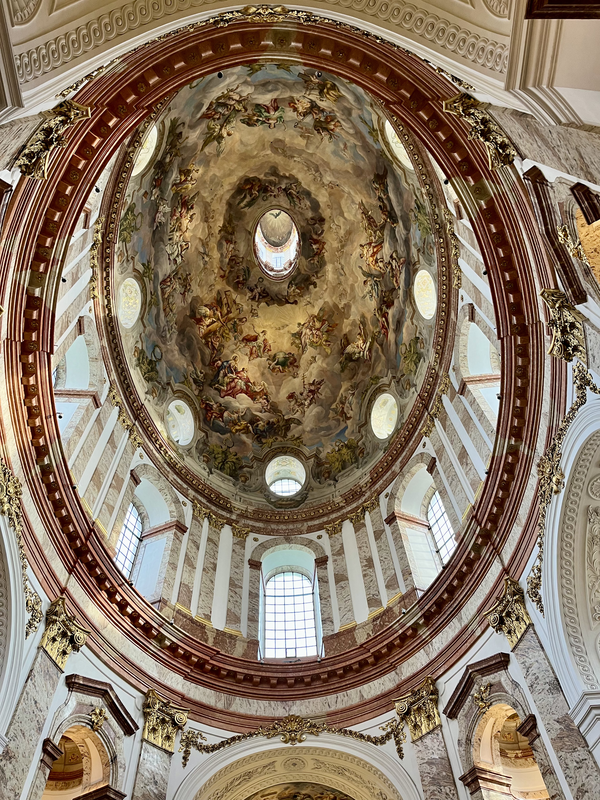
Another must visit church in Vienna is St. Charles, with its Baroque domed architecture. The church was completed in 1737 and dedicated to St. Charles Borromeo, namesake for Emperor Charles VI who ordered its construction in honor of Vienna overcoming a horrific plague in 1713. The interior of the church is stunning, and you can also go up onto a terrace with beautiful views out over Vienna.
Rathausplatz
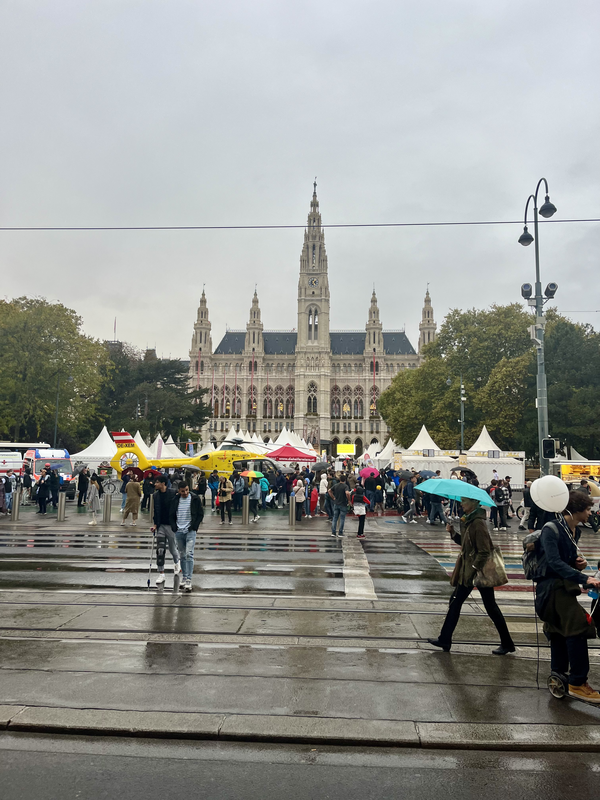
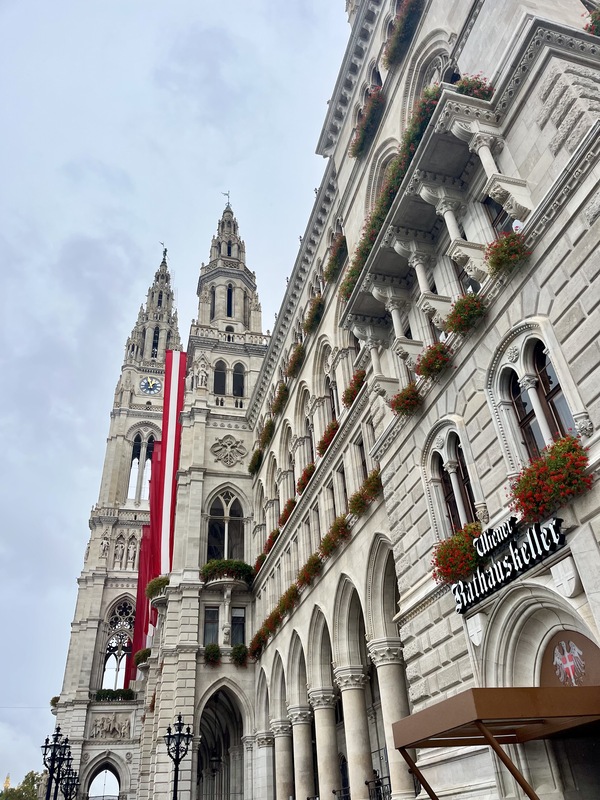
A short walk from the Hofburg is Rathausplatz, the square in front of the Rathuas (City Hall), a remarkable Neo-Gothic building that houses the Mayor’s Office and city council chambers. The square is used for public events, including Vienna’s renowned Christkindlmarkt holiday marketplace. I happened to arrive back into Vienna on Austrian National Day (October 26th), so the square was activated with family-friendly festivities. I got there just as the festivities were wrapping, but did have the pleasure of watching some hunky army men tearing down the event! One note on Austrian National Day: if you are traveling that time of year keep in mind that some businesses and attractions in Austria may be closed or have adjusted hours that day.
Schloss Belvedere
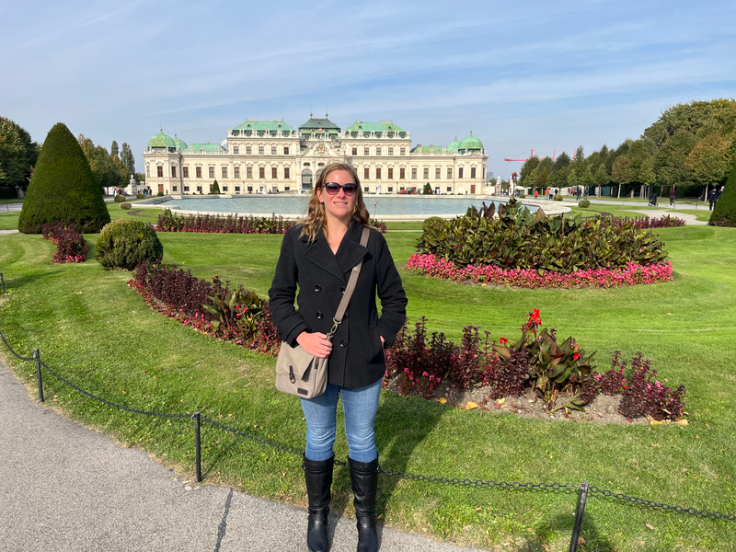
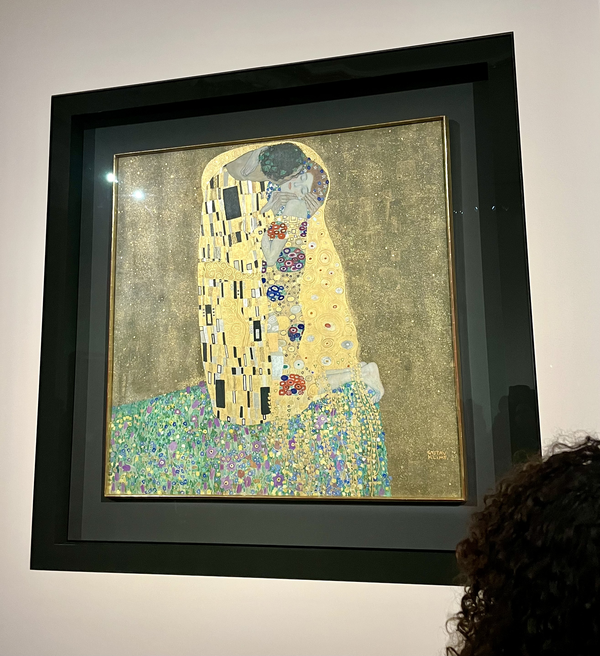
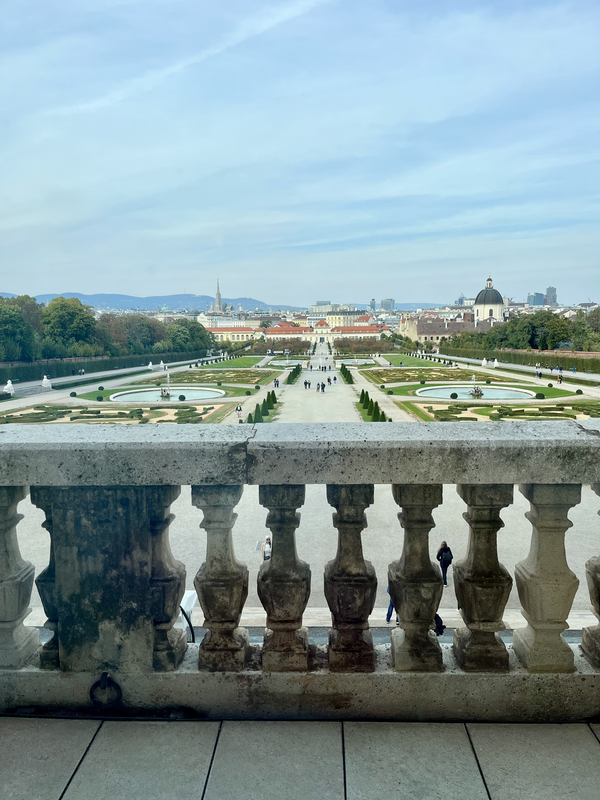
A little outside the Innere Stadt and a short walk from the Vienna Main Train Station sits Schloss Belvedere. The Belvedere consists of two grand Baroque palaces, Upper and Lower Belvedere, separated by a sprawling Baroque garden. Austrian general Prince Eugene of Savoy commissioned the palaces as a summer residence. Under Empress Maria Theresa, they became an exhibition venue for the imperial collections – one of the first public museums in the world. In 1896 under Franz Joseph I, the Upper Belvedere once again became a residence, becoming home to imperial heir Franz Ferdinand. Today, both palaces house the Belvedere art museum, with permanent collections in the Upper and special exhibitions in the Lower. You can choose to visit only one or the other, or both. I visited the Upper, which contains 800 years of art, most notable being the extensive collection of Viennese modernist Gustav Klimt’s works.
Vienna is still a city full of imperial charm with its history embedded in every turn, and I loved embracing the wandering spirit of Empress Sisi as I explored it.

 C to Shining C