
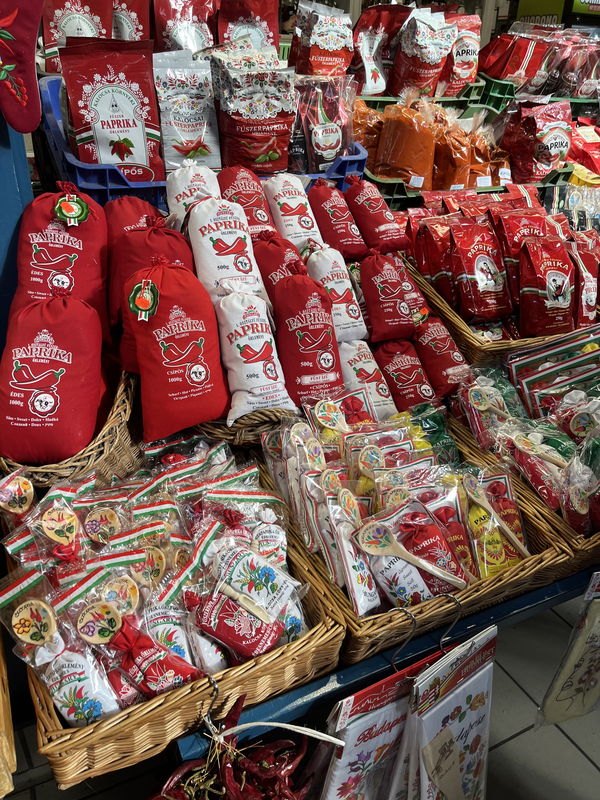
Hungarian cuisine is known to be some of the spiciest food in Europe, in large part due to the extensive use of spices, especially paprika, throughout many dishes. The paprika spice, made from crushed peppers, was first introduced to Hungarian cooking in the early 19th century and has since become a staple in the cuisine, with variations from spicy to sweet paprika. Hungarian cuisine also shares elements with the foods of neighboring Czechia, Slovakia, and Austria, being heavy on meat, dairy, and bread.
One of my favorite stories to tell from this trip is of getting stopped at security on my way home through the Frankfurt airport with a few containers of Hungarian paprika in my carry-on, having forgotten that powders can sometimes cause trouble in carry-on luggage. Upon searching my bag, the security agent zipped it back up and handed it to me, saying “You know, you really should have bought the smoked paprika.”
Here are all the dishes and restaurants I enjoyed in Budapest!
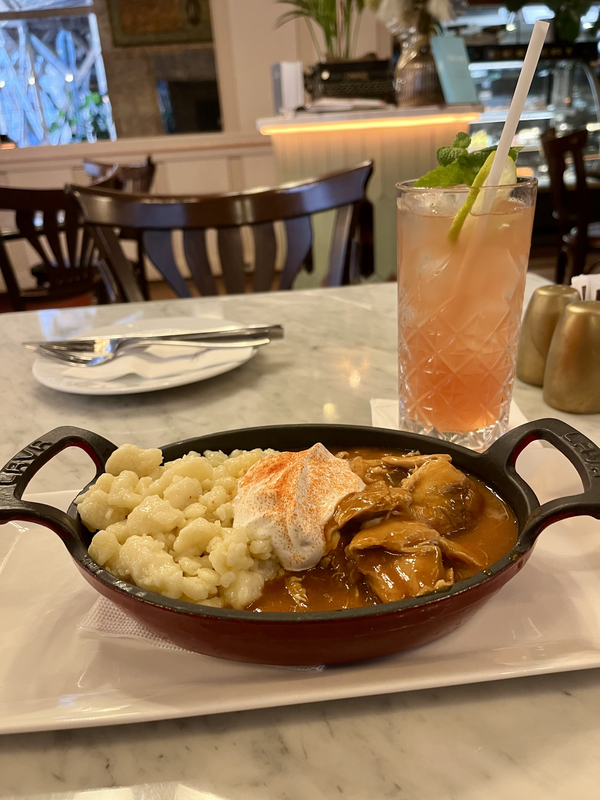
Csirkepaprikás (Chicken Paprikash) at Central Cafe
One of the most iconic spots in Budapest is the Central Cafe, a historic restaurant dating back to 1887. Because of its central location adjacent to the Budapest University Library in the Pest side of the city, the cafe has over the years been a location for socialites, writers, artists, and poets to hang out and grab a bite or a drink. It was the intellectual heart of the city. The cafe closed in 1944 when Soviet forces occupied Budapest, but was restored to its former glory and reopened as a cafe in 2000.
The cafe is elegant and bright and a great spot to experience classic Hungarian fare. Upon my arrival to Budapest and after checking into my hotel, I headed here for a lunch of csirkepaprikás (chicken paprikash) with butter noodles. Chicken paprikash is a traditional dish consisting of chicken simmered in a creamy paprika sauce.
Gulyásleves (Goulash) at For Sale Pub
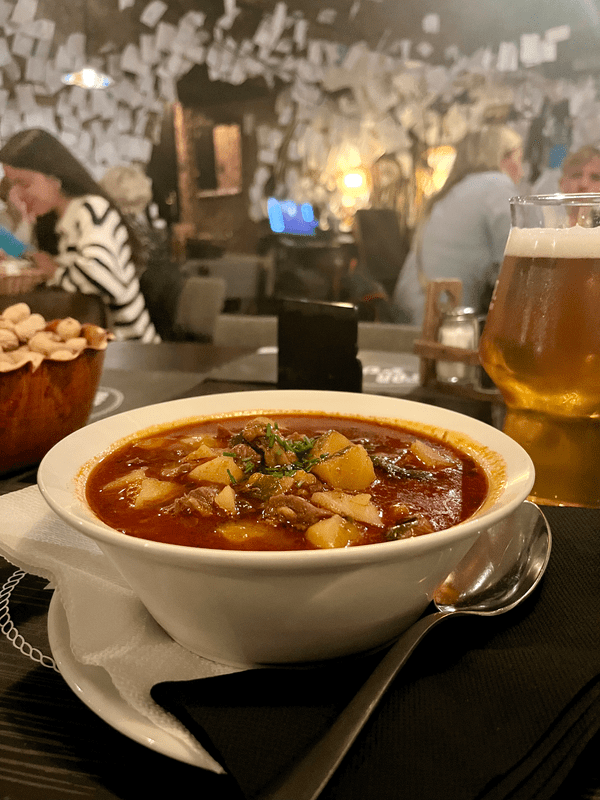
One of my simple pleasures in life is a good neighborhood dive bar, and For Sale Pub in Budapest is one of those unpretentious gems where you can hang out, drink, and get a good meal. I had heard about this place ahead of my trip and planned to go, but was even more thrilled once I arrived in Budapest and got my bearings and realized it was only a block or two from my hotel. After an afternoon of wandering around in the rain, it was the perfect place to stop in for a beer and a hot bowl of goulash.
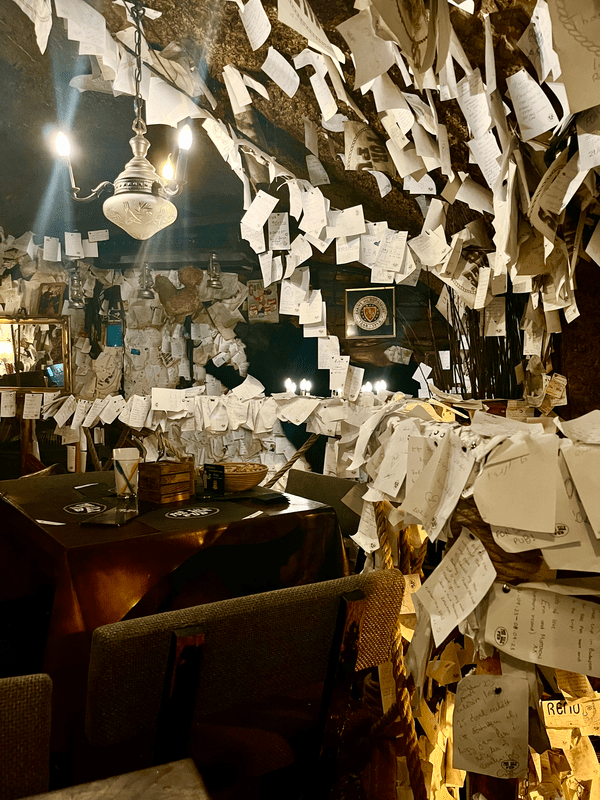
For Sale Pub is a small bar with its walls covered in traces of its patrons: you can pin drawings, business cards, and notes on the wall to leave your mark. The floor is covered in straw, and you are given a bowl of complimentary peanuts which you can shell right onto the floor. I was seated in a cozy corner upstairs, perfect for dining and enjoying the live music coming up from the first floor without it being too loud. The goulash hit the spot. Hungarian-style goulash is a soup with beef, vegetables, and of course plenty of paprika. The dish has its origins in Hungarian cattlemen who were often camped out for days tending to their cattle and had to eat what they could easily carry and prepare in a single pot.
Lunch and a Sweet Treat at Café Gerbeaud
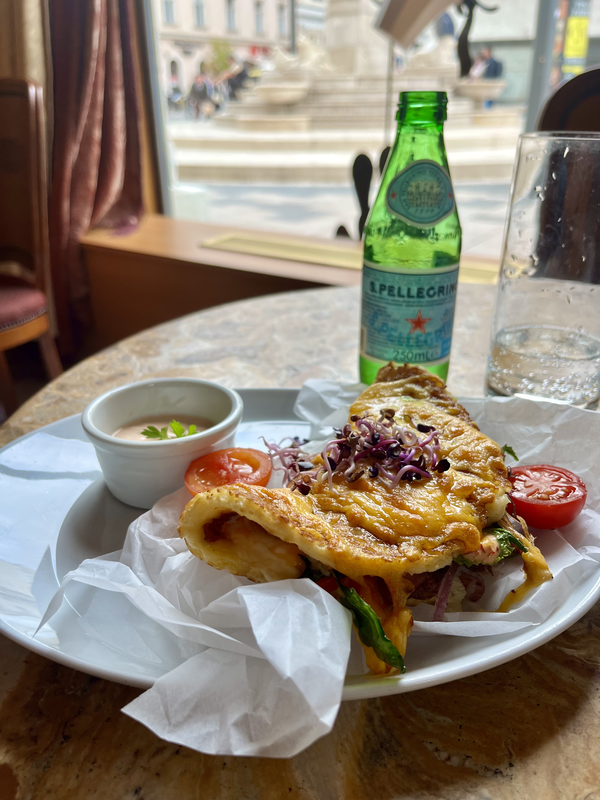
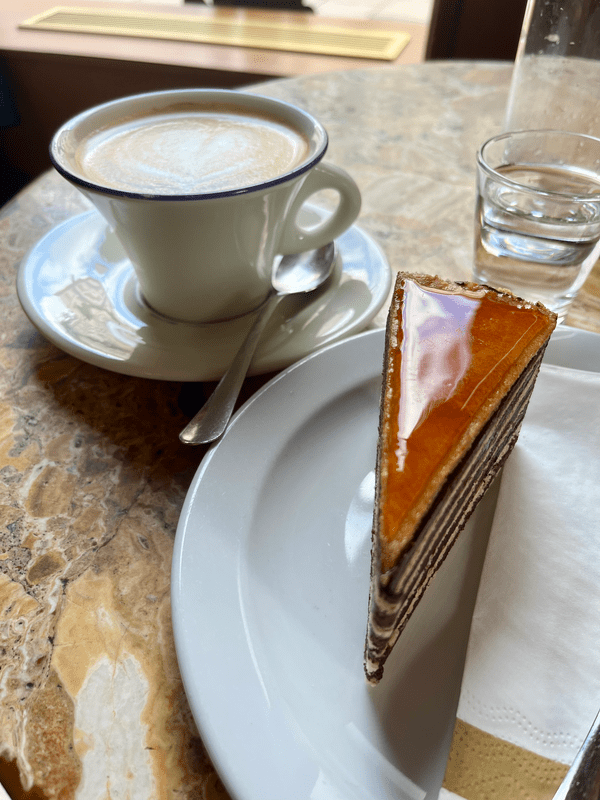
On Vörösmarty Square in the heart of Pest sits Café Gerbeaud, a traditional coffeehouse started in 1858 by a man named Henrik Kugler and later maintained by confectioner Émile Gerbeaud. I grabbed a little table by a window perfect for people-watching to enjoy lunch at Gerbeaud. I ordered the Kámi Csirkés Tócsni, a potato pancake filled with fresh chicken from the restaurant’s family farm in Kám, Hungary, topped with cheddar cheese and salad and served with spicy sour cream on the side. Being that Gerbeaud has such a longstanding confectionery tradition, dessert is a must, so I ordered the Dobos torte, a sponge cake that is layered with chocolate buttercream and topped with hard caramel. This cake was first created by a Budapest deli owner and chef named József C. Dobos in Budapest and debuted at the 1885 National General Exhibition of Budapest, with Emperor Franz Joseph and Empress Elisabeth being among the first to try it.
Dinner at Rosenstein Vendéglő
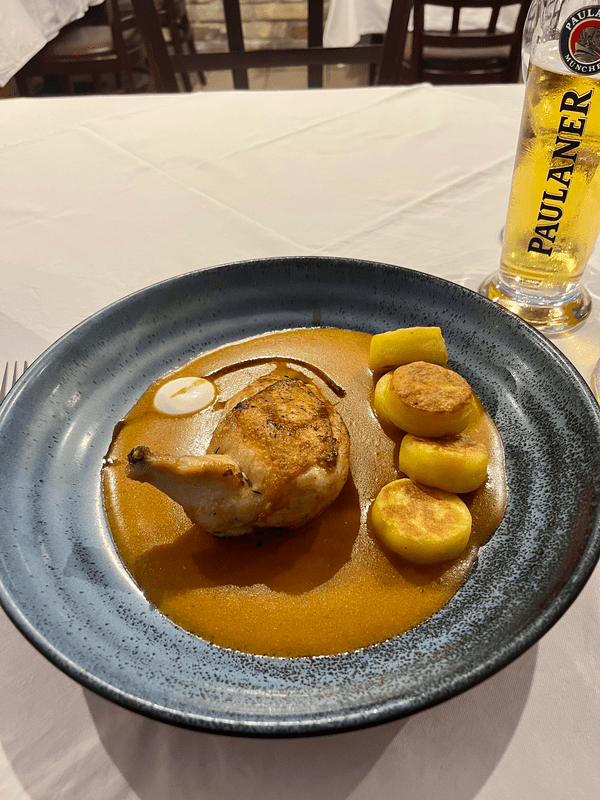
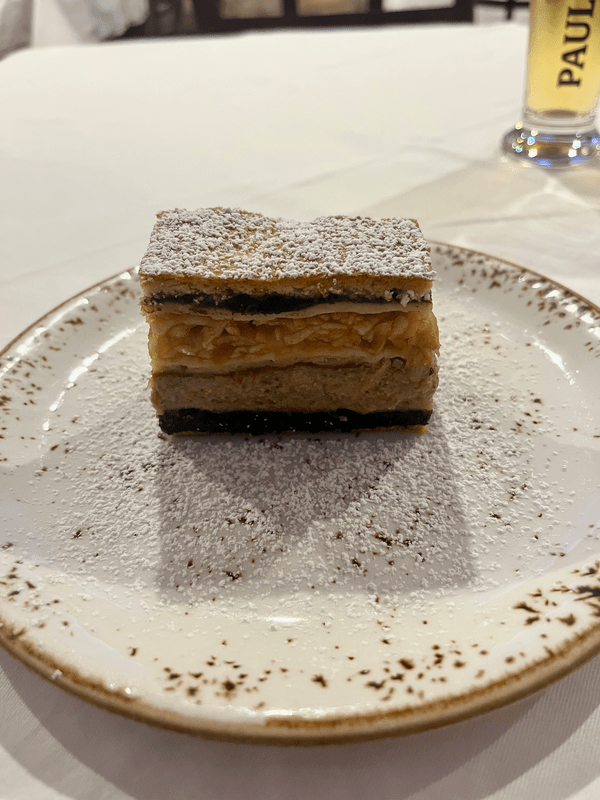
Rosenstein Vendéglő sits a little across town in the Jewish Quarter. It was opened in 1996 by Tibor Rosenstein, a Jewish-Hungarian chef who survived the Holocaust and whose parents were both murdered at Auschwitz. Rosenstein opened his restaurant to preserve the tradition of Jewish-Hungarian cooking, and it’s since become a culinary destination in Budapest with an extensive menu and top-notch service. I took the metro to the restaurant one evening for dinner – it’s just steps from the Budapest-Keleti rail station, making it very easy to get to from other parts of the city. The menu is pages long with an extensive variety of meat, fish, and poultry dishes. I enjoyed my dish of pan-fried chicken supreme with paprika sauce and Hungarian potato dumplings. Inspired by overhearing the waiter discussing dessert with the table next to me, I also decided to try Flódni for dessert. Flódni is a traditional Jewish-Hungarian cake layered with apple, walnuts, poppy seeds, plum jam, and chocolate. Delicious!
Cafe Brunch
On my last day in Budapest, I was catching a train to Vienna around noon so I had time for a little morning walk and decided to take myself out for a hearty breakfast. I found Cafe Brunch on Google Maps not far from my hotel – they have several locations throughout Budapest but the one I ate at was on Fővám tér near Central Market Hall. It’s a cute small cafe offering all-day breakfast foods. I ordered the Omlett Magyarosan (Hungarian Omelette) which had Hungarian sausage, onion, spicy green peppers, and smoked cheese. It was delicious, and those peppers were definitely spicy!
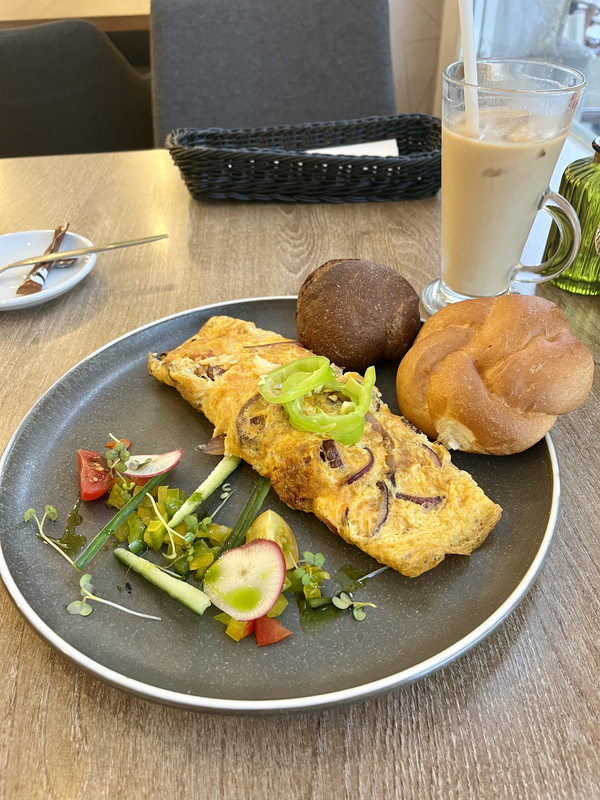
As a lover of spice, I greatly enjoyed Hungarian cuisine and am now a fan of putting paprika in everything!

 C to Shining C
Leave a comment