An important seaport city on the Baltic coast, Gdańsk has been a contested area throughout history. Early Gdańsk was part of the Polish state, but was annexed by Prussia and later incorporated into the German empire in 1871. From 1807-1814 and 1920-1939, it operated as a free city-state known as the Free City of Danzig. In September 1939, Gdańsk’s Westerplatte peninsula was the site of the first battle of the German invasion of Poland, thus beginning the Second World War. Danzig became a part of Poland after the war as its borders were redrawn and territories recovered. Today it’s the sixth largest city in Poland and one of the country’s most-visited tourist spots. The Old Town is completely charming, with streets full of colorful “Dutch Mannerist”-style houses restored after the destruction from the war. Gdańsk was my first stop on a three-city Polish adventure in December and I fell in absolute love with it.
Disclaimer: This post contains affiliate links. This means if you choose to make a purchase after clicking on one of the links, I earn a small commission at no cost to you. I only recommend businesses that I personally use and any commission earned goes to maintaining C to Shining C.
Stay
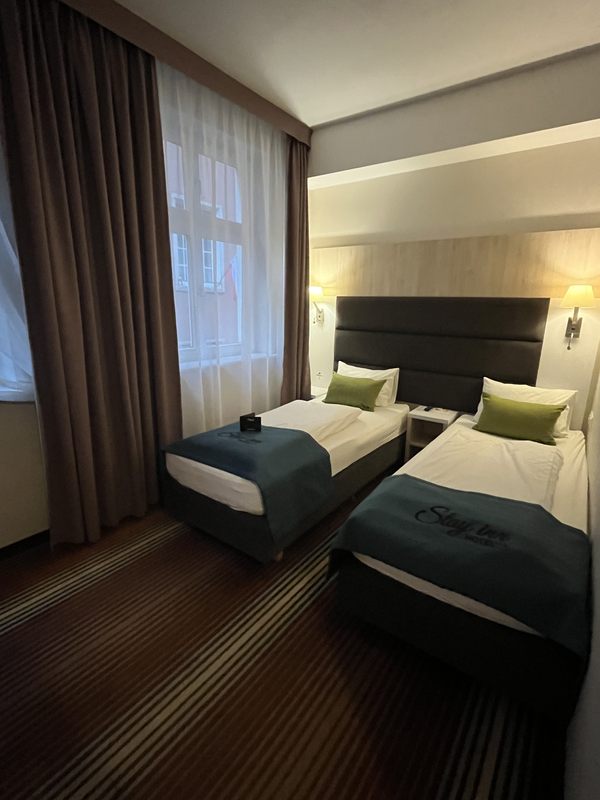
I stayed at the Stay Inn Hotel Gdańsk in the heart of Old Town. The hotel has a very contemporary feel and was comfortable with modern amenities. It’s in a great location, across from St. Mary’s Church and just a block off the Długi Targ, the city’s main square. There are plenty of restaurants on the street and the MONO Kitchen restaurant connected to the hotel is a delicious option. Being in the heart of everything, the hotel can be a bit noisy – in addition to the bells of the church, I could hear loud people leaving a bar on the street outside my window until 2 or 3 am every night. Luckily the hotel provides earplugs for sleeping but if you’re a light sleeper this place might not be for you!
Getting Around
The easiest way I found to get into central Gdańsk from the airport was via bus. I took the 210 bus to the Hucisko stop, which was about a 10-minute walk from my hotel. It’s important to note that when you take the bus, you’ll want to make sure you have a ticket and validate it in the bus’s machines upon boarding. Poland is one country that takes its public transit fares very seriously, and multiple occasions throughout my time in Poland, a transit employee came onboard to check tickets. If you get caught without a valid ticket, you’ll face a hefty fine.
Once in central Gdańsk, I didn’t use public transit the rest of my time there. It’s a very walkable city and most of what I wanted to see was within 20 minute walk of my hotel. The main train station, Gdańsk Główny was also only a 15-minute walk from my hotel, making it easy to get to for a day trip to Malbork and for catching my train on to my next destination.
Things to See and Do
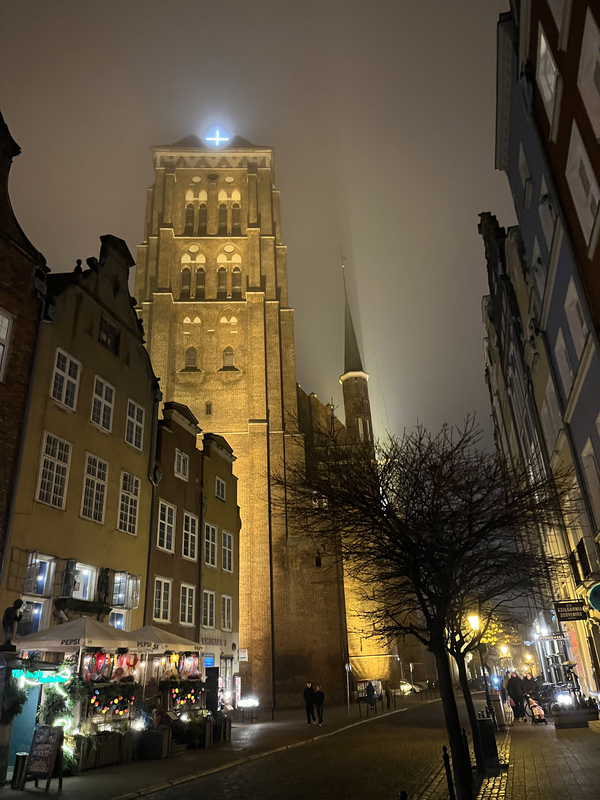
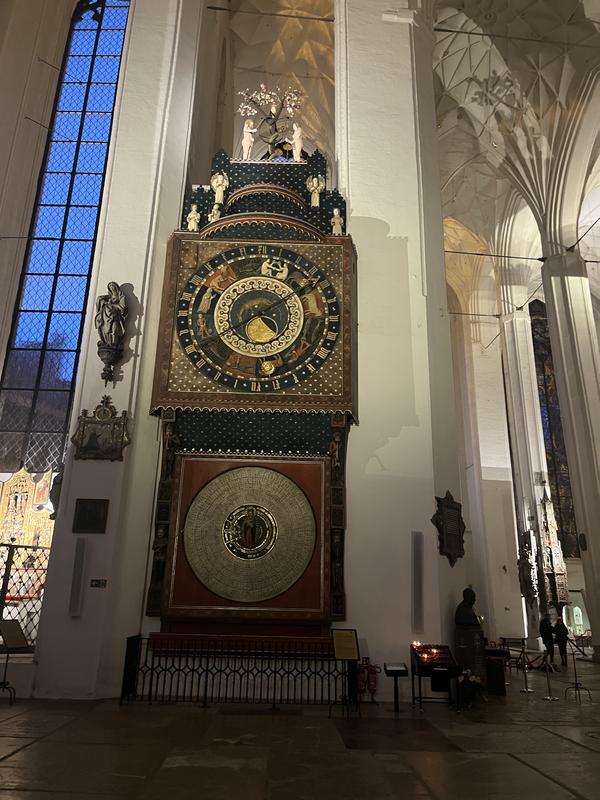
Upon checking into my hotel and dropping bags, I headed across the street to St. Mary’s Church, a Roman Catholic church built in 1502. The enormity of this church is awe-inspiring. Its brick facade towers above the rest of Gdańsk and during my time there, its tower topped with an illuminated cross became my guiding beacon for finding my way back to my hotel without opening Google Maps. You can tour the cathedral’s cavernous interior as well, with one of the highlights being a restored fifteenth-century astronomical clock.
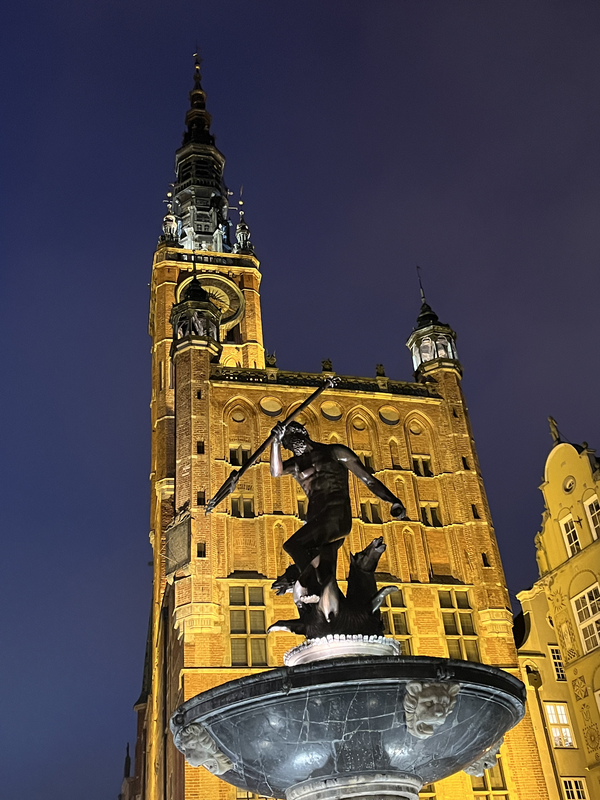
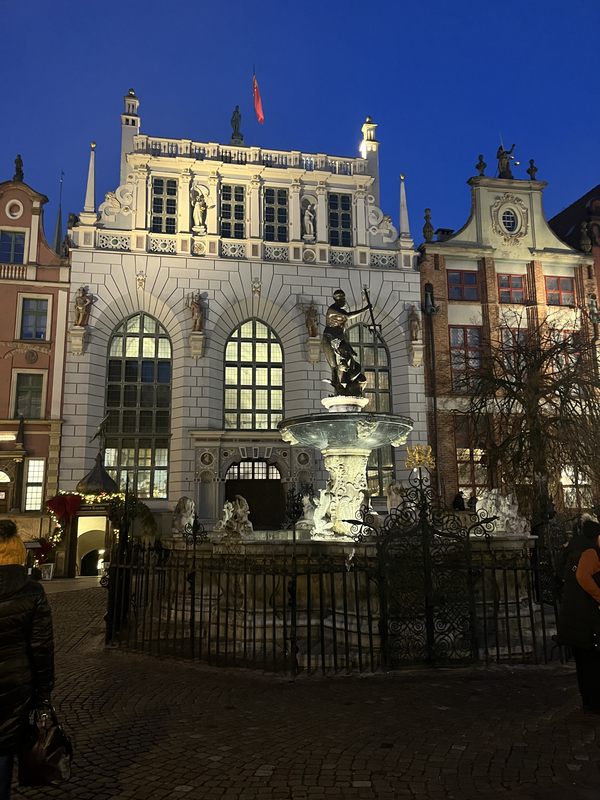
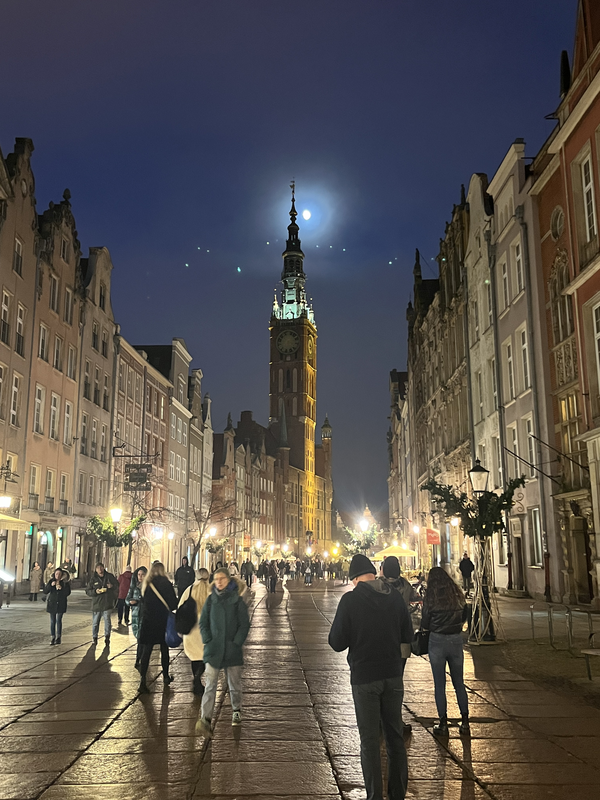
I next headed around the corner to Długi Targ (Long Market Square), the heart of Old Gdańsk. Originally a merchant road, this square and the adjoining Ulica Długa (Long Street) became the city’s main street, inhabited by some of the city’s most prominent and wealthy citizens. It’s one of Gdańsk’s most picturesque streetscapes. At the point where the square meets Ulica Długa, the Gothic spire of the Main Town Hall dominates the skyline. You can tour the museum, though my schedule didn’t align with the museum’s hours, so I’ll have to put that on my list if I ever find myself back in Gdańsk. Another prominent building on the square is the 1350 ornate facade of Artus Court, once a gathering place for merchants. In front of Artus Court is Neptune’s Fountain, built in the 17th century. Długi Targ and Ulica Długa are always bustling with tourist activity, lined with plenty of shops and dining options. Beautiful as it is during the day, there’s nothing like walking the street with a big glowing moon behind the tower of the Main Town Hall.
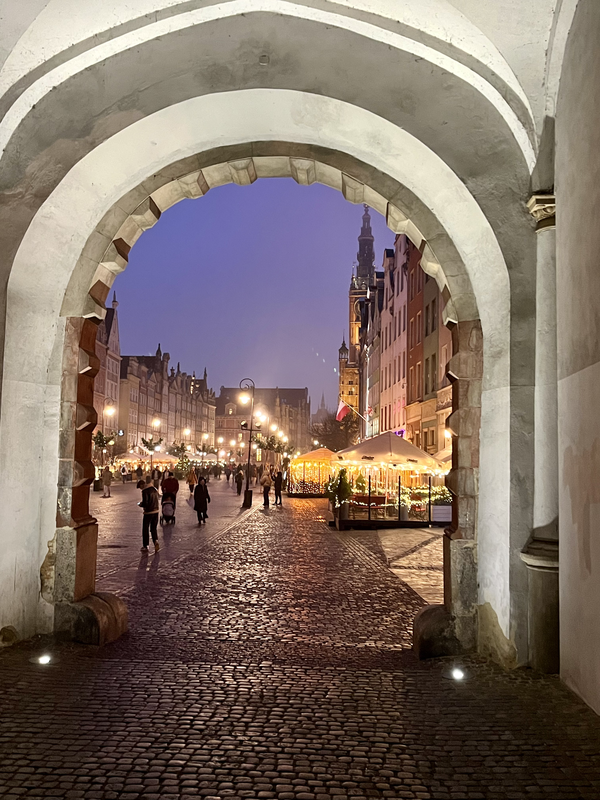
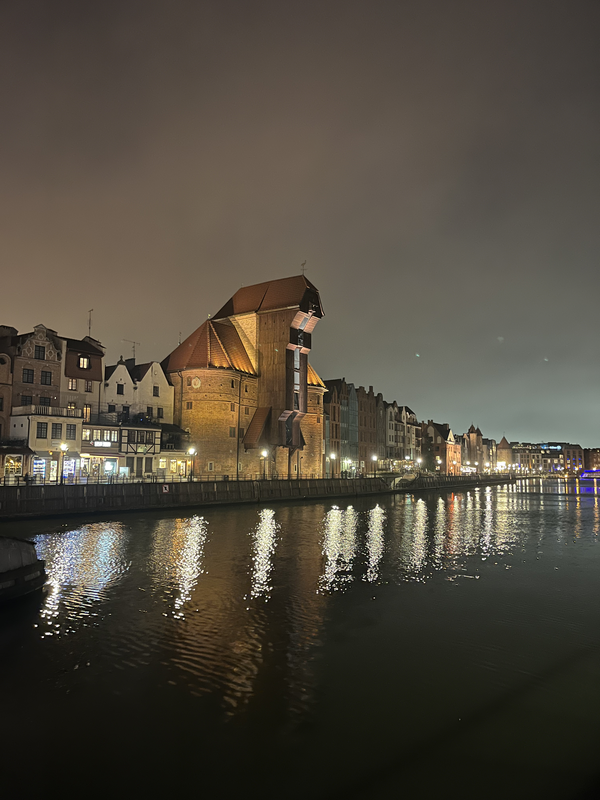
Venturing down the end of the Długi Targ and through the Green Gate, you come out onto the River Motława, one of the city’s many waterways. Both sides of the river offer a promenade that’s great for a stroll, with riverside dining options. If you wander across the bridge to Wyspa Spichrzów, the island, you’ll get another of the most iconic views of Gdańsk: the Crane, a symbol of the city’s history and significance as a hub of industry. This structure dates back to the 15th century and was at the time the largest port crane in medieval Europe.
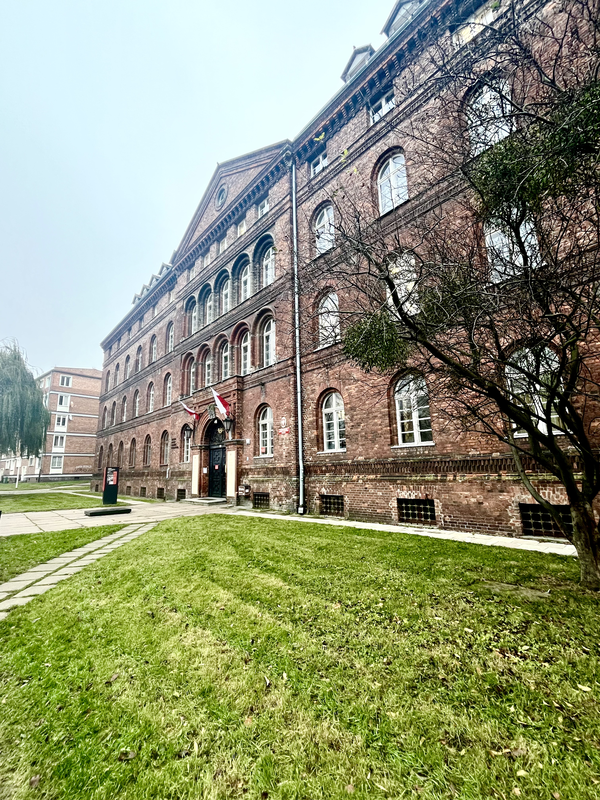
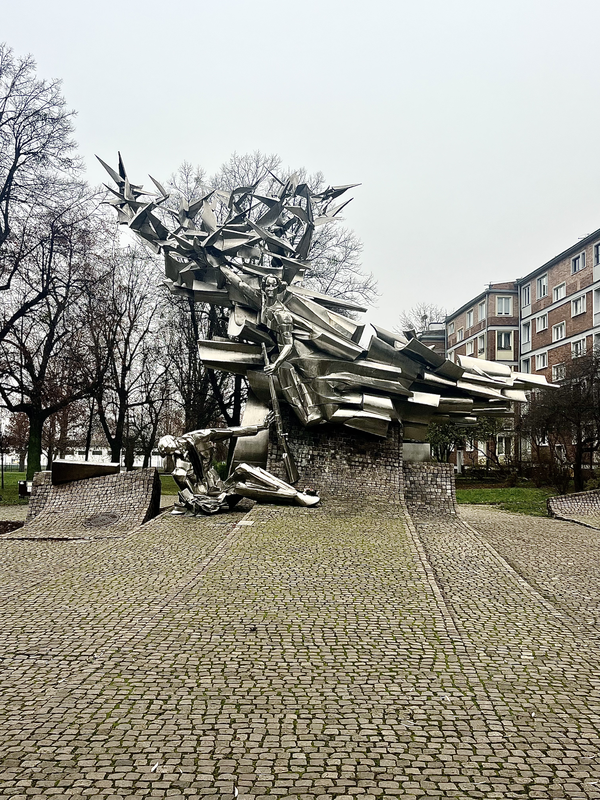
My second day in Gdańsk, I set out early to visit the Museum of the Second World War. It was about a fifteen minute walk from my hotel, and I enjoyed the walk. It was a misty winter morning and the city was peacefully quiet, with only the occasional resident out walking a dog or heading to work or school. En route to the museum, I stumbled upon the Museum of the Polish Post Office. It was closed for renovations so I couldn’t visit, but I paused to read some infographic signs outside the museum. On September 1, 1939 as the Germans staged their invasion of Poland at the Westerplatte, SS troops also attacked the Polish Post Office building. The Polish postal workers resisted and defended the building against the German attack for 14 hours, until it was set aflame and they were forced to surrender. Of the 58 people working in the building, 8 were killed and 6 died later in the hospital. The rest were arrested and 38 of them sentenced to death, and later shot and killed. A monument in front of the building memorializes the Defenders of the Polish Post Office.
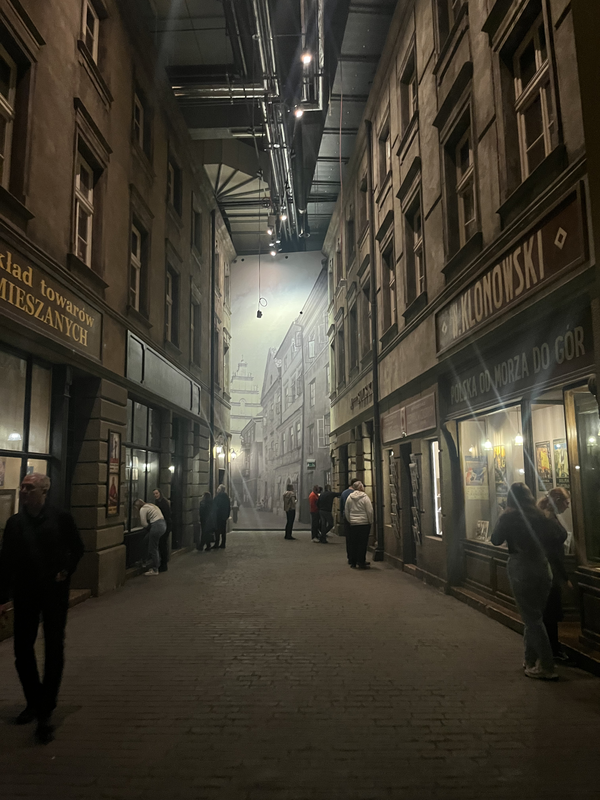
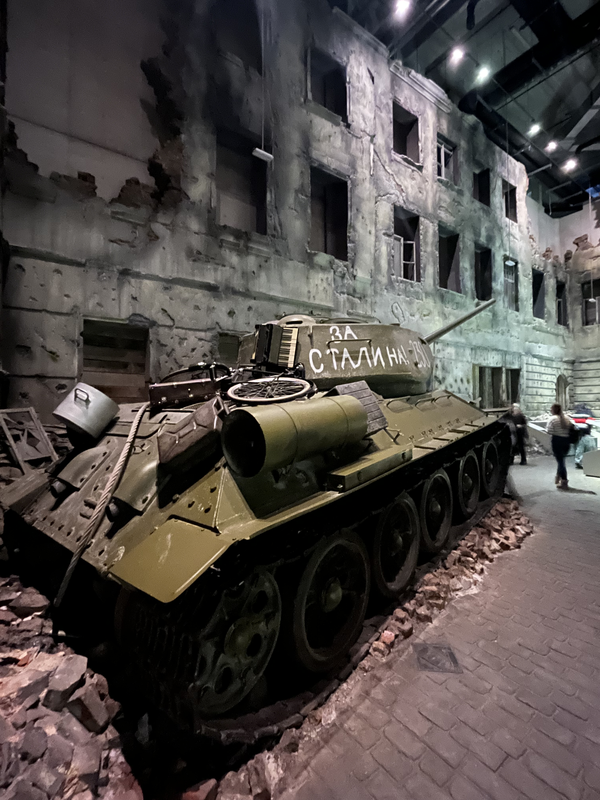
I arrived at the Museum of the Second World War right around opening. I didn’t realize it in advance of visiting, but Tuesdays are free admission days, and it happened to be a Tuesday, so I only had to pay the cost of renting an audio guide. The main exhibition is over 6,000 square meters, making it one of the largest historical exhibitions in the world. It tells the full story of World War II, from the rise of fascism through the aftermath of the war and its implications on life in the present day. One of the most striking parts of the exhibition for me was the rooms depicting views of the “before” and “after” – a room replicating what a pre-war Polish streetscape looked like, and at the end of the exhibition a haunting room made to look like a bombed-out Polish streetscape, showing the devastation felt across much of Europe and Japan. The museum was a deeply reflective and sombering experience, especially as I was able to see so many parallels to current events in my own country.
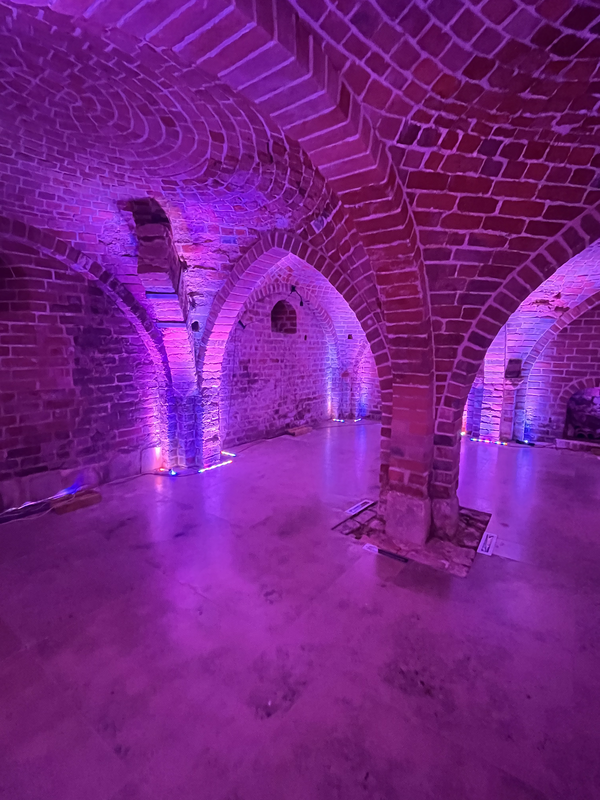
After lunch, I headed to a small museum that’s a little more “off-the-beaten-path” but very much worth the visit: the Romanesque Cellar. The cellar is the remains of a 13th-century Dominican Monastery. The part that you can walk through is what was once a kitchen and dining room area for the monastery, created in a Romanesque style of architecture. The cellar was only just discovered in 2005, and underwent archaeological excavation before being opened to visitors in 2014. You begin your tour with a short video explaining the history of this early settlement and monastery, and then enter the dining hall. Also included is a 16th/17th-century ossuary found at the site, believed to be a consolidation of graves from St. Nicholas Church as space became limited.
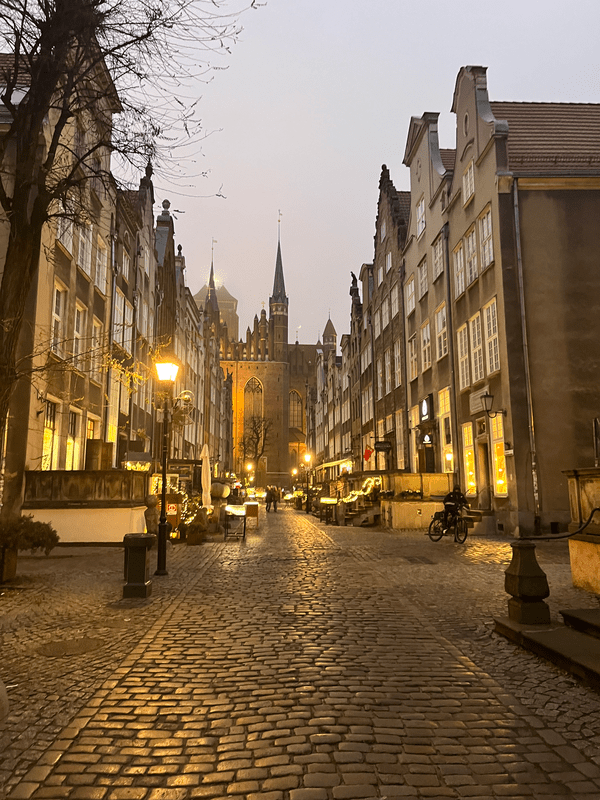
In the early evening I took a stroll down Ulica Mariacka. This is one of the most magical streets in Gdańsk, a narrow cobblestoned street with historic architecture – while much of Gdańsk’s streets were reconstructed after the war with new materials, much of Mariacka was constructed using pieces of salvaged architecture. In the evening the street glows from the cafes and jewelers lining it – Mariacka is the place to go to shop for amber, a specialty here as Gdańsk is known to be the capital for Baltic amber. I didn’t even know that I wanted a piece of amber jewelry until I found myself window shopping here and being entranced by the resin’s golden glow, and decided on a little moon-shaped necklace charm to take home as a souvenir.
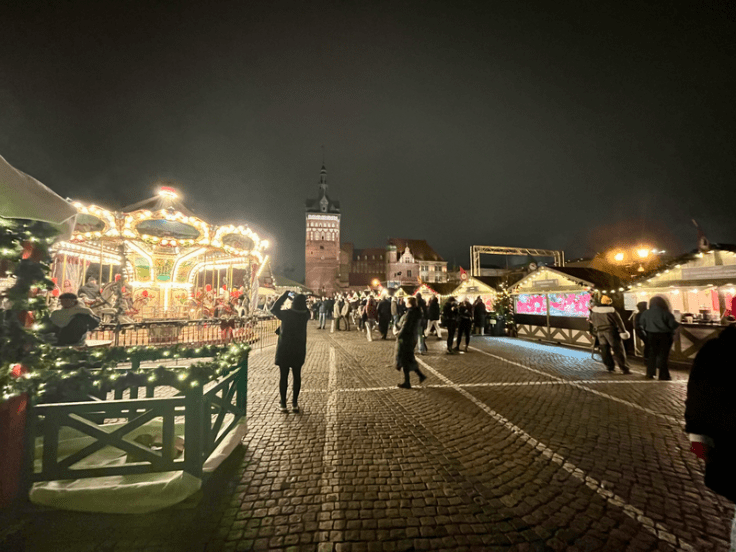
If you’re looking for even more charm and are staying in Gdańsk during late November or early December, visiting its Christmas Market is an absolute must. In fact, it’s been voted the best Christmas market in Europe. I found myself here multiple times throughout my stay, whether it was to shop souvenirs, eat delicious Polish classics, or just to enjoy a beer next to a heat lamp in the middle of a winter wonderland. Read more about this one and other Christmas markets I hit while in Poland: Exploring 3 Must-Visit Polish Christmas Markets.
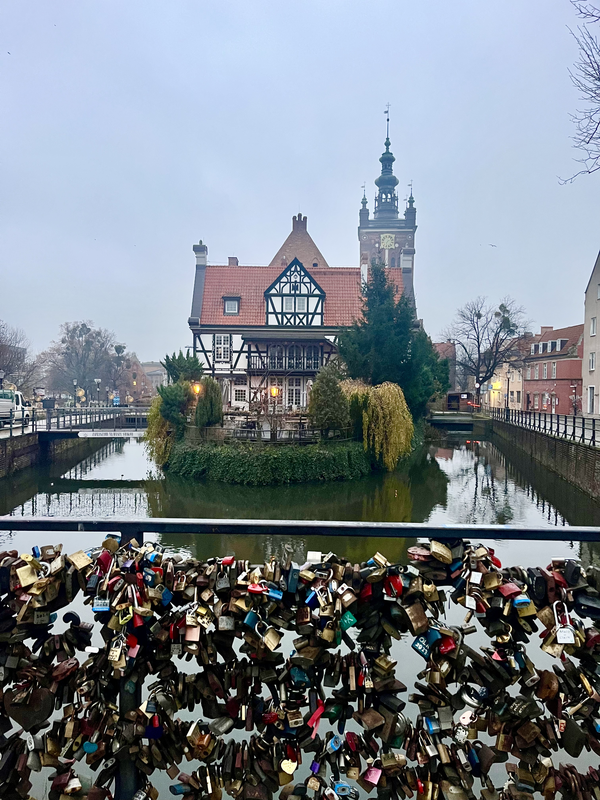
On the way to the Gdańsk Główny train station from where I was staying in Old Town, I stopped off at one of the city’s other most photographic spots: Most Chlebowy (Bread Bridge), a 14th-century bridge across a canal. It’s so named because this was a spot that vendors would set up to sell bread in the Middle Ages. It’s also known as the “Bridge of Love” as its iron railings have become covered in padlocks, Gdańsk’s version of a “Love Lock” bridge. The view from the bridge is stunning, with the half-timbered Miller’s Guild House and beyond it the tower of St. Catherine’s Church.
There are a few locations that make good day excursions if you’re based in Gdańsk for a few days. I took a day trip out to Malbork Castle, a UNESCO World Heritage Site and the largest castle in Europe by land area. The castle sits a 30-minute train ride outside the city, making it an easy trip. It took me about 4 hours to tour the castle, and after eating lunch and wandering Malbork for a bit, I was back in Gdańsk by late afternoon. In warmer months, the coastal resort town of Sopot is another option for an excursion from Gdańsk.
Eat and Drink
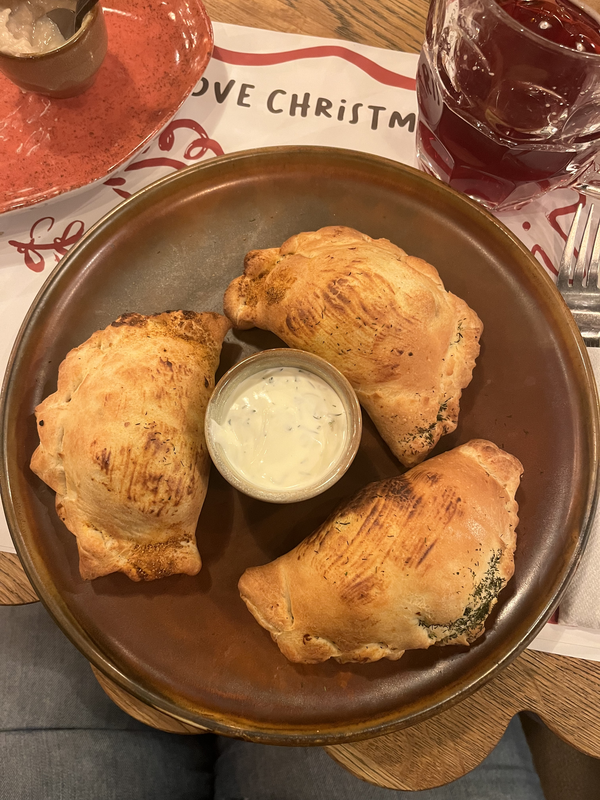
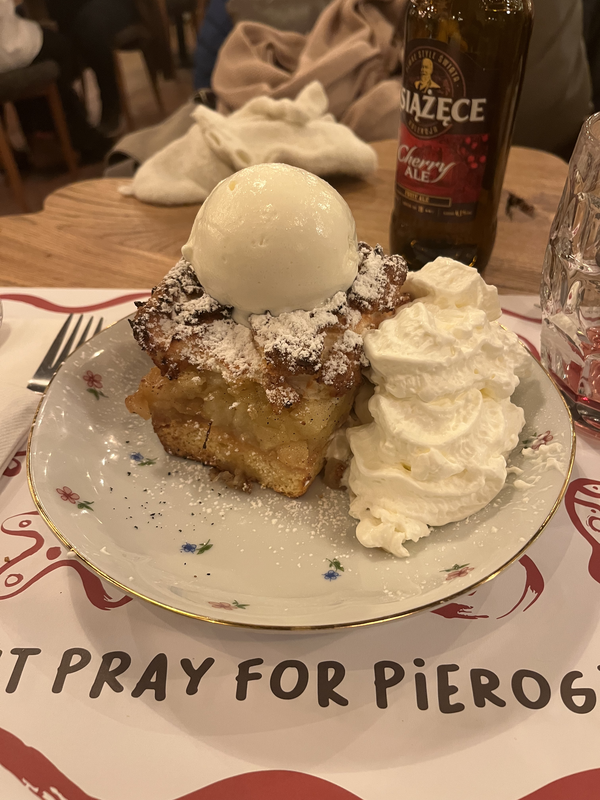
Gdańsk has no shortage of great restaurant options for trying both traditional Polish foods, and cuisines from around the world. My first food stop on my first evening in Gdańsk was Pierogarnia Stary Młyn. There are two Gdańsk locations, but I was wooed by the coziness of the Chmielna location along the river as I was wandering. Throughout Poland you’ll encounter restaurants called “pierogarnia” and they’re exactly what they sound like – restaurants specializing in those delectable little Polish dumplings called pierogi. Pierogarnia Stary Młyn was an absolute dream for a pierogi-lover, offering pierogi with a variety of fillings, both sweet and savory, and in both an oven-baked (piecuchy) or traditional boiled (lepiochy) format. I ordered a trio of mix-and-match piecuchy, with my favorite being the Diabelskie one with stewed beef, pickles, peppers and onions. I was then easily persuaded by the waitress to order the hot apple pie with a scoop of ice cream for dessert, and it was heavenly.
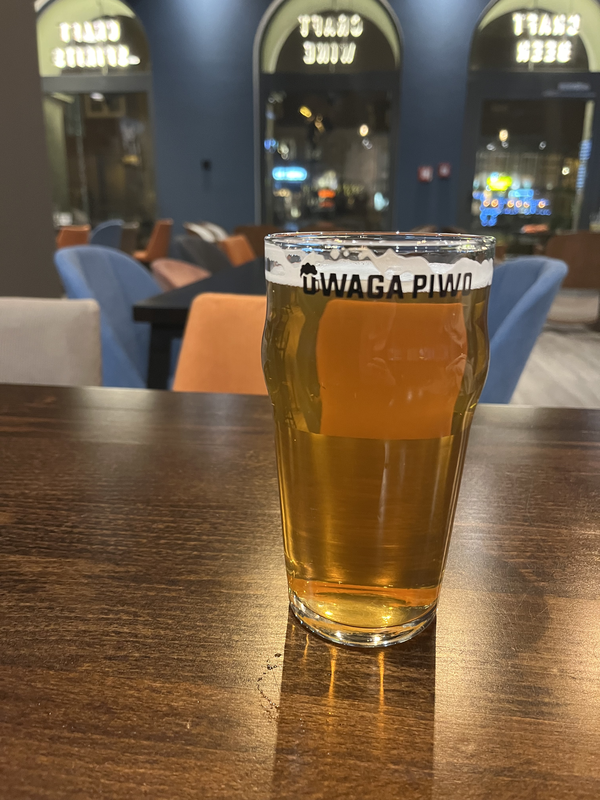
I swear I didn’t plan it this way, but the street my hotel was located on was Ulica Piwna , or “Beer Street,” so named because it was once home to the brewers of Jopenbier, a style of beer brewed in then-Prussian Danzig. And what’s even better for a beer-lover than staying on Beer Street itself? Finding a brewpub a few doors up from your hotel on Beer Street! I spent my first evening in town at Uwaga Piwo, a trendy spot offering a full list of craft beers from Polish brewers. Beer heaven!
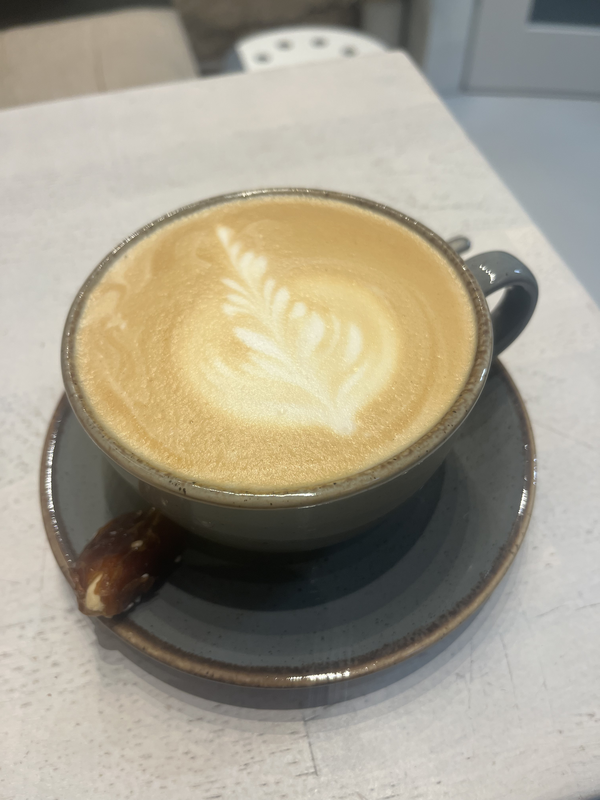
I’m not a huge breakfast person, so I usually opt out of the breakfast option at hotels when I travel and instead seek out a local coffee shop to grab a cup of coffee on the go. The morning I went to the Museum of the Second World War, I was on the hunt for a coffee shop I could hit on the way and decided to check out Sips. Gdańsk that I found on Google Maps. You go down a few steps to get into this tiny cozy cafe that boasts the “best brownies in the city.” I sat and enjoyed a cappuccino, and as I was preparing to leave, the employee was prepping the brownies for the day and offered me a sample. Delicious!
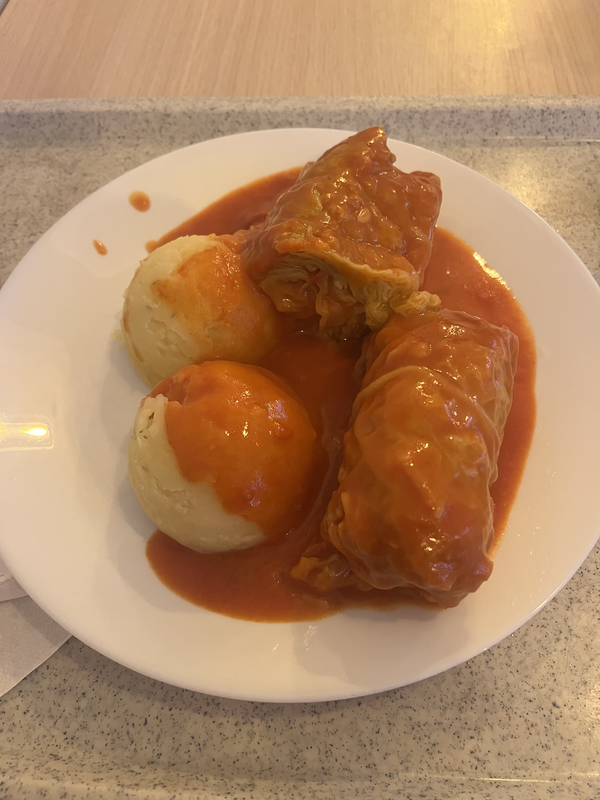
A must when you’re in Poland is to hit a bar mleczny, or “milk bar.” These are no-frills, cafeteria-style establishments where you can get some hearty homestyle Polish cooking at a low price. The first milk bar was established in 1896, but they gained popularity largely in the interwar and post-war years as places where the working class could go for a cheap meal during the workday. Many are still cash-only. You’ll go in and grab a tray and select your meal, often served to you by elderly ladies in the kitchen who tend to not speak English as fluently as the younger generation, and enjoy your eats in a communal seating area. Milk bars today are frequented by tourists, university students, and locals alike – still serving their original purpose of being a place where anyone can come in, grab a good cheap meal, and be on their way. Bar Turstyczny in Gdańsk is a prime example of a milk bar and I can’t recommend it enough if you’re looking for that experience. I hit it on my way back from the Museum of the Second World War to have a hearty late lunch of gołąbki, minced meat-stuffed cabbage rolls served in a tomato sauce, one of my favorite Polish meals. The ones at Turstyczny absolutely hit the spot.
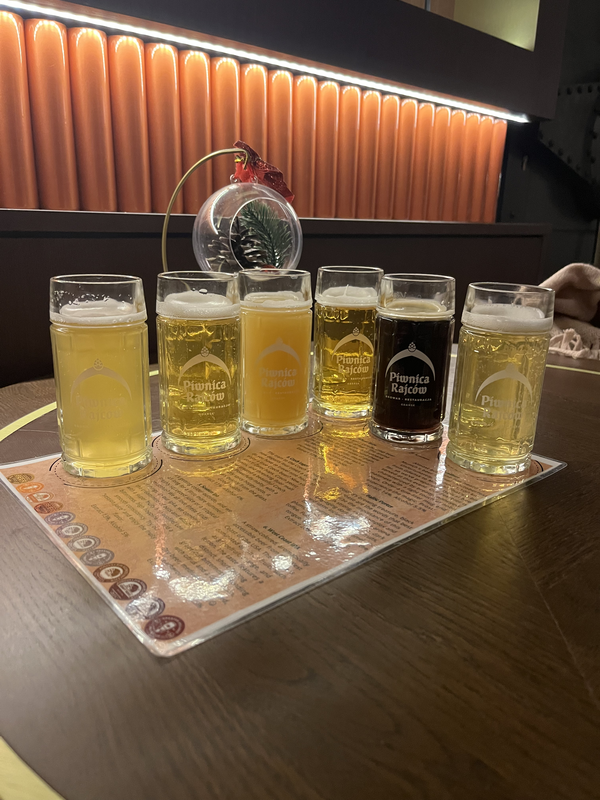
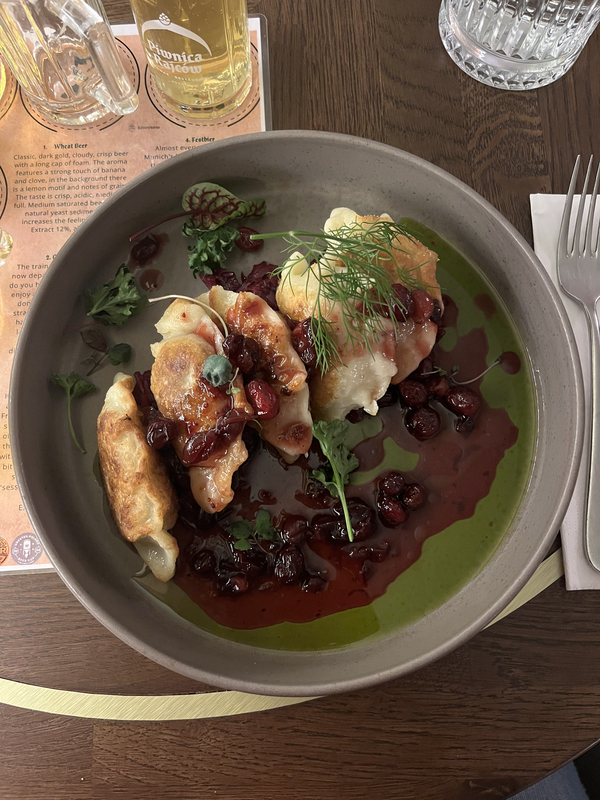
Later that evening, still full from lunch, I headed to Piwnica Rajców on the Długi Targ for a light dinner and drinks. This is a brewery and restaurant located in the basement level of Artus Court, with a lavish atmosphere. I was wearing jeans and a nice sweater, but anything more casual and I would have felt underdressed. It would be a great restaurant for a date, though it did just fine for a solo date night – they seated me at a little table in a quiet corner of the restaurant. I ordered a flight of the six beers they have on tap, and an order of roasted duck pierogi served with red cabbage, apple, cranberries, mead, and herbs. Wow. I still think about those pierogi a lot.
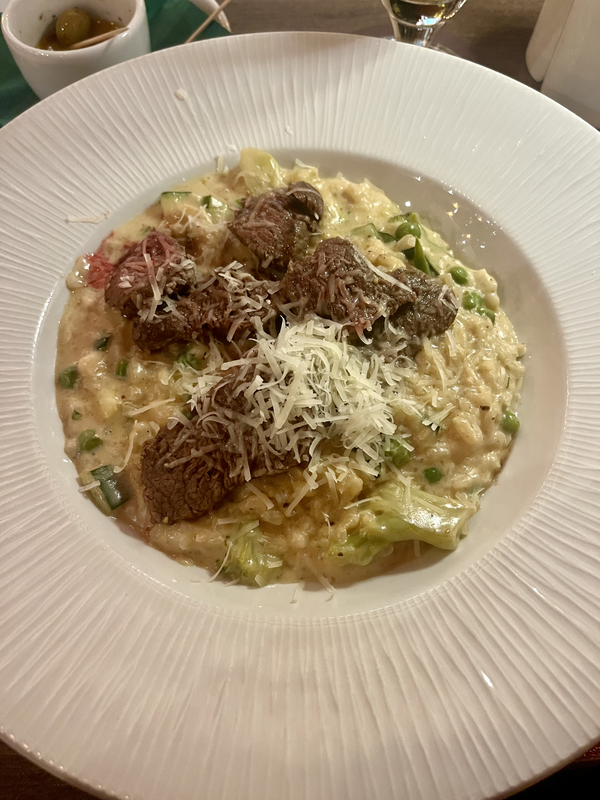
My last evening in Gdańsk after spending the day at Malbork, I decided to rest at the hotel for a bit and eat dinner at MONO Kitchen, the restaurant in the first floor of my hotel. I had received a discount card at check-in to the hotel that offered me a free beer or wine with purchase of a meal. MONO offers a creative menu with dishes drawing inspiration from around the world. I thoroughly enjoyed the risotto with beef tenderloin, made with truffle cream, spinach, shallots, white wine, and Grana Padano cheese. My waiter was wonderfully hospitable too, and upon serving my beer, made sure to teach me the Polish phrase for “cheers,” na zdrowie!
Gdańsk is home to some heavy history as the place that saw the first battle of the Second World War, and while that history is remembered through the city’s world-class museums and memorials, modern-day Gdańsk is full of incredible warmth and charm. From eating delicious pierogi to taking in the glow of the amber-lit Mariacka street, it’s hard not to be won over by this maritime city. It’s one of those cities that has a special place in my heart and I hope I get to go back one day.

 C to Shining C
Leave a comment