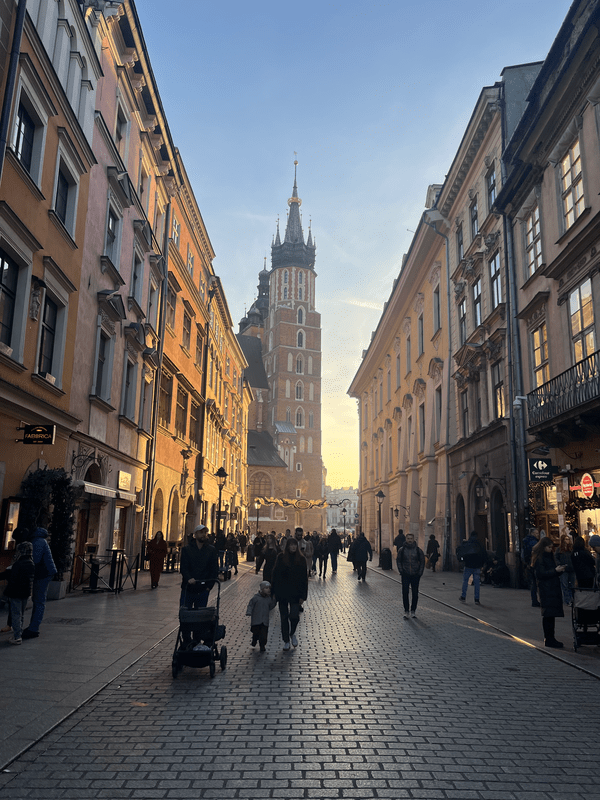
Kraków isn’t just Poland’s most popular destination. It’s a city that effortlessly balances a heavy past with a buzzing, modern present. From the medieval charm of the Old Town, encircled by the serene Planty park, to the trendy, history-steeped streets of the Kazimierz Jewish Quarter, there is a rhythm here that captures everyone. Best of all? It’s officially been voted the safest European city for female solo travelers. I’ve experienced it firsthand, and I couldn’t agree more: if you’re looking for a destination that is as secure as it is stunning, this is it.
Disclaimer: This post contains affiliate links. This means if you choose to make a purchase after clicking on one of the links, I earn a small commission at no cost to you. I only recommend businesses that I personally use and any commission earned goes to maintaining C to Shining C.
Stay
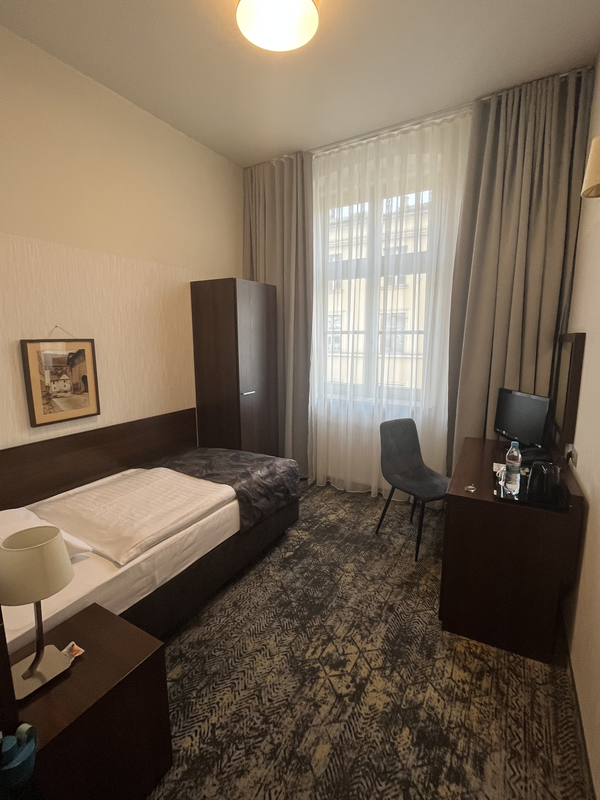
My stay was at the Hotel Rezydent right on ulica Grodzka, one of the main tourist streets in Kraków and a two-minute walk from Rynek Główny, the Old Town’s main square. The hotel has a clean, bright and modern feel and the staff were extremely friendly and helpful. As with any other hotel on a major pedestrian street, my stay was a bit noisy, but the hotel provided ear plugs for sleeping. For me, it was worth a little noise for the amazing walkable location of the hotel.
Getting Around
I obtained a multi-day transit pass for the duration of my stay in Kraków for ease of getting around. While the Old Town area is very walkable, I was able to hop on a tram to get to places like the Kazimierz neighborhood or the Schindler Factory museum. My flight home was out of Kraków, and due to my early AM flight time, I ended up ordering an Uber to the airport, although there are plenty of transit options to get there.
Things to See and Do
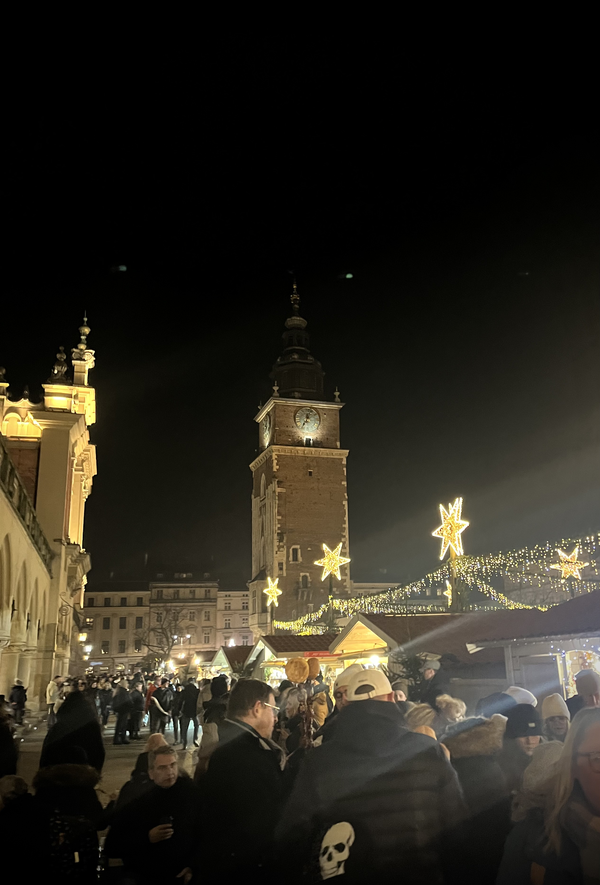
The heart of Kraków and first thing you’ll want to see is Rynek Główny (Main Market Square). The square is always full of energy, from breakdancers and street performers to tourists taking in all the restaurants and clubs lining the square. During December, it’s also the site of Kraków’s main Christmas Market, with artisanal crafts and traditional Polish foods. Read more about the Kraków Christmas Market and others I visited: Exploring 3 Must-Visit Polish Christmas Markets.
The focal point of Rynek Główny is the towering brick St. Mary’s Basilica. If you find yourself in the square at the turn of the hour, you’ll hear a bugle call – that’s a traditional bugle call known as the hejnał mariacki. Look closely at the tower of St. Mary’s and you’ll see the tiny figure of the bugler in the window playing the tune four times, once in each cardinal direction. It’s not a recording – buglers work in shifts to play the tune every hour on the hour, around the clock, a tradition derived from the medieval days when a bugler sounded off to open and close the city gates for the day.
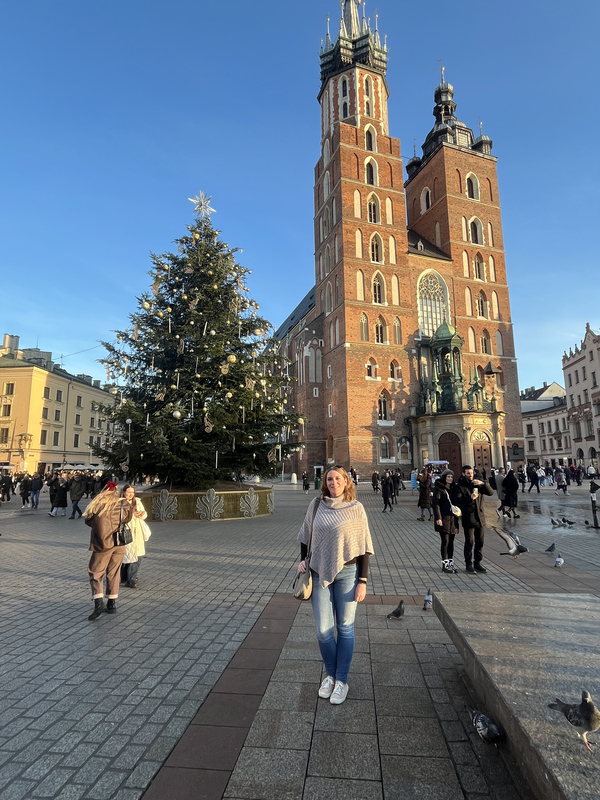
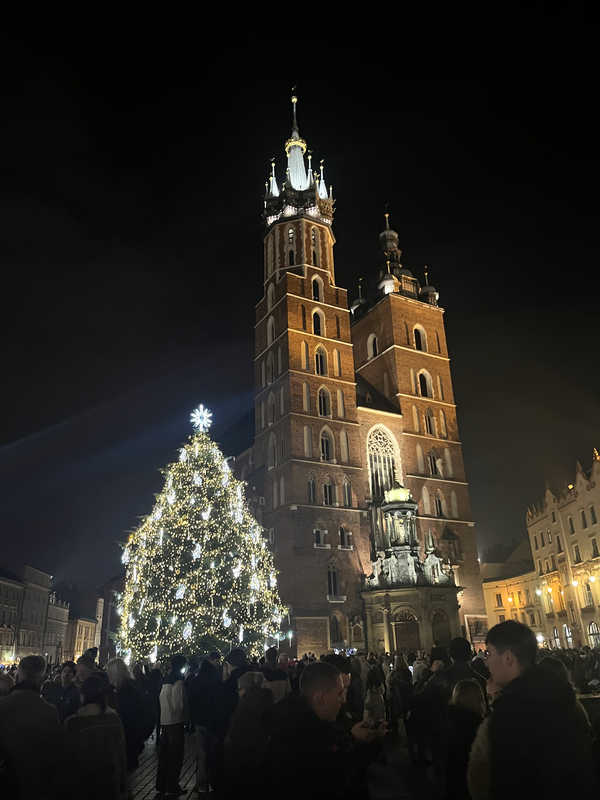
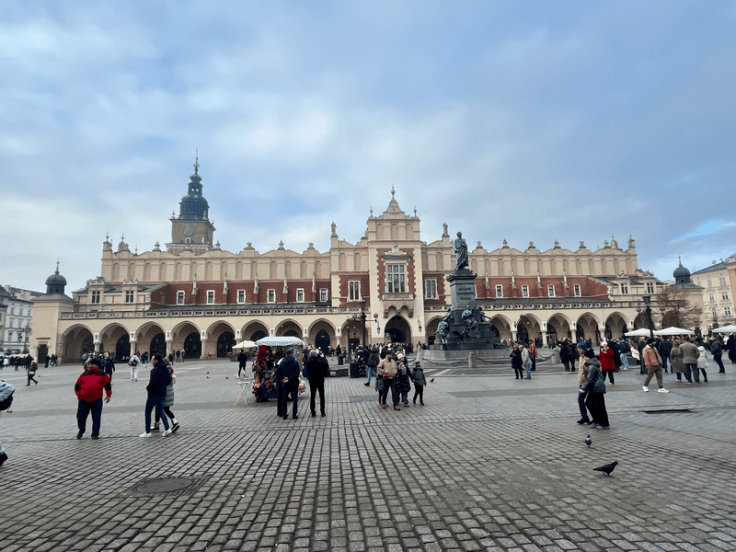
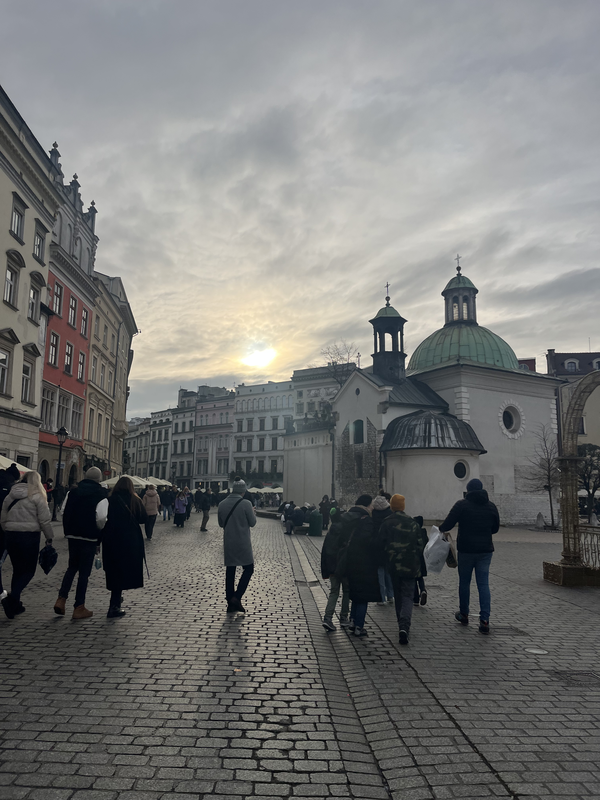
In the center of the square is Cloth Hall. This impressive building dates to the Renaissance period and served as a center of international trade for peddling goods from all over the world. Today it houses a marketplace full of local goods and souvenirs. Also in the square, you’ll find the Town Hall Tower, a remaining part of the original Town Hall that was demolished in 1820 as an effort to open up the square. At the intersection of Grodzka with the square, you’ll see the small Church of St. Wojciech, one of Poland’s oldest stone churches built in the 11th century.
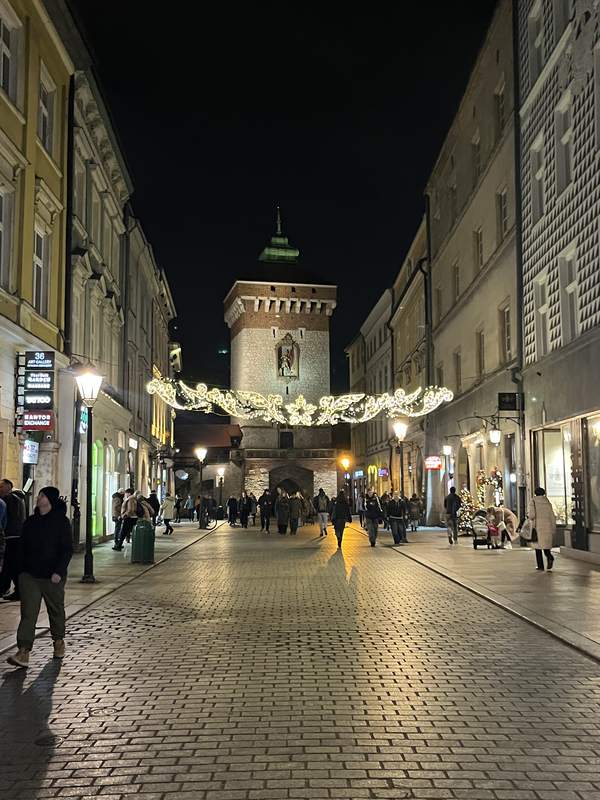
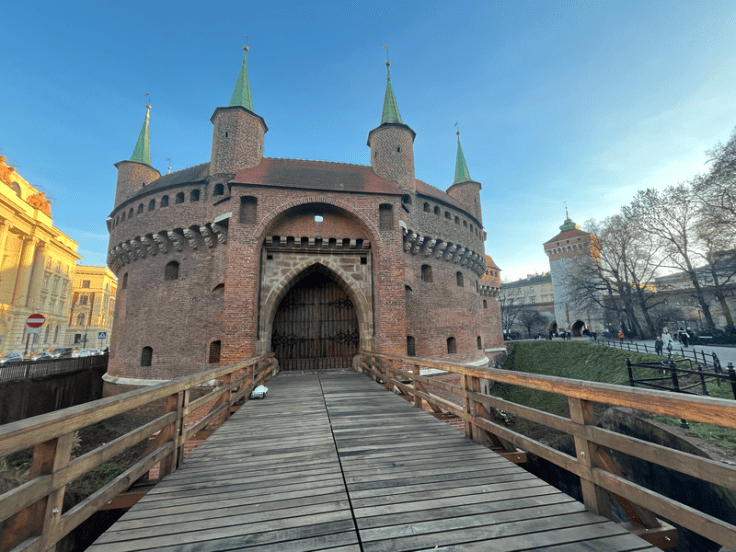
If you continue out the northeast end of the square past St. Mary’s, you’ll be on ulica Floriańska, a scenic historic street full of restaurants and shops culminating at St. Florian’s Gate, one of the city’s original fortifications. Just past the gate is the city’s moated Barbican, dating back to 1498.
Heading southeast out of the square is ulica Grodzka, one of Old Town’s main pedestrian thoroughfares. It’s a great street for just wandering or finding a great spot to eat, and will eventually take you to Wawel Castle. But along the way, be sure to stop at the intersection with plac Wszystkich Świętych to see the dragon in the second-story window on the corner. The Wawel Dragon is a Polish legend, living in a den under Wawel Hill and terrorizing the town’s residents while demanding offerings of cattle. Today the dragon is symbolic for Kraków, so you’ll see plenty of dragon motifs and souvenirs about the city.
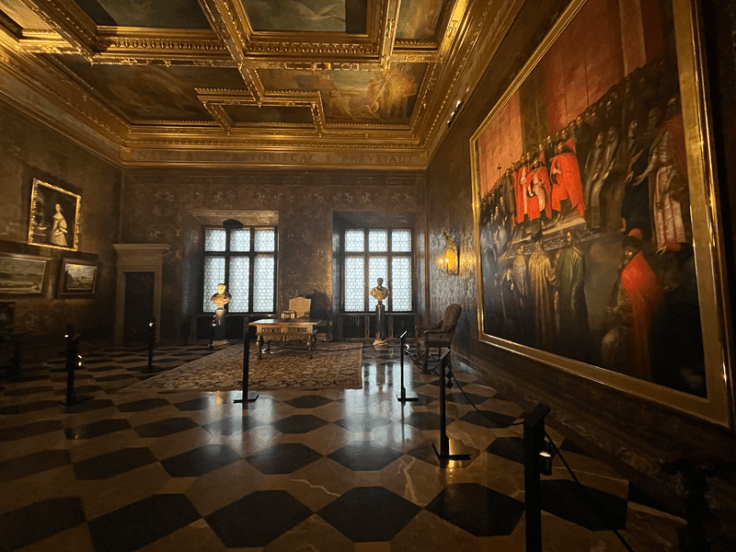
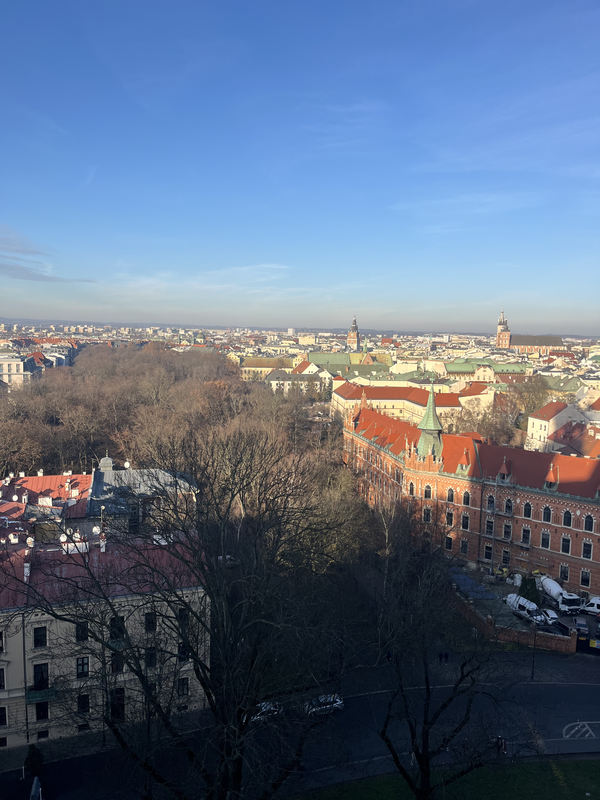
High on Wawel Hill overlooking the Vistula River, Wawel Castle is a fortified complex that was once the residence of Polish kings and is today open as an art museum, presenting precious pieces of Renaissance art and tapestries in the way the royal residences may have been decorated at the time. The complex is available to tour via a la carte tickets for the exhibitions, so you can choose to visit the parts that most interest you rather than paying a flat fee for everything. If I had more time I probably would have seen more, but I saw a good amount with tickets for just the main Castle collections and the Cathedral. In the Cathedral, you can ascend the tower for some of the best views of the city.
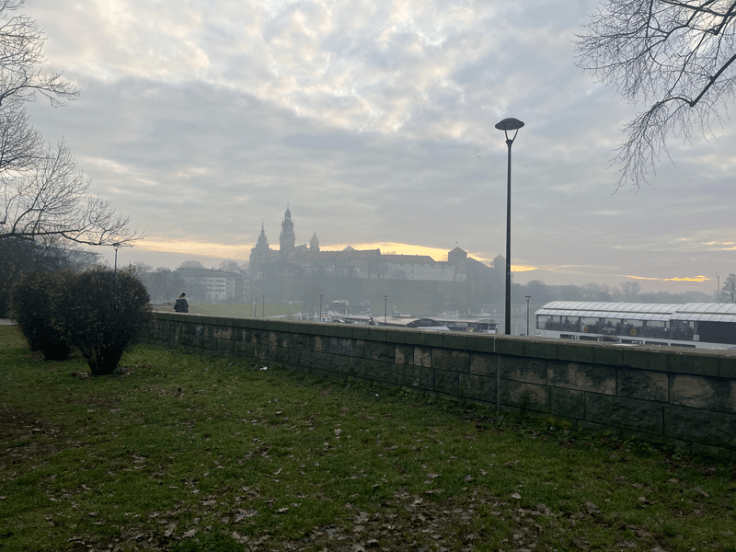
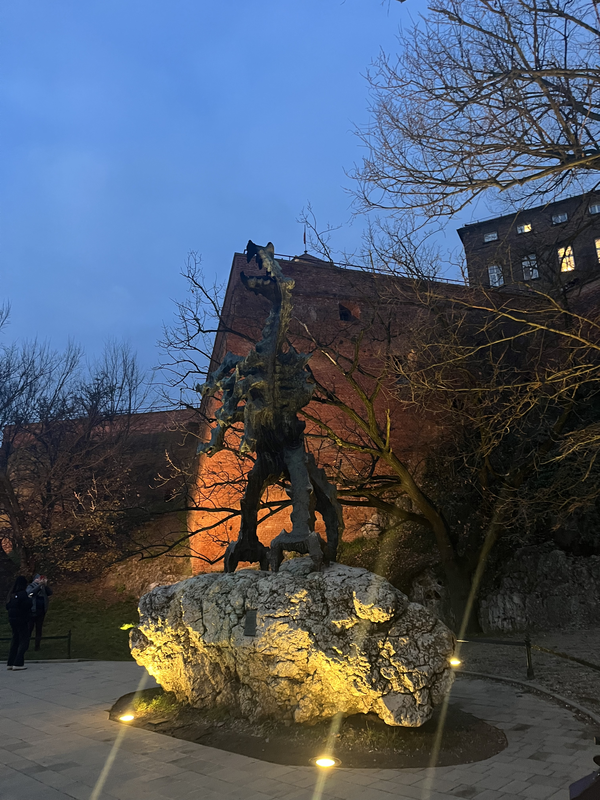
At the base of the hill along the Vistula River is the Dragon Statue, another portrayal of the legendary Wawel Dragon. I snapped a few pictures of the statue and went to walk away when the statue suddenly came to life and breathed fire! It does this every 15 or so minutes.
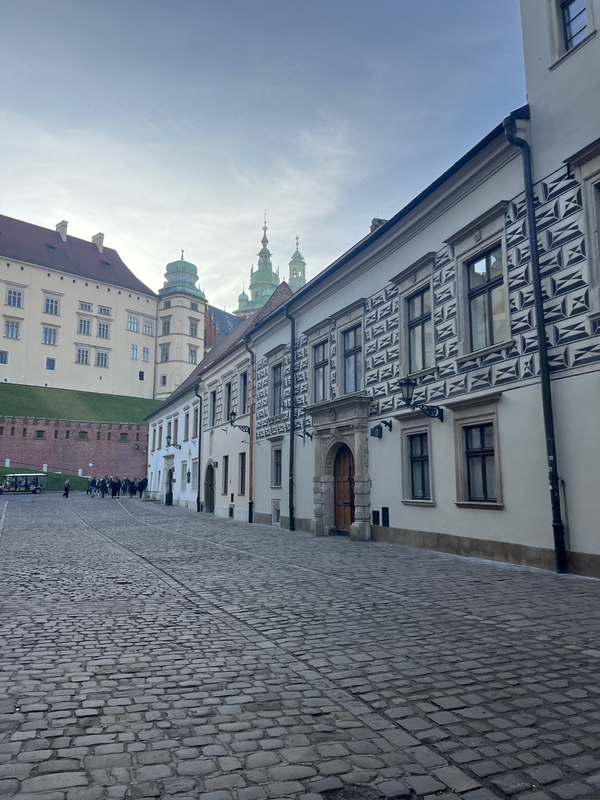
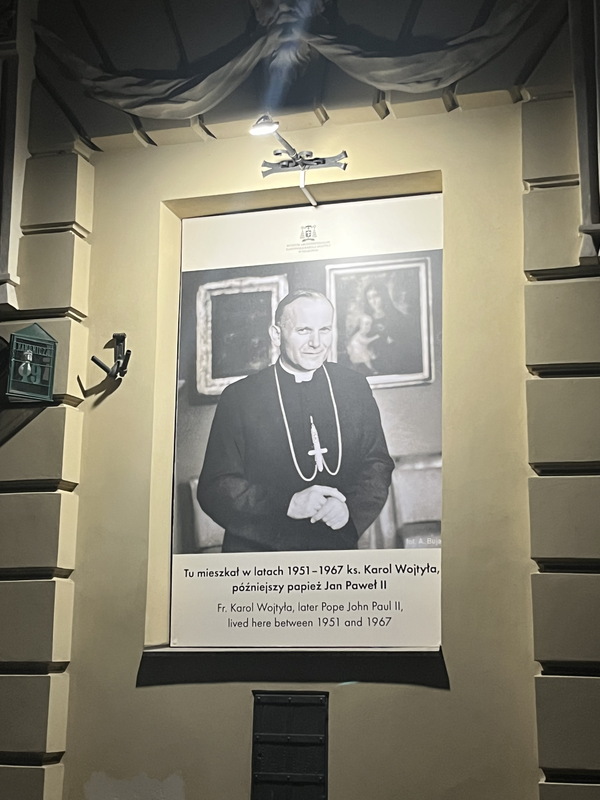
Wandering back towards my hotel from visiting Wawel Castle, I took ulica Kanonicza, a picturesque street of 14th century architecture that was largely used as residences for the clerics of Wawel Cathedral. Most prominently, you’ll pass a building that was the home of Karol Wojtyła, more famously known as Pope John Paul II.
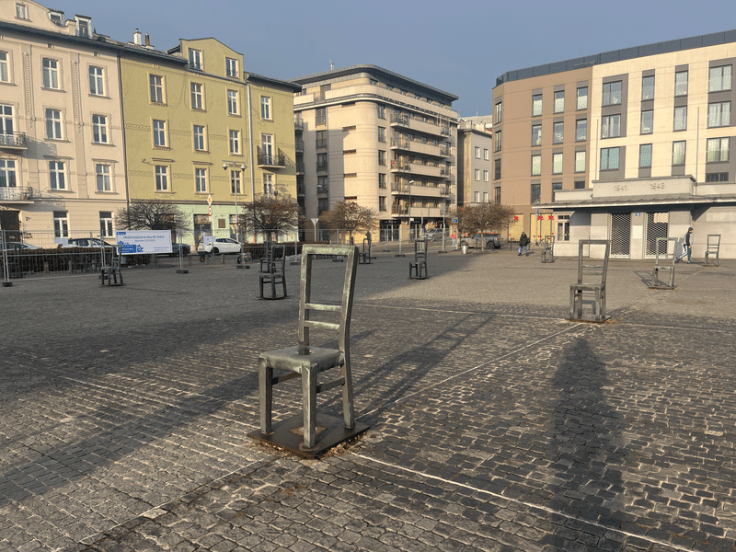
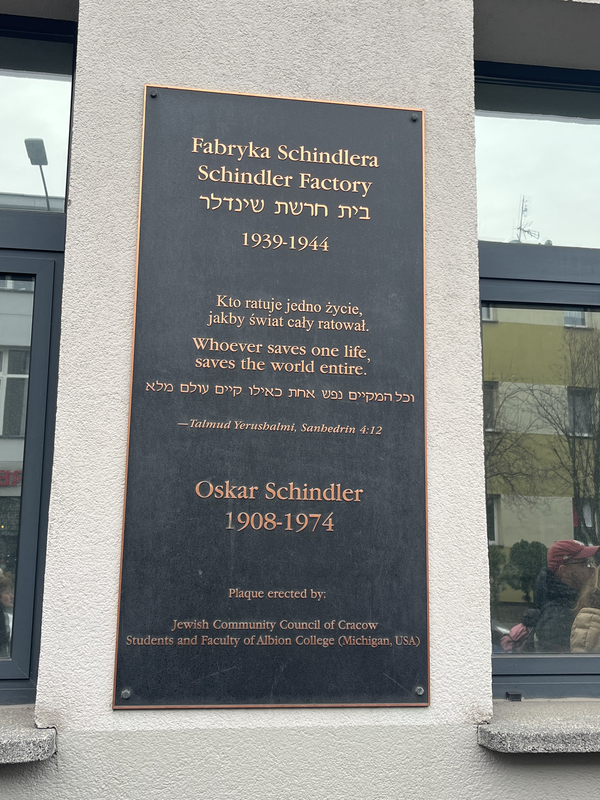
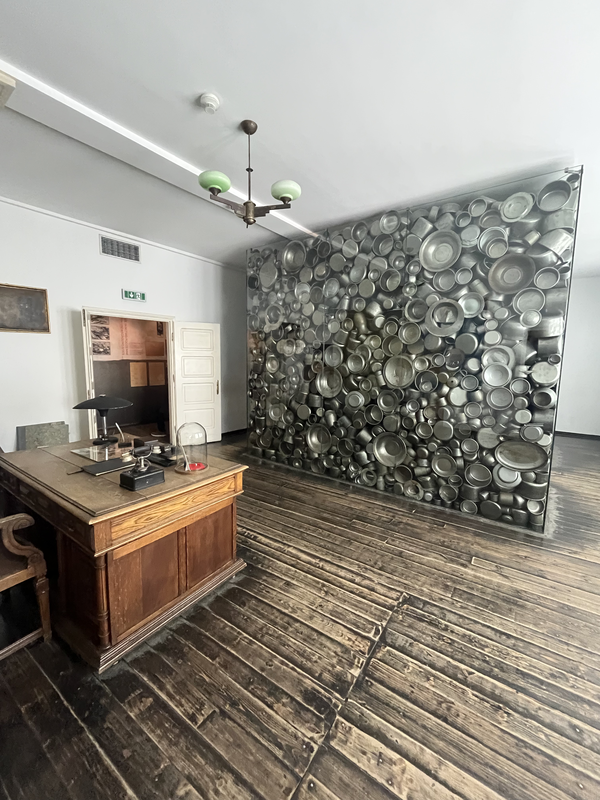
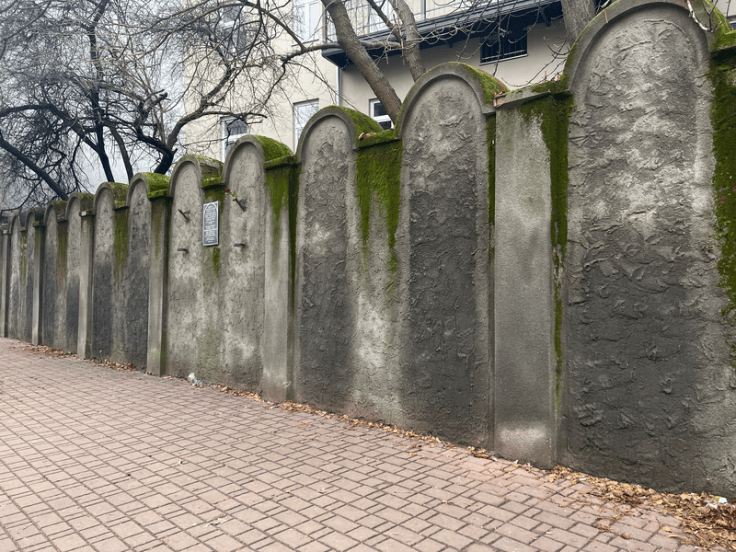
My second day in Kraków, I took a tram across the Vistula into the neighborhood of Podgórze, the site of the Jewish ghetto during the Second World War. My first stop was Ghetto Heroes Square, the site where Nazis gathered Jewish residents to be deported to the nearby concentration camps at Auschwitz and Płaszów. The square today is recognized with a monument consisting of 70 empty chairs, inspired by the accounts of local pharmacist Tadeusz Pankiewicz who described the scene of furniture left behind after all of the Jews had been cleared out of the ghetto. I next visited Oskar Schindler’s Enamel Factory, site of the story that inspired the book and movie Schindler’s List. It was here that Oskar Schindler employed and saved 1,200 Polish Jews, and today the factory’s administration building houses an excellent museum on Schindler and World War II history of Kraków. Note that on Mondays the museum offers free admission, but you can’t make reservations. I visited on a Monday and would have rather gone on a paid admission day – even getting there a half hour before the museum opened, I still ended up standing in line longer than it took me to go through the actual museum. After the museum, I stopped down ulica Lwowska, where you can see remains of the original ghetto wall that separated Jewish residents from the rest of Kraków.
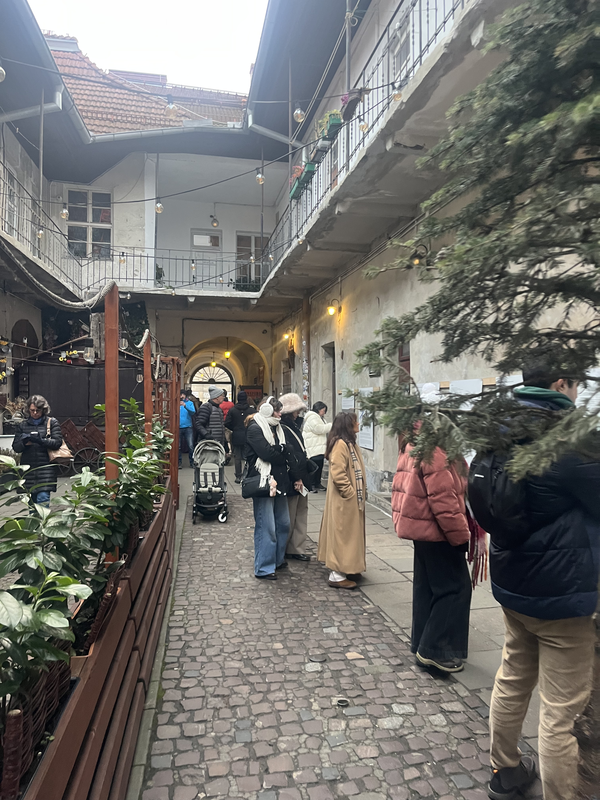
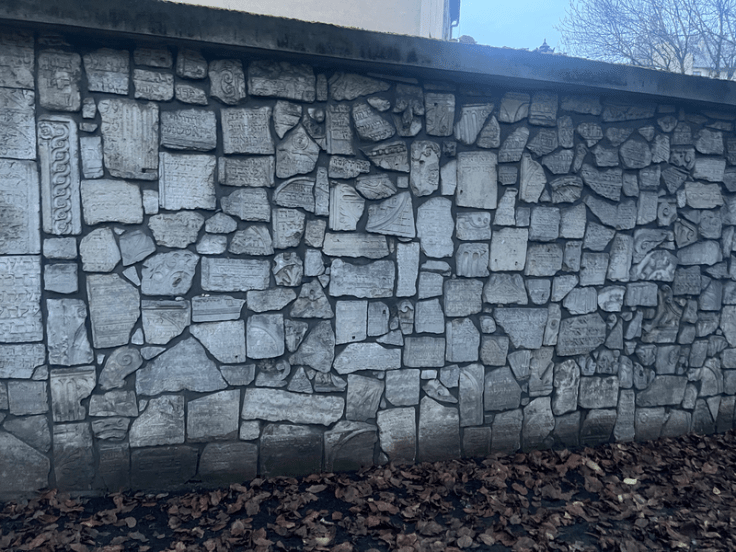
After some lunch, I wandered the neighborhood of Kazimierz, the historic Jewish Quarter of Kraków. The neighborhood is a stark contrast to the medieval charm of Old Town, a little grittier in appearance from World War II damage and years of neglect during the communist area. It wasn’t until Steven Spielberg filmed a large part of Schindler’s List there in 1993 that the neighborhood started to receive new attention and revitalization. Today it’s a cultural section of Kraków for the Jewish community as well as quirky bars, shops, and indie galleries. Just off ulica Józefa, you’ll find a small courtyard known as Schindler’s List Passage. The courtyard famously appeared in the movie and today is lined with exhibits on the walls telling the story of Kazimerz’s Jewish community. I next visited the Remuh Synagogue and Cemetery. With graves dating back to 1551, the cemetery was largely demolished and turned into a landfill by the Nazis during World War II. During 1956 cleanup efforts, around 700 tombstones, many incomplete or damaged, were discovered under a layer of soil. The cemetery has been mostly restored, and a wall mosaic created using fragments of tombstones that could not be restored.
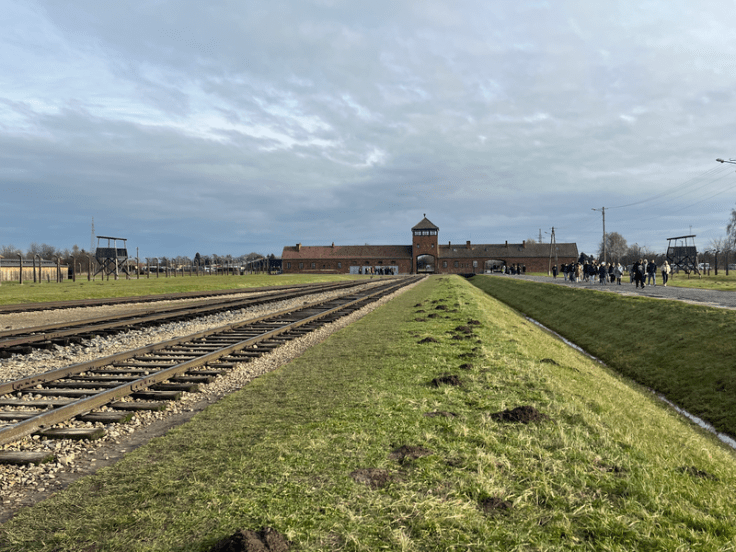
The next day, I took a day trip to Auschwitz-Birkenau. The notorious concentration and extermination camp lies about an hour outside of Kraków in the town of Oświęcim, which I was able to get to easily by taking an intercity train and then walking to the museum. There are also organized tours and shuttles that run from Kraków, but I preferred to do the train and go it on my own to take the guesswork out of which tour companies were reputable. You need a ticket to tour the Auschwitz grounds, and it’s recommended to reserve your tour in advance to ensure your desired entry time and language for the tour. As expected, the tour is extremely heavy emotionally, so I strategically planned this towards the end of my trip, and left that evening open for whatever I needed mentally, which turned out to be a few beers in Kazimierz once I got back into Kraków.
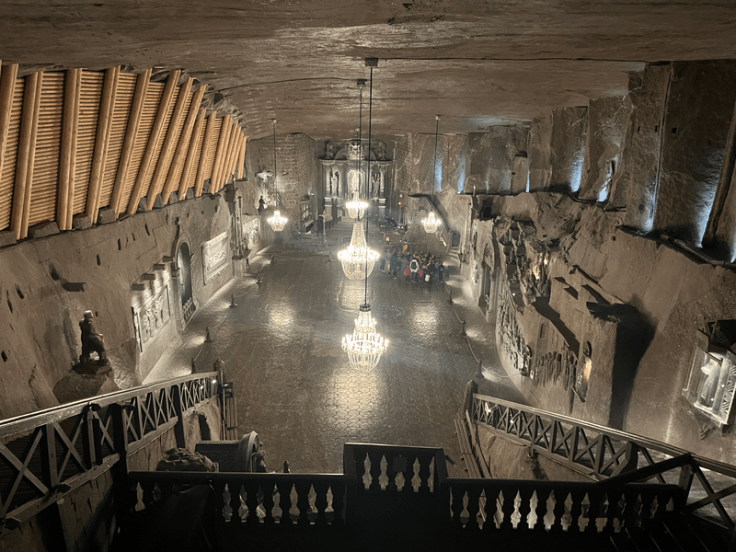
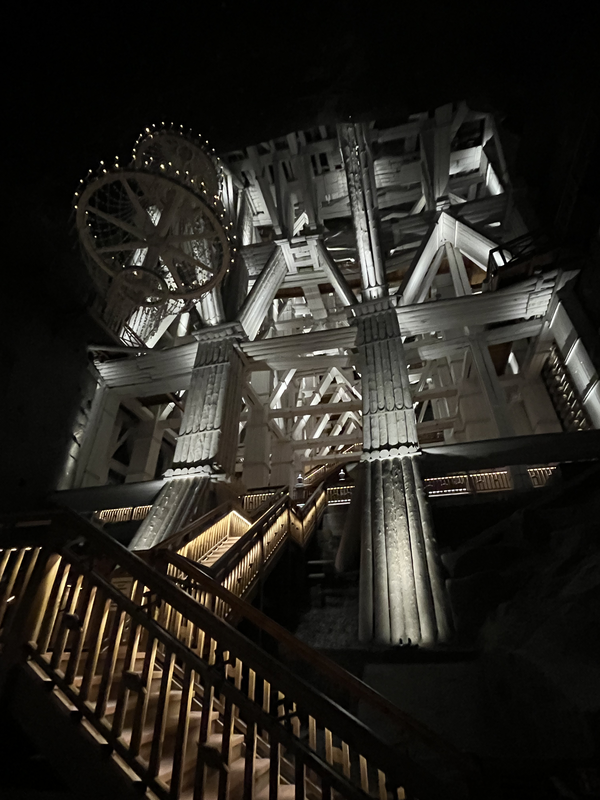
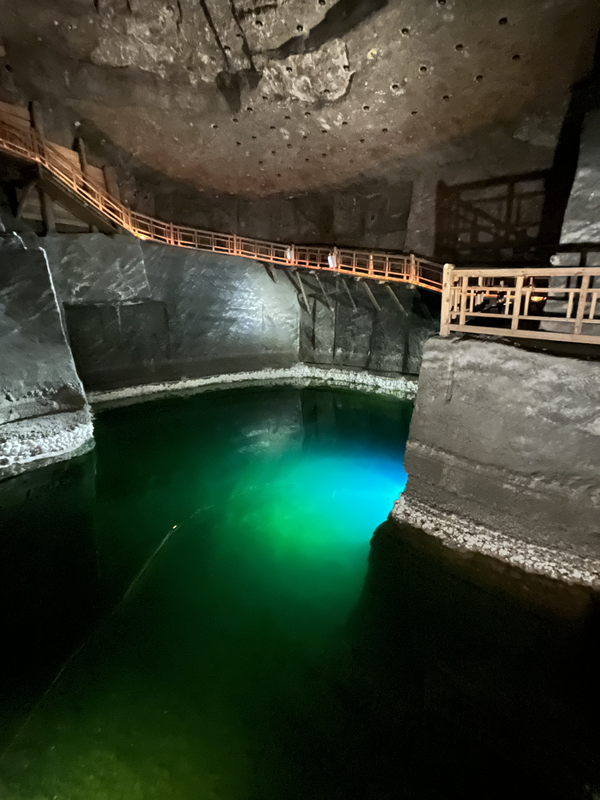
The last day of my stay in Kraków, I took another little excursion outside of Kraków to the Wieliczka Salt Mine. There are a few different bus lines that will take you there from downtown Kraków with about a 23 minute ride. Salt mining in Wieliczka dates back to the Middle Ages, and it became a crucial source for the Polish economy. Salt mining ended there in 1996 in order to preserve the mines which had a few years earlier been designated a UNESCO World Cultural and Natural Heritage site. Today you can go 135 meters down on the tourist route through the mine. Despite touring 3.5 kilometers worth of shafts, you’ll only see about 1% of this sprawling labyrinth, but what you do see is wondrous – salt sculptures and formations and even a full salt-sculpted chapel where you can host your wedding! There’s even a health resort you can visit, as the underground microclimate of the mines is said to offer health benefits for your respiratory system.
Eat and Drink
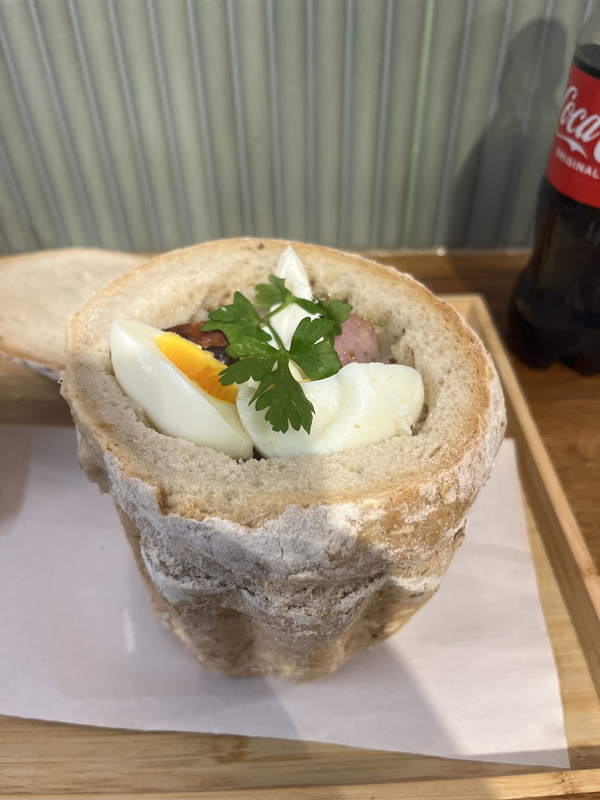
On arrival in Kraków after a morning train, my room wasn’t quite ready at the hotel yet so I decided to wander somewhere nearby for a quick lunch. I found Taste Poland on Grodzka and actually ended up eating here a second time for lunch during my stay in Kraków. It’s a great little no-frills cafe that serves traditional Polish foods. I had a zapiekanka there on my first day – these are a favorite Polish street food consisting of a halved baguette topped with mushrooms, melted cheese, and your choice of toppings and condiments. The second time I ate at Taste Poland, I tried their Żurek, sour rye soup with kielbasa, egg, and potatoes served in a bread bowl. Delish!
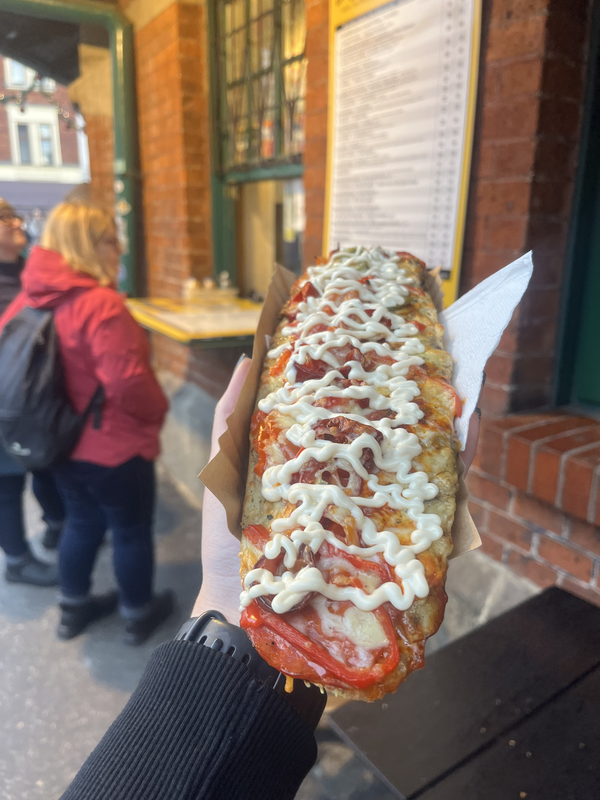
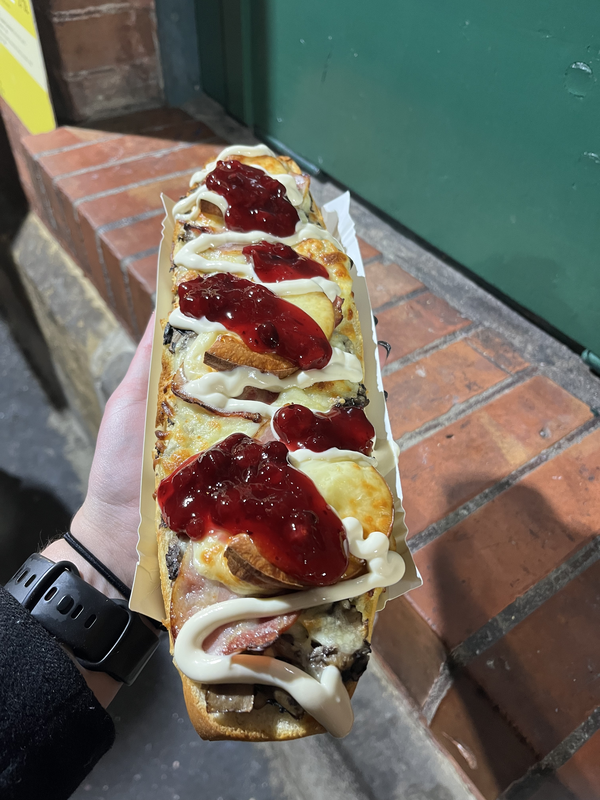
One of the food highlights of my time in Kraków was visiting the Okrąglak. This open-air market hall located in the Kazimierz neighborhood serves up some of the best zapiekanki in the city. This is another one that I enjoyed so much, I ended up eating here twice, getting to try some variations of toppings on my zapiekanki. The first one I had was Zapiekanki Oko’s Smok Wawelski, a zapiekanka topped with all things spicy and named for the Wawel Dragon. Later in my stay I had one from Bar Namaxa that was topped with cranberry and oscypek, a traditional smoked cheese from the Tatra Mountain region of Poland.
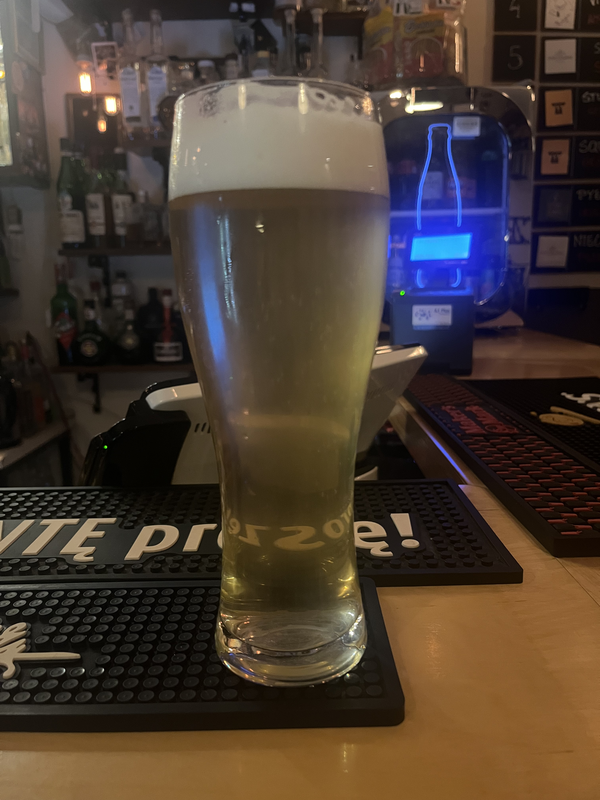
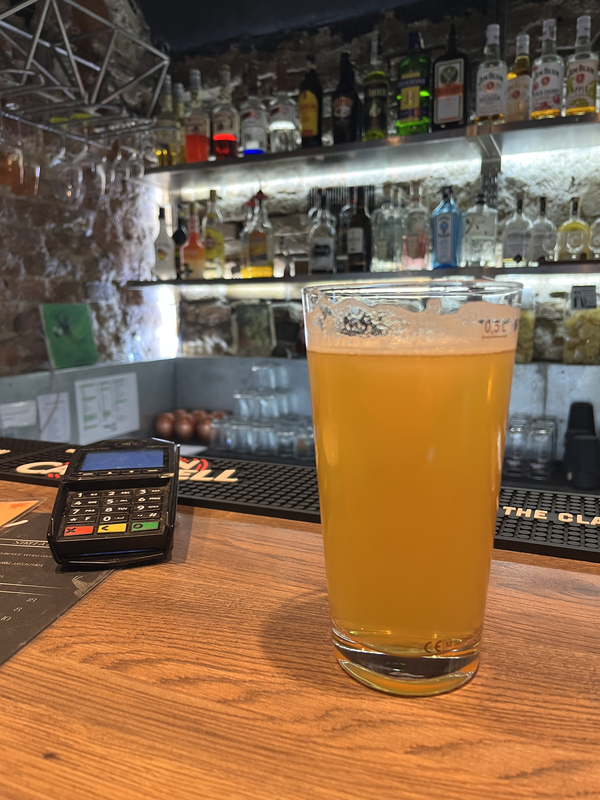
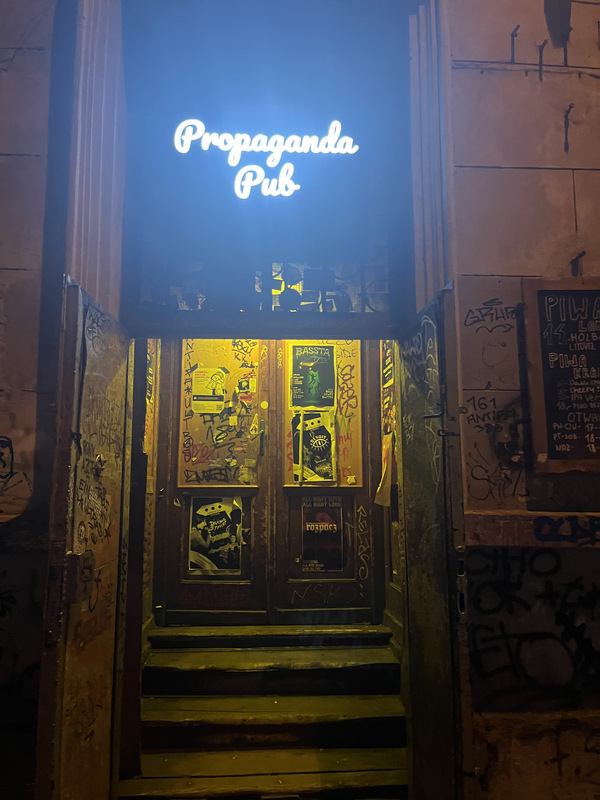
As mentioned before, Kazimierz is also a great spot for pubs and nightlife, and I hit a few great spots while I was there. I stopped into Craftownia, a beer bar serving up an extensive list of modern craft beers from Poland. I checked out Pub Pod Ziemią, a rock pub that often hosts live music. I was there on a Tuesday so there wasn’t a whole lot going on, but I enjoyed a few beers while listening to some rock and metal. Pub Propaganda is one of the oldest and probably one of the most popular bars in Kazimierz, playing a variety of punk, ska, psychobilly and rockabilly music. This was a fun hangout and one of my favorite stops as I made some bar friends here.
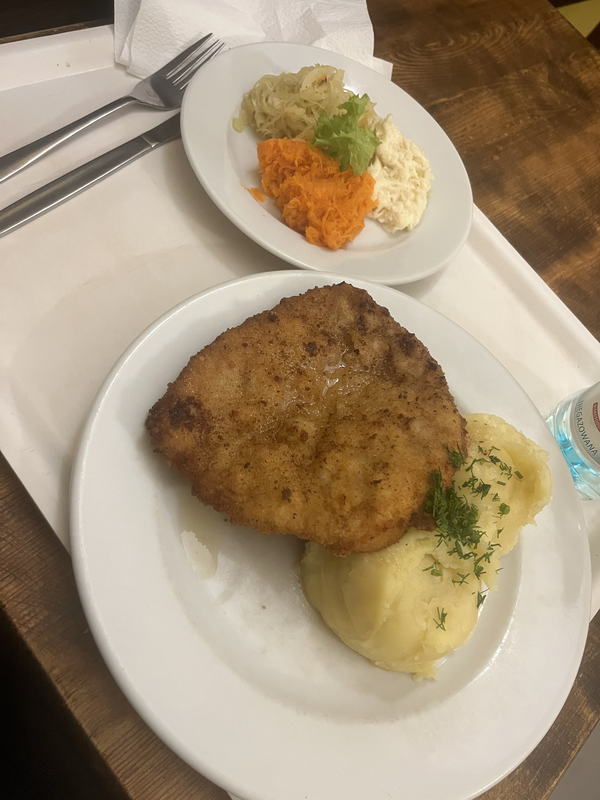
For dinner one night I went to bar mleczny Pod Temidą, a “milk bar.” These are cafeteria-style establishments where you can get some hearty homestyle Polish cooking at a low price, a tradition popularized during the interwar and postwar years as places the working class could go for a cheap lunch during the workday. Today they’re still frequented by locals, tourists, and university students looking for a good cheap meal. I had a delightful pork cutlet dinner there.
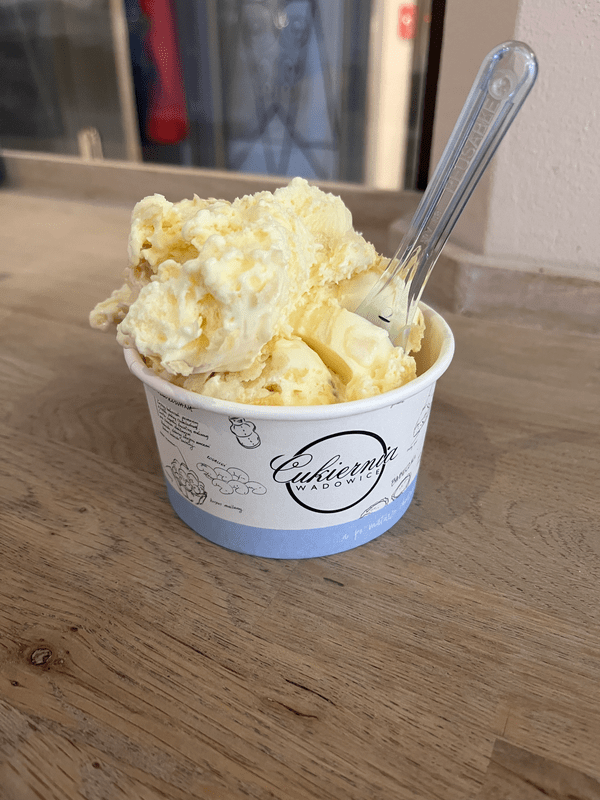
Looking to satisfy a sweet tooth, I stopped into Cukierna Wadowice on Grodzka one day for some ice cream. I got the Papal Cream Cake flavor, which incorporates a traditional Polish cake renamed Papal Cream Cake as it was a favorite of Pope John Paul II. This ice cream was so good!
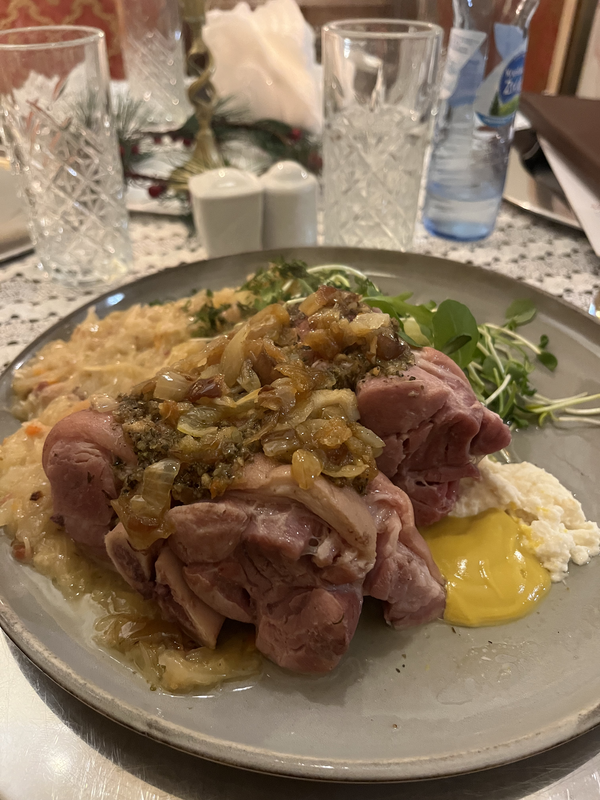
For dinner on my last night in Kraków, I went to Restauracja U Babci Maliny. Its name meaning “Grandma Malina’s,” this place has all the warmth of dining at a Polish grandmother’s house. Tastefully decorated with antique furniture, they serve up authentic Polish cuisine in a cozy atmosphere with great hospitality. My waiter had “the perfect table” for me dining solo, sitting me back in a quiet little alcove. I ordered the golonko, which came as a special with a small beer which my waiter offered to upgrade complimentary to a large beer. The golonko was spectacular – so tender it fell right off the bone. While the meal itself was great, the service and hospitality truly made it one of my favorite dining experiences on the whole trip. It being my last night in Poland, it gave me that bittersweet “I don’t want to go home, I love it here” feeling I get when I really fall in love with a place I travel to.
Kraków was the final stamp on a meaningful trip exploring Poland and connecting with my Polish heritage – so much so that I had to get an actual stamp of my own. On my final day in Kraków I got a tattoo of a little pieróg on my ankle. I went to VEAN Tattoo just outside of Old Town near the train station, and I can’t recommend them enough if you’re looking for a permanent souvenir. They accept walk-ins and have talented artists in-line with industry pricing, and offer piercing services as well. This was my first time getting a tattoo while traveling (or ever!), and it worked out getting it on my last day as I didn’t have to remove the wrapping and start my full aftercare routine until I was back in the States.
From the salt mines deep underground to the bugle call high in the towers of St. Mary’s, Kraków is a city of constant wonder. It’s a place where you can honor the past at Schindler’s Factory in the morning and toast to the future in a Kazimierz craft beer bar by night. Safe, stunning, and soul-stirring, it’s a must-visit for any traveler’s bucket list. I left Poland with a full stomach, a deeper connection to my roots, and a fresh pieróg tattoo to remember it all.

 C to Shining C
Leave a comment