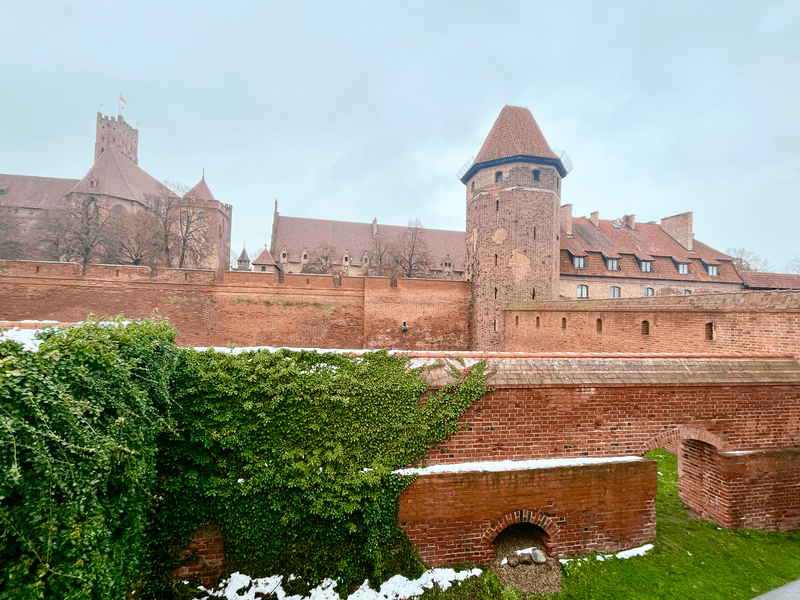
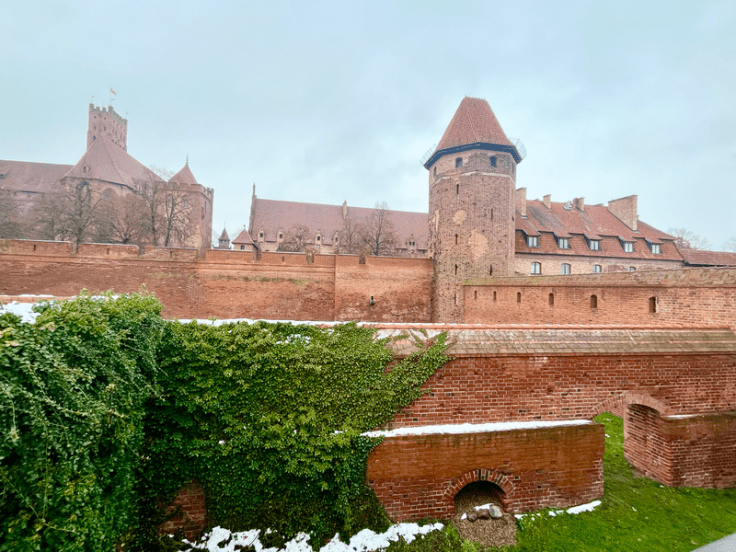
A half hour outside of Gdańsk lies one of the most significant pieces of medieval architecture in Europe. Sitting on a total of 21 hectares, Malbork Castle is by land mass the largest Gothic castle complex in the world and the largest brick castle in Europe. It was built in the late 13th century, and served as the capital of the Teutonic Order and the seat of the Order’s Grand Masters. The castle’s location along the east banks of the River Nogat near the Baltic Coast made it a strategic location for trade, and the town of Malbork grew around the castle. During the Second World War, roughly eighty percent of Malbork’s Old Town was destroyed, and the castle faced substantial damage. Since the postwar years it has undergone extensive restoration efforts that continue to this day, being designated a UNESCO World Heritage Site in 1997.
I took a morning train to visit Malbork for a day during my stay in Gdańsk. There are intercity trains that run from Gdańsk to Malbork, getting you there in just about 30 minutes. During the season I visited, the castle opened at 9am each day, so I took an 8:30 train out of Gdańsk, with about a 15-minute walk from the station in Malbork to the castle. It was early December, and the weather in Gdańsk had been pretty cold with a light misty fog in the mornings. As the train chugged out of the city and into the countryside, it was to my delight to see fields covered in snow – and it would make for some beautiful photos once I arrived at a snow-dusted Malbork Castle.
The first thing I noticed when I left the train station and was walking through Malbork was that the town has a smell – not particularly a bad odor, but strong enough to make me curious. I soon figured out that it was coming from the steam put off by a large sugar factory right near the train station. My walking route took me down Tadeusza Kościuszki, a commercial corridor through town. Being largely destroyed during World War II, Malbork has a very modern small town feel, until you cross a bridge over a small stream and the castle comes into view.
My first stop was to the ticket office, where I picked up an audio guide. The Historical Castle tour via audio guide takes 3-4 hours and is offered in 12 languages. It has tracking technology to automatically offer information based on your location within the castle grounds, with photos on the screen helping you easily locate your next steps as you navigate the complex castle grounds.
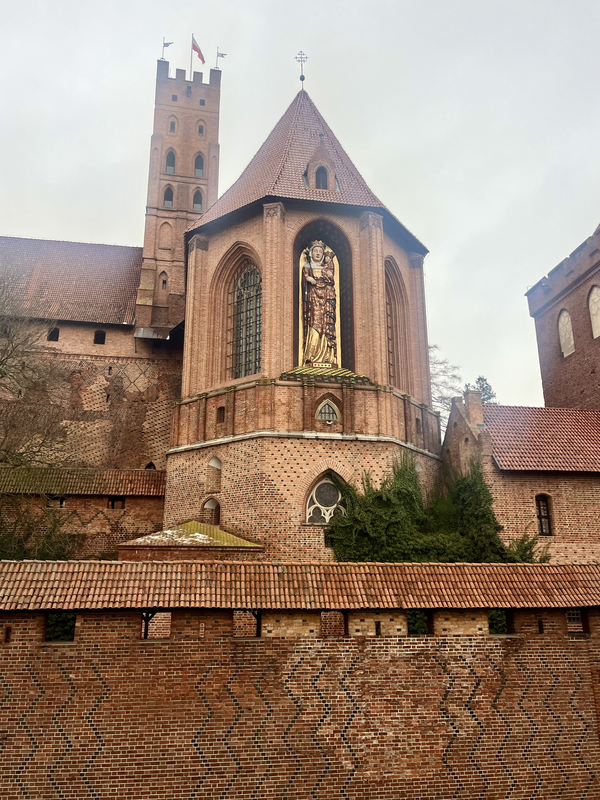
Before entering the castle, you can stop to admire an 8-meter tall mosaic statue of the Virgin Mary holding Baby Jesus on the side of the castle’s Church of the Blessed Virgin Mary. The mosaic was first constructed in 1340 but faced destruction along with the church during World War II. It was only just reconstructed in 2016.
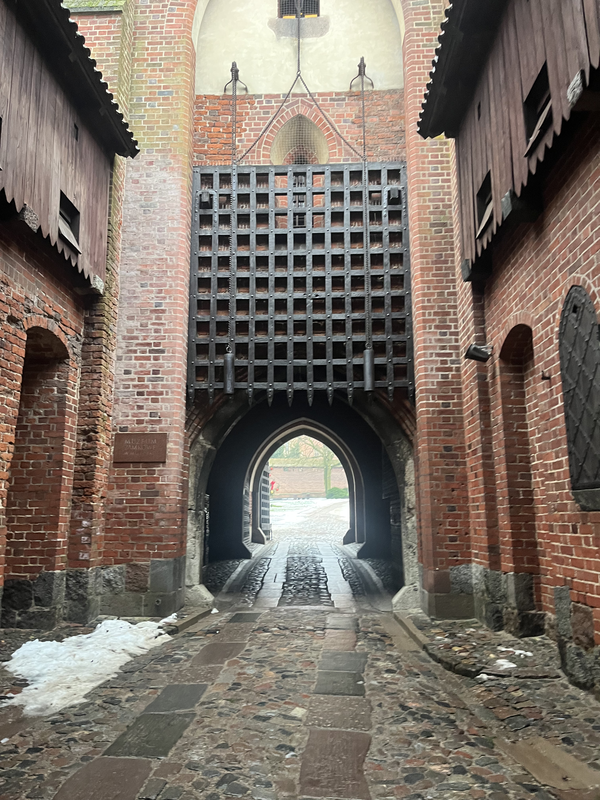
There are three main sections to the castle: the High Castle, Middle Castle, and Low Castle. The Low Castle contains the Karwan, used as event space, the chapel of St. Wawrzyńca and a number of farm buildings. The audio guide tour takes you mainly through the Middle and High Castles.
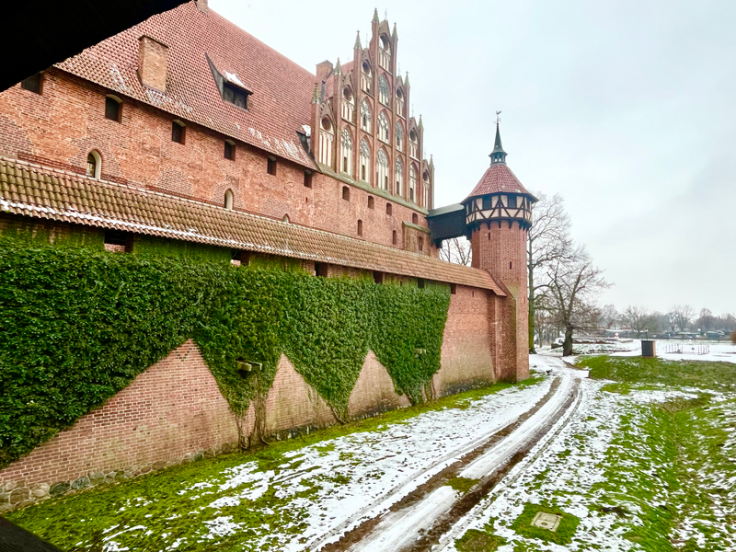
The Middle Castle is a three-sided complex, with a large courtyard separated from the High Castle by a wall and moat. The Middle Castle contained the chapel of St. Bartholomew, Great Commandery, Infirmary, Grand Refectory, Palace of the Grand Masters, and the Summer and Winter Refectories.
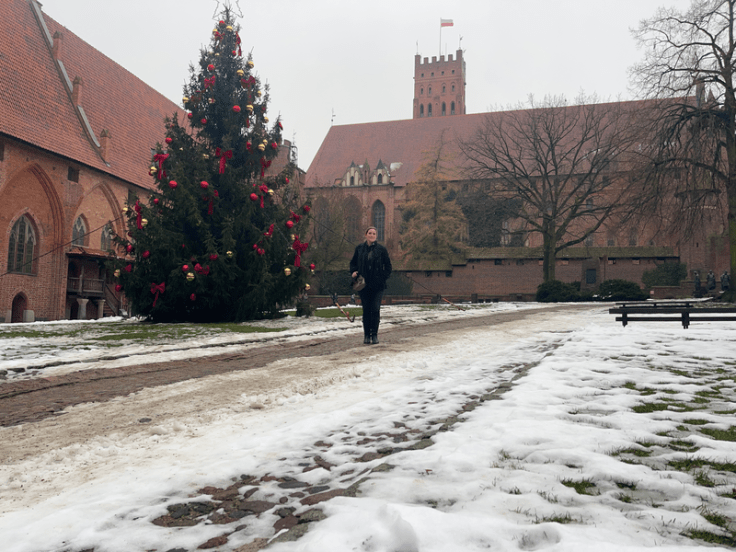
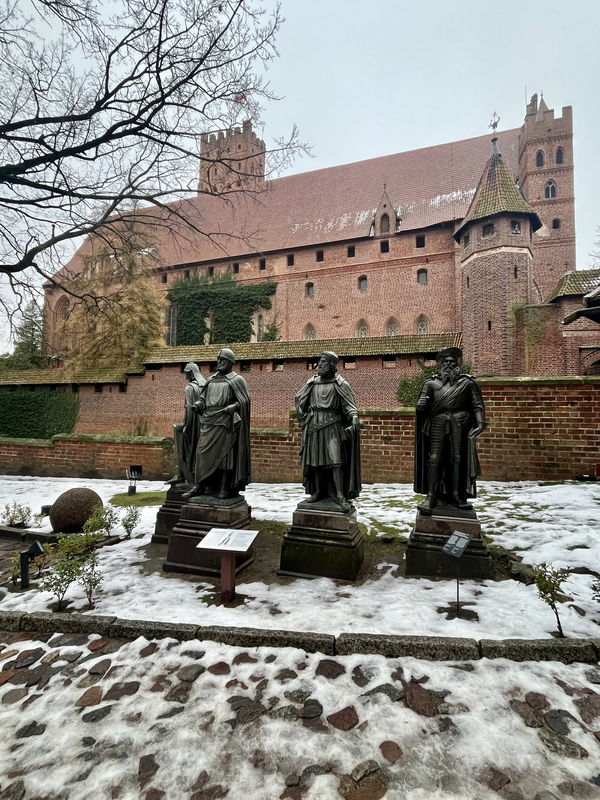
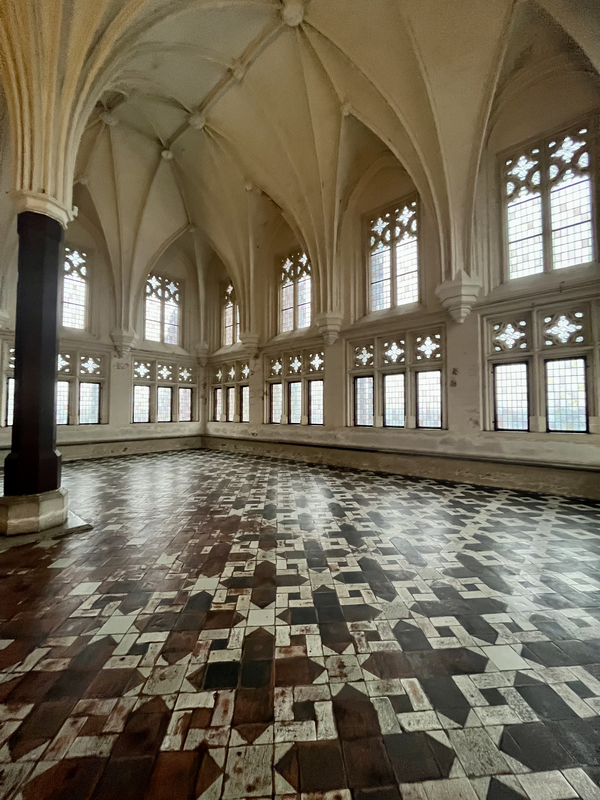
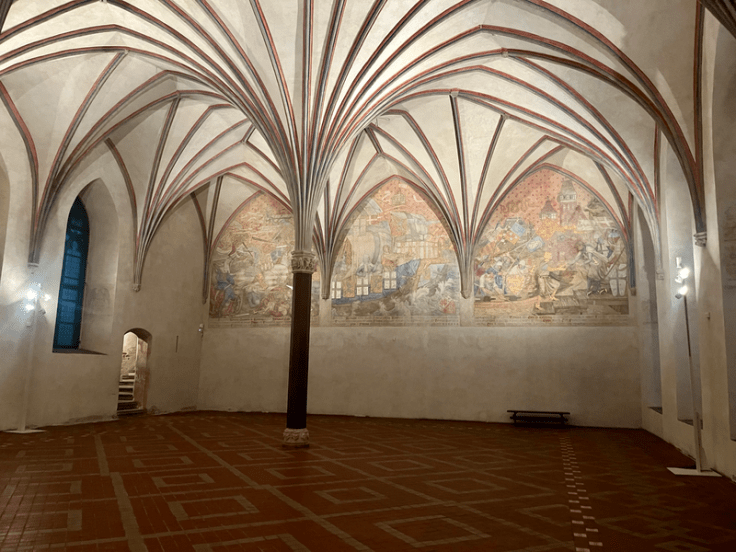
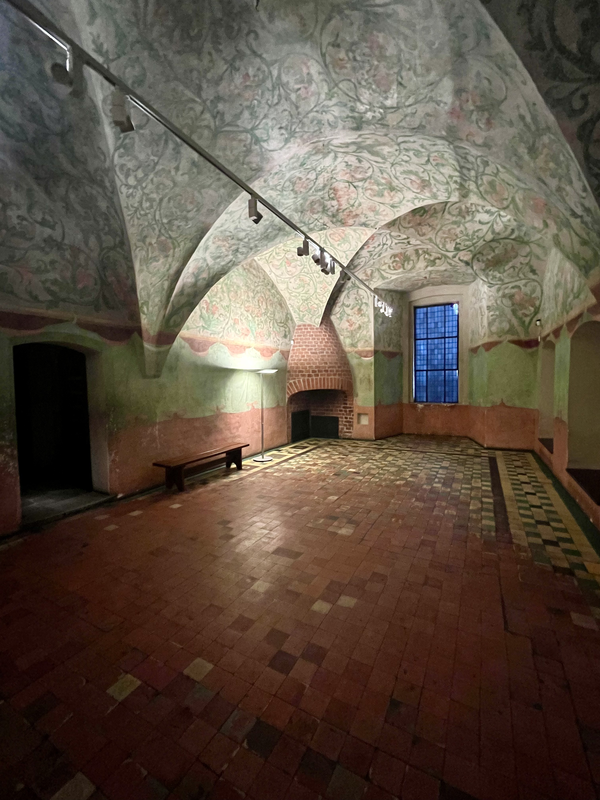
The High Castle is the tallest part of the castle, a four-sided building with a courtyard surrounded by a cloister, containing a tower and the Church of the Blessed Virgin Mary.
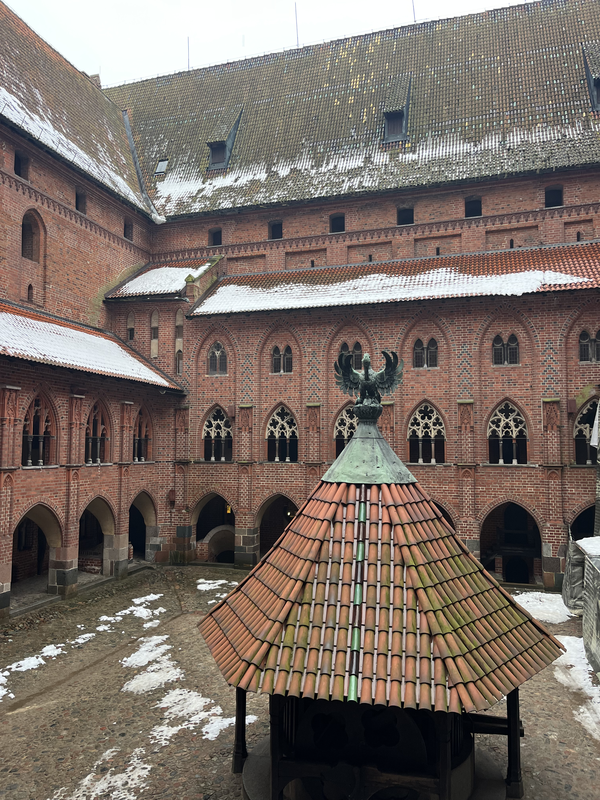
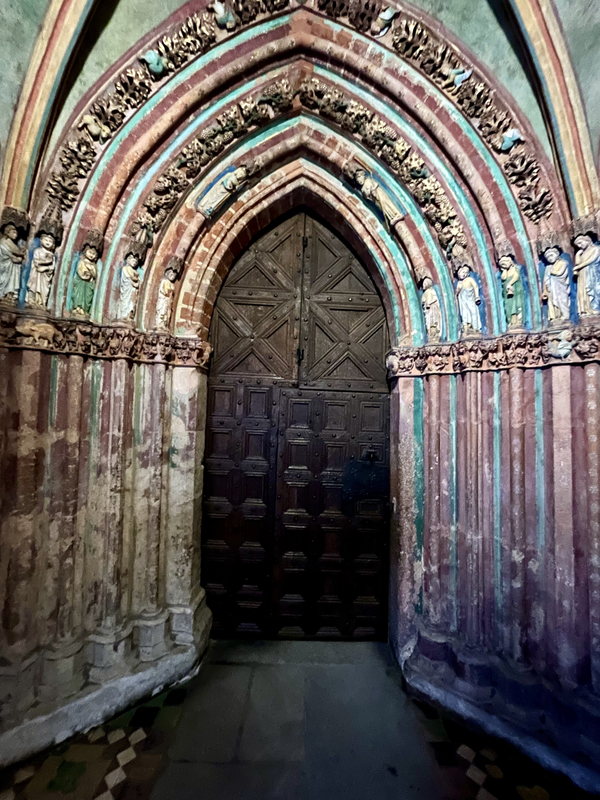
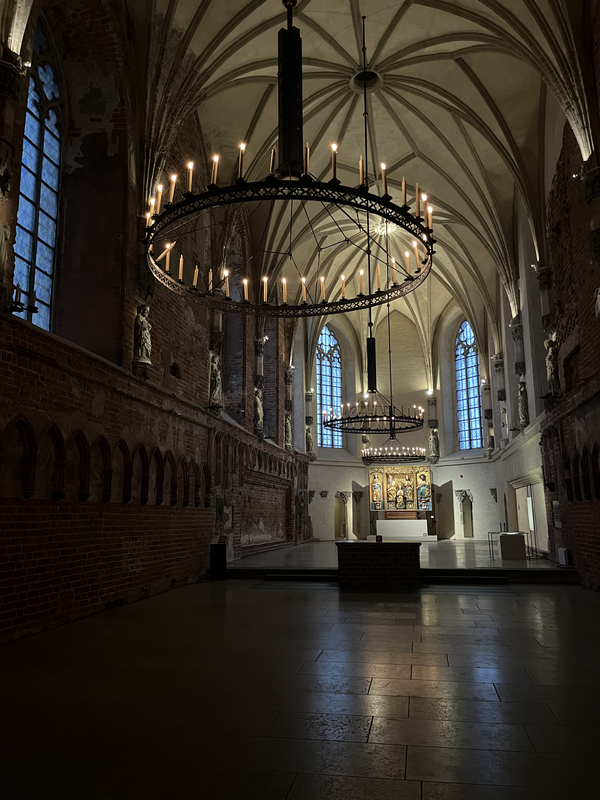
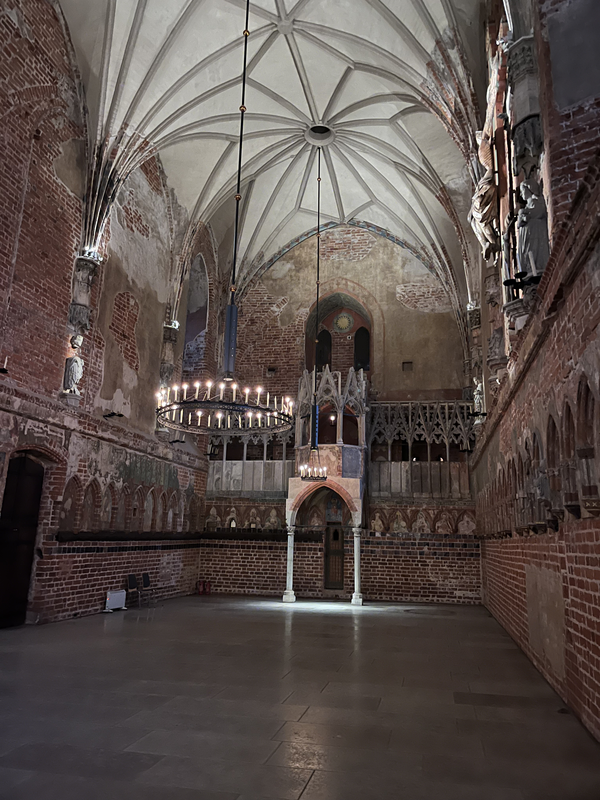
In addition to providing a great overview of the castle’s key locations and their history, the tour takes you through a few significant exhibitions. Malbork contains an impressive exhibit on amber, an important gemstone to this region since the Neolithic period. Amber was a significant item of trade in the Middle Ages for the state of the Teutonic Order, and many items within Malbork Castle were made of amber. The exhibit takes you through the gemstone’s history, from how it is geologically formed, through its uses in jewelry and art. Another impressive collection is the castle’s armory, containing European weaponry from the 11th through mid-19th centuries, and a second section containing weapons from Persia, Turkey and India from the 17th to the 20th century.
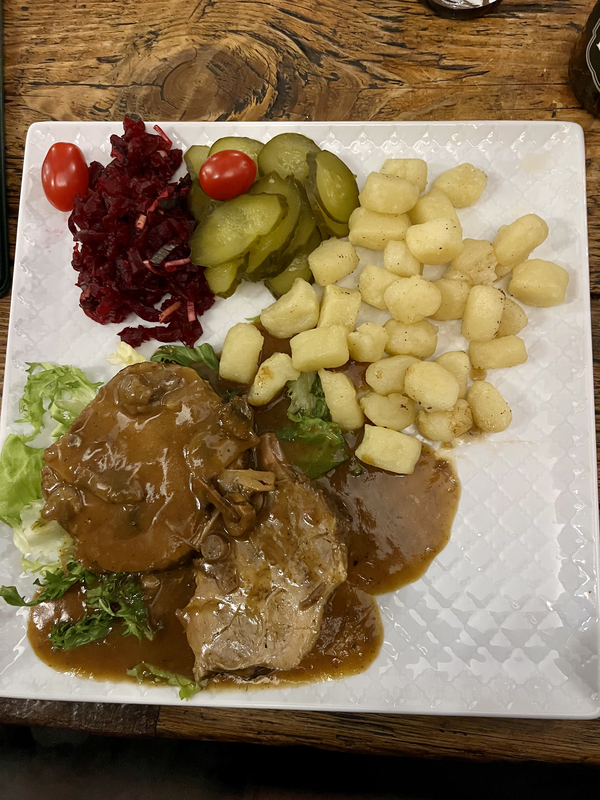
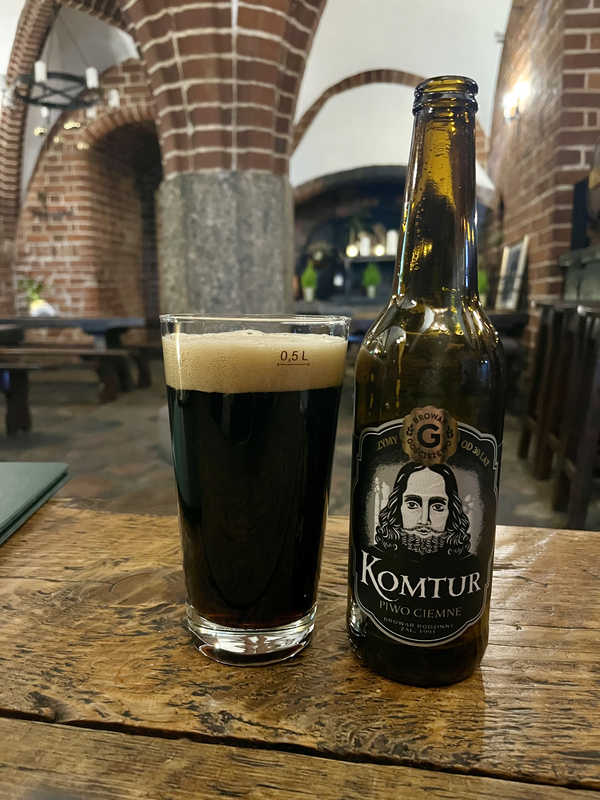
The audio tour allows a good stopping point halfway through the tour if you need a break for something to eat, but since I arrived early in the morning, I decided to just finish the whole tour and then grab some lunch. There is a restaurant onsite at the castle, Restauracja Piwniczka Wielkiego Mistrza (Grand Master’s Cellar Restaurant) that serves up delicious Polish specialties in a historic atmosphere. I had a savory dish of roasted pork in dark gravy with potato dumplings and red beetroot, paired perfectly with a Komtur dark lager from Browar Gościszewo.
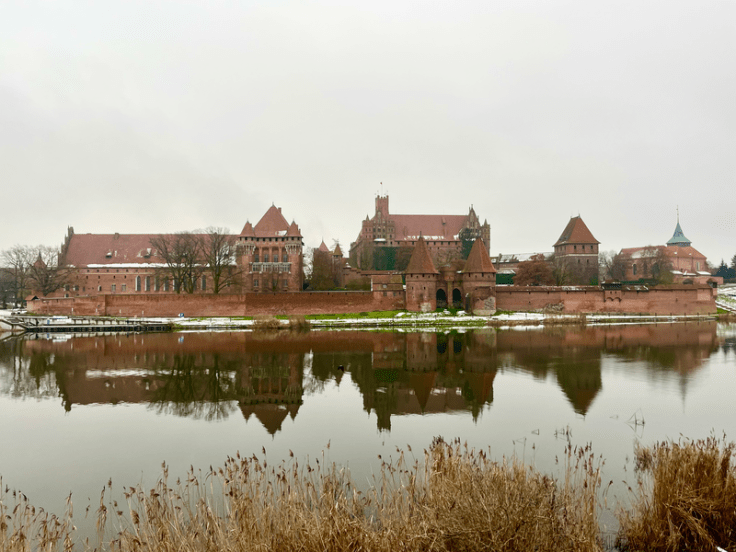
I hadn’t booked a return trip to back to Gdańsk in advance as I didn’t want to feel limited in my sightseeing, so while sitting at lunch I took a look at the train schedules and booked myself a late afternoon train that would get me back into Gdańsk around 4:30 or so. This would give me a little time still to wander Malbork a bit more. After lunch, I exited to the River Nogat side of the castle. I took the footbridge to the other side of the river, which afforded some incredible views of the entire castle complex reflecting on the water.
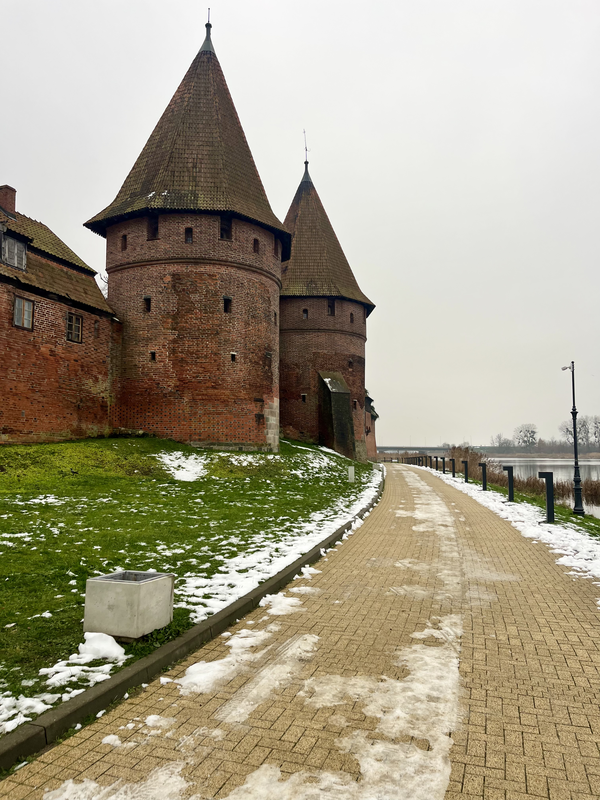
I crossed back over to the castle side, and with still plenty of time to kill, decided to just wander along the river. There is a nice walking path and park space down alongside the river, for a different vantage point of the towering architecture of the castle.
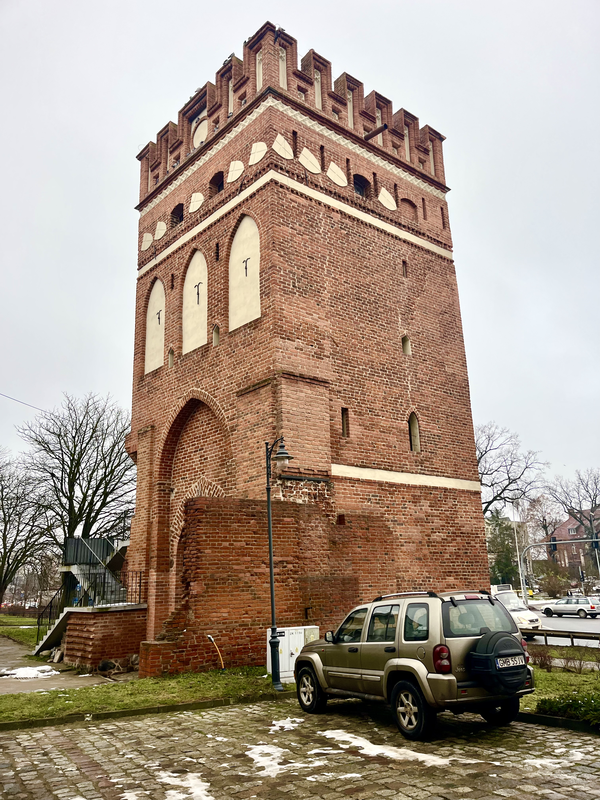
I wandered down the south of the castle to the part of Malbork considered “Old Town.” Malbork’s Old Town is actually fairly modern. After the war, many of its bricks were used in rebuilding the Old Towns of Warsaw and Gdańsk. You can see just a handful of medieval relics in Malbork’s Old Town, including two tower gates that were part of the city’s defense system in the 14th century. Beyond that, it’s a primarily residential area with postwar housing complexes. It was a chilly Wednesday in December, so the town was fairly quiet as I was wandering around, aside from the business corridor along Tadeusza Kościuszki on my walk back to the train station, but I loved walking around Malbork and just experiencing what everyday life looks like in a less-touristy Polish town.
As a grey winter’s day faded into night over the Nogat, I took my tired feet back to Malbork Station to catch my train, arriving back in Gdańsk as the city’s streets began their evening glow. I reflected on Malbork Castle and its centuries of stories retold through years of painstaking restoration efforts. A visit to Malbork Castle and the surrounding humble little town is a must for any Poland trip. The “world’s largest brick castle” is impressive on paper, but seeing it dusted in snow, reflected in the river, is something you have to feel for yourself.
Staying in Gdańsk? Check out my guide to the city to help you plan your stay: Exploring Gdańsk: Top Attractions and Local Cuisine.

 C to Shining C
Leave a comment