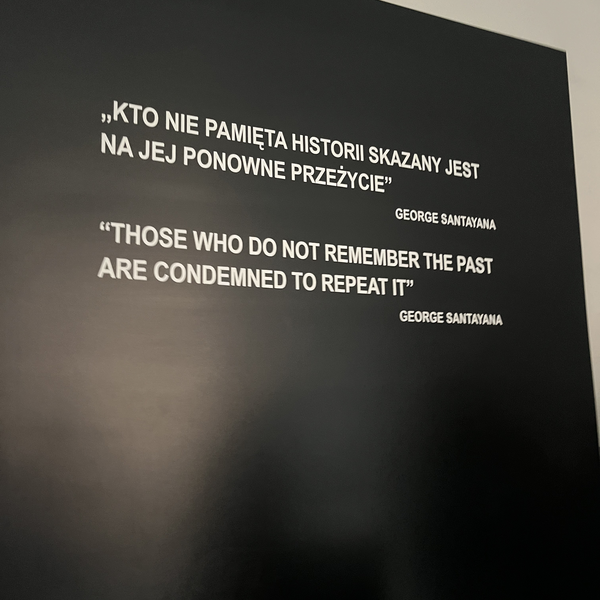
“Those who do not remember the past are condemned to repeat it.” Visiting the concentration camp of Auschwitz should be on everyone’s list of things to see in their lifetime. No, it’s not a pleasant travel experience. It’s a stark reminder of the ugliest days of world history and the evil that exists in this world. Sure, we read about it in history books. But seeing it for yourself is a different story. So much of the concentration camp still appears exactly as it was back then, making it more realistic to visualize the horrors that went on here. Making it more real than words on a page. You will leave Auschwitz feeling gutted, but empowered to do your part in ensuring that this never happens again.
I strategically planned my visit to Auschwitz towards the end of my trip to Poland – visiting the cities of Gdańsk and Warsaw before my stay in Kraków and day trip to Auschwitz which lies an hour outside the city. I highly recommend planning your trip this way if you can. While I encountered heavy history throughout Poland with visits to other World War II sites and museums, visiting Auschwitz deeply affected me and I think it’s better to do this towards the end of a trip rather than start off a trip with such a heavy experience.
I did a lot of research on the best way to get to Auschwitz from Kraków. In my research initially, it seemed like it might be most convenient to do an organized tour from Kraków that would include transportation, but I ultimately realized it was not that complicated to get to the museum via public transportation. There is a train line that runs into Oświęcim, the Polish name for the town of Auschwitz. From the train, it’s about a 20-minute walk to the Memorial and Museum Auschwitz-Birkenau.
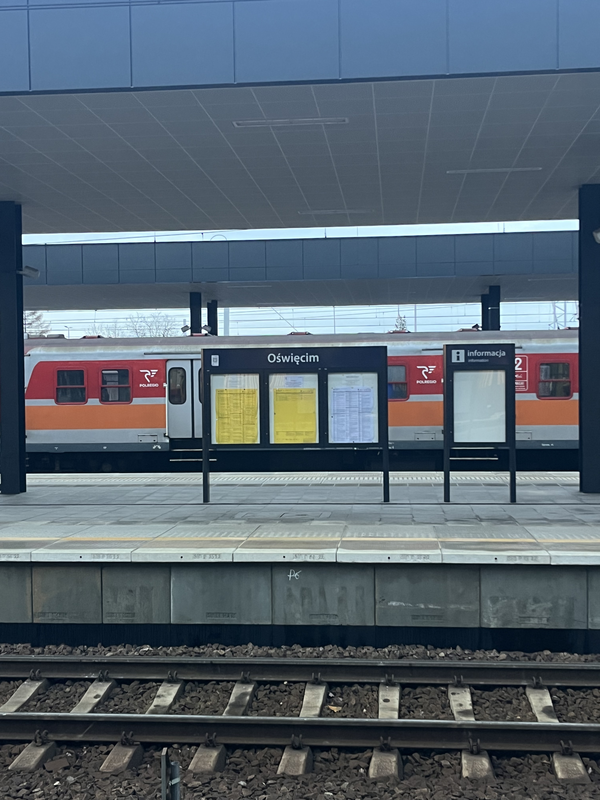
There are two ways to visit Auschwitz for individual visitors – with or without a guide, though the times for entry without a guide are more limited. Guided tours are available more frequently in several languages, and the guided tour takes about 3.5 hours and covers both Auschwitz I and Auschwitz II-Birkenau. Whichever way you choose to visit, it’s highly recommended to book in advance as the total number of entries per day are limited and likely to fill up especially during peak tourist season. I had booked a 9:30am time slot in the months ahead of my trip, and took a 6:50am train out of Kraków that arrived into Oświęcim just after 8am. It’s recommended to arrive at the Memorial a half hour before your tour, so this gave me about an hour to grab some coffee and breakfast at the train station and make my way at an easy pace through Oświęcim.
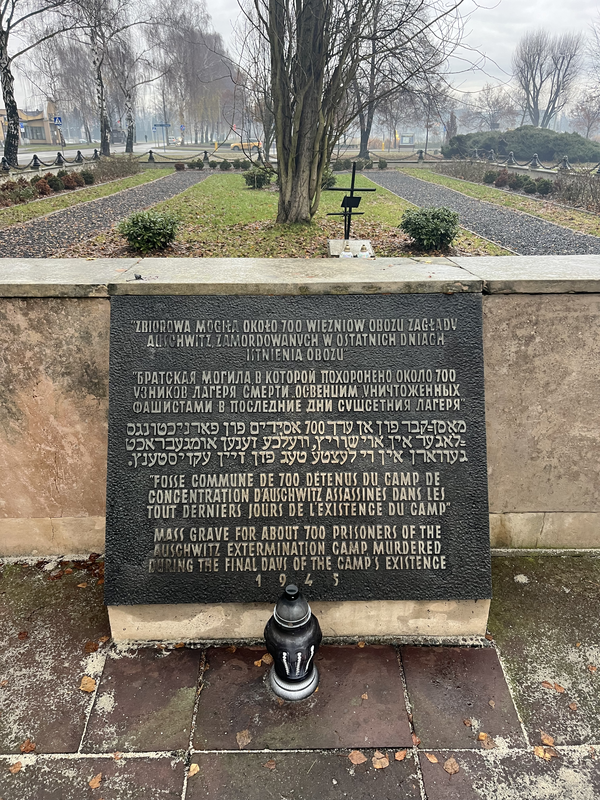
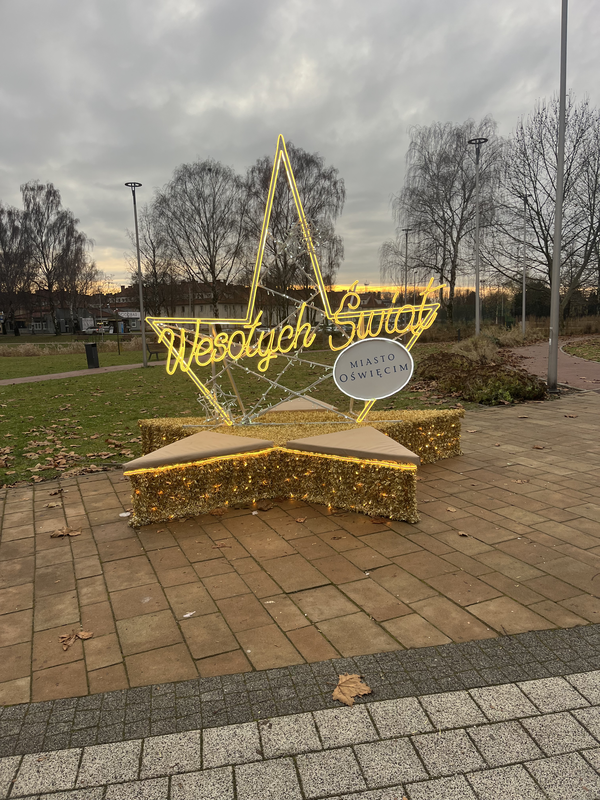
The walk from the train station was an interesting contrast to what I was about to see. It was a quiet morning, with an overcast fog hanging over the town as it often does on Polish winter mornings. The walk was a straight shot down Dworcowa, which turns into Obozowa, and takes you past nice residential homes, apartment buildings, and a few public parks. I passed a few people walking dogs or waiting for a bus to work – a glimpse into a normal, daily Oświęcim residential life just steps from the site of World War II’s greatest atrocities. Just before arriving at the Memorial, in what seemed like an unassuming little park, I saw a marker denoting the mass grave of 700 prisoners of Auschwitz who were murdered in the final days of the camp, a sign that I had left the idyllic part of this little Polish town.
Upon arrival at the Memorial, there are restrooms and a restaurant available outside the entry gate. Upon entry, there is a waiting area where you’ll wait to meet your guide who will take you downstairs to get an audio device before starting the tour.
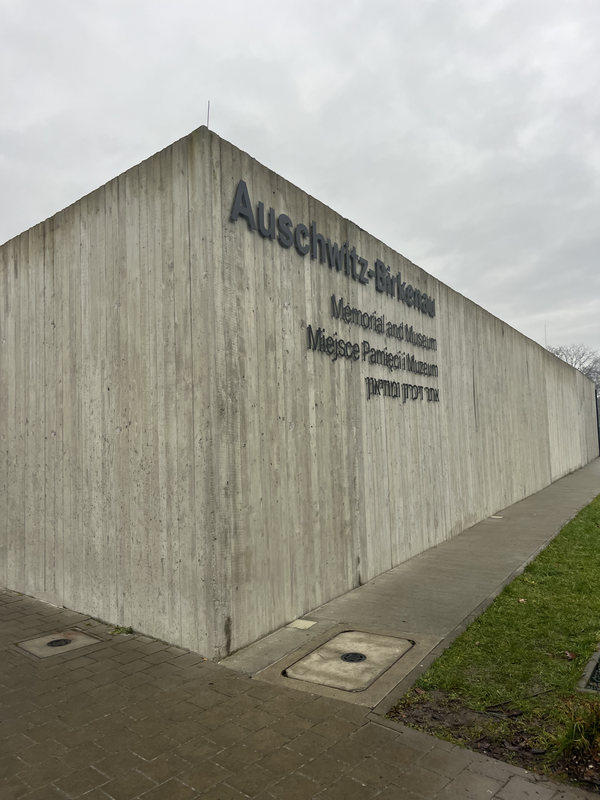
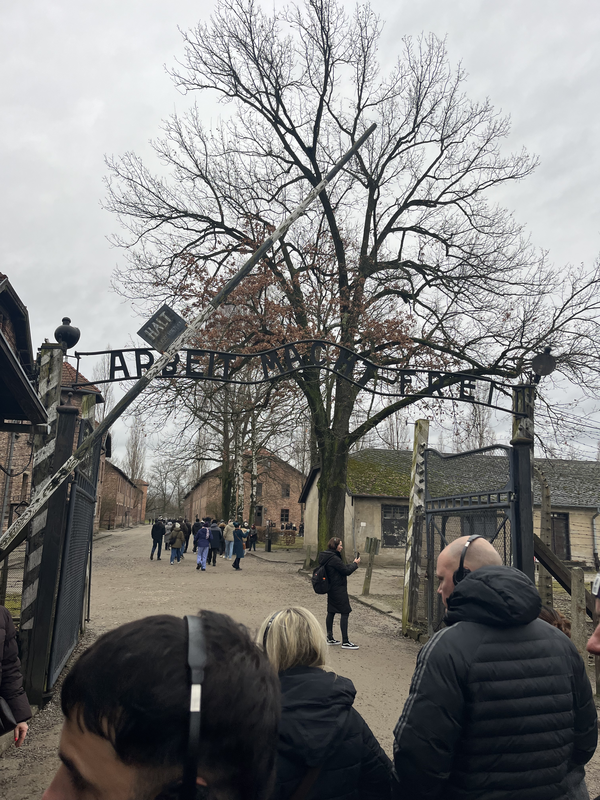
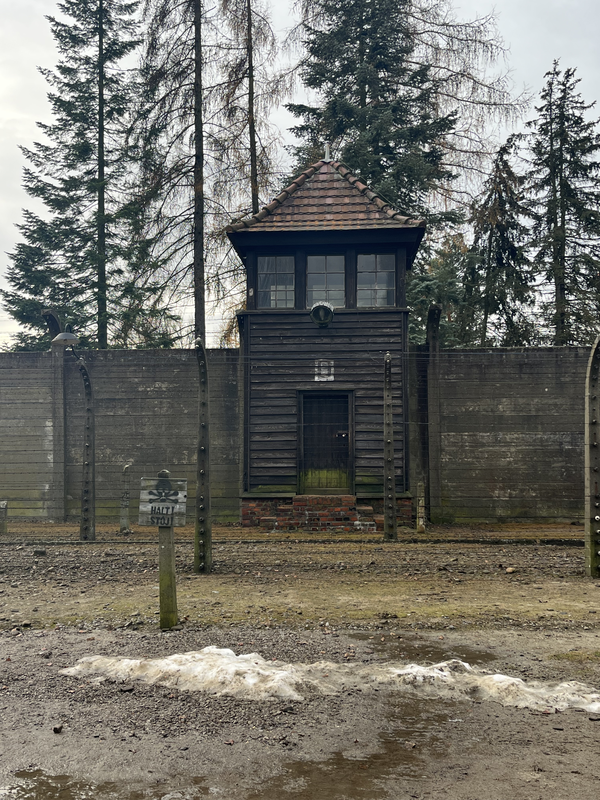
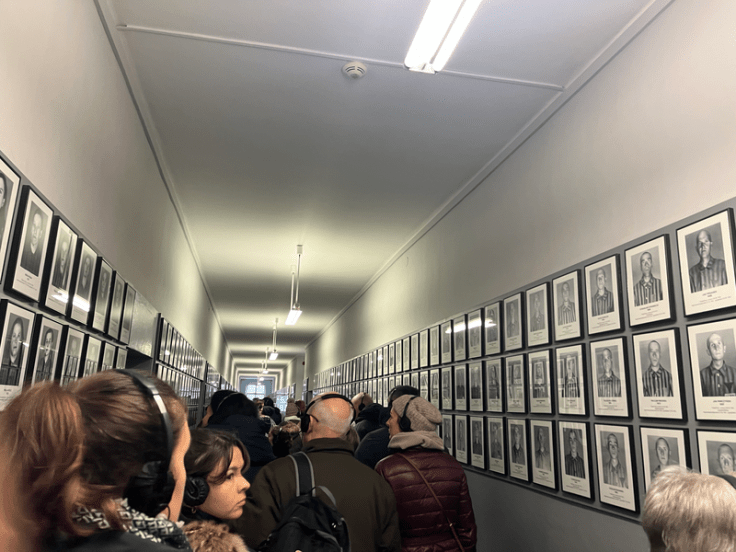
The tour begins in Auschwitz I, the oldest part of the camp and considered the “main camp,” established using the grounds and buildings of prewar Polish barracks. Auschwitz was established in 1940 as a solution to the mass arrest of Poles quickly outgrowing the existing prisons in local Polish towns. This section of Auschwitz typically held 15,000-20,000 prisoners at a time. One of the first things you’ll see and recognize from photos is the “Arbeit Macht Frei” (Work sets you free) sign gate. The tour will take you through several of the barracks buildings, which contain exhibits and photographs on the camp. Most places throughout Auschwitz allow you to take photos, with a few exceptions which posted signs and your guide will be sure to remind you of – but don’t be one of “those tourists” who takes a smiling selfie at Auschwitz. Remember the respect owed to those who were murdered here.
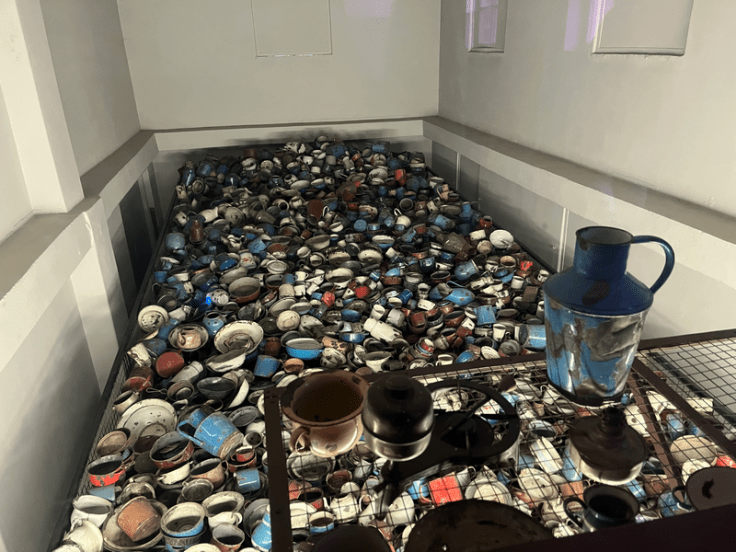
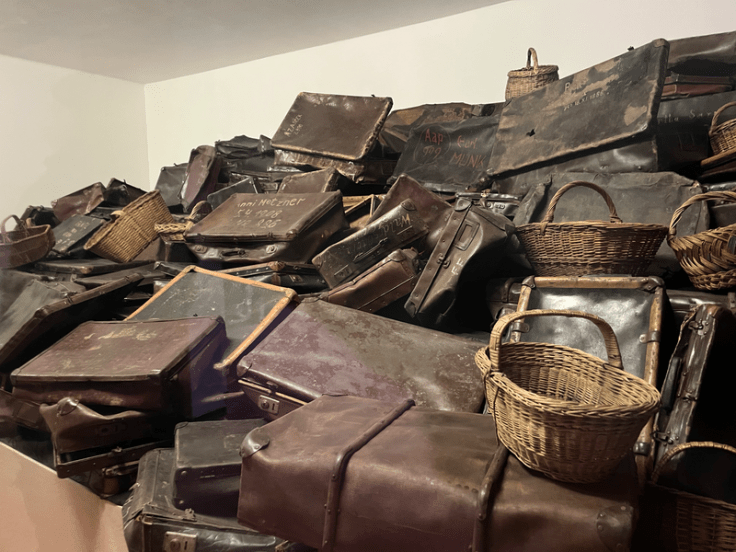
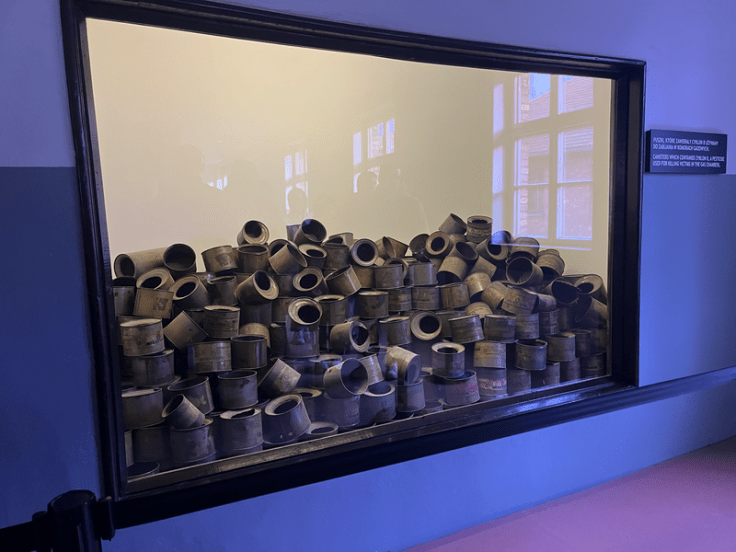
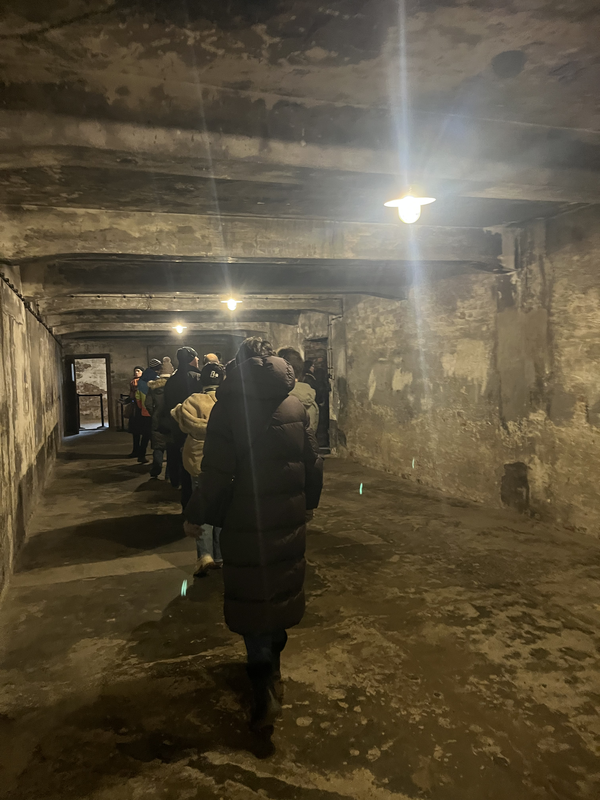
One such location that you cannot photograph is in block 4 in Auschwitz I, known as the “hair room.” Prisoners at Auschwitz had their hair shaved off, and the sick Nazis shipped it off to use in materials like rugs and socks for their soldiers. The hair room features a display case the length of an entire wall with tons of hair braids recovered at Auschwitz after the war. This was the part of Auschwitz that really got to me. I teared up as we were walking through, and still do every time I think of it, even as I write this right now. Other haunting displays at Auschwitz I feature suitcases, pots and pans, shoes, glasses, and artificial limbs all left behind by those murdered, and a wall of empty Zyklon B cans, the chemical agent used in the extermination. The tour of Auschwitz I concludes with a tour of one of the gas chambers.
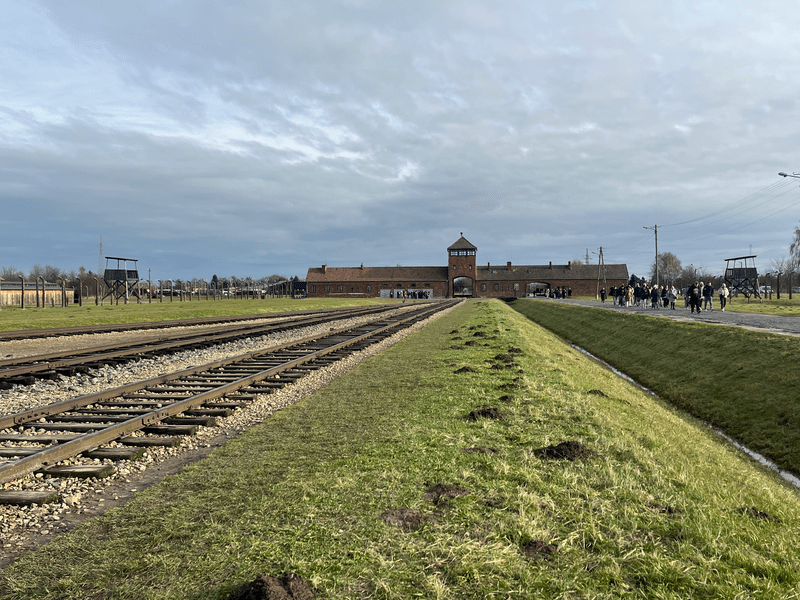
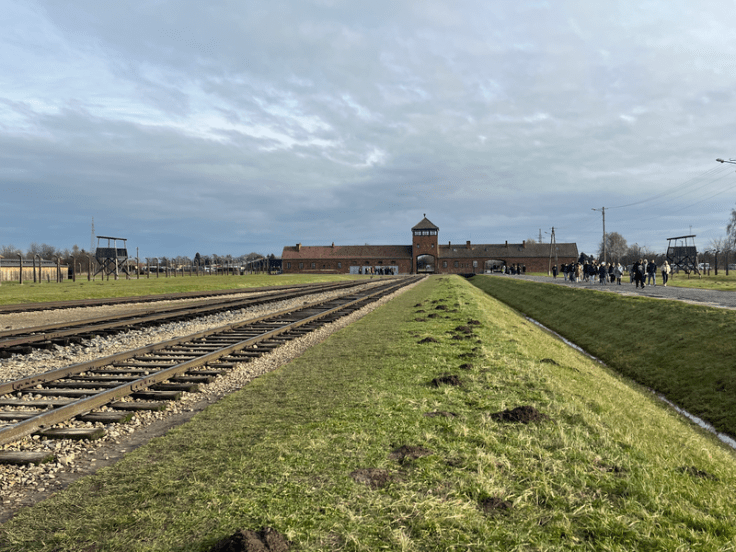
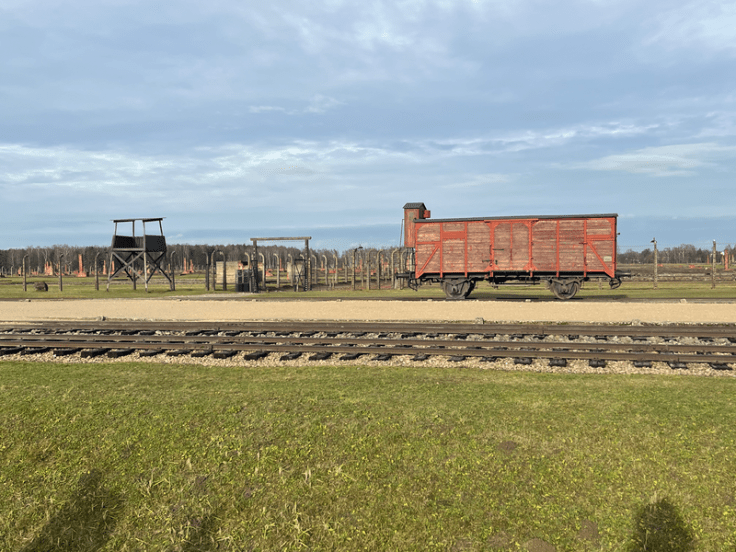
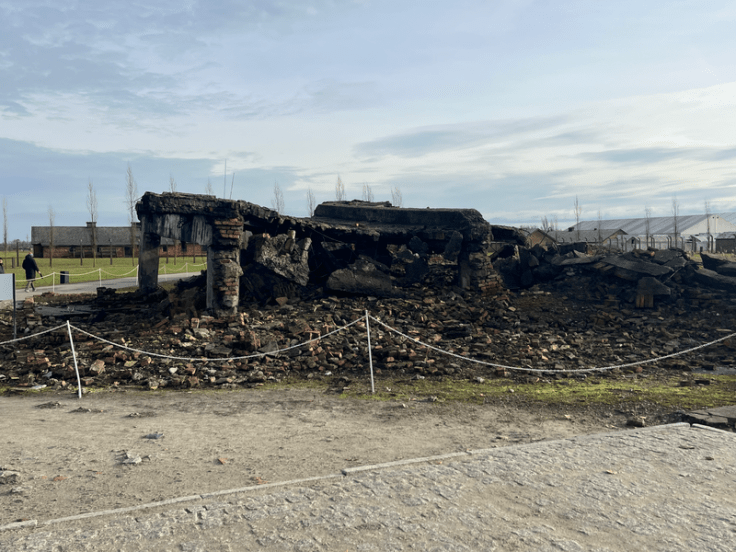
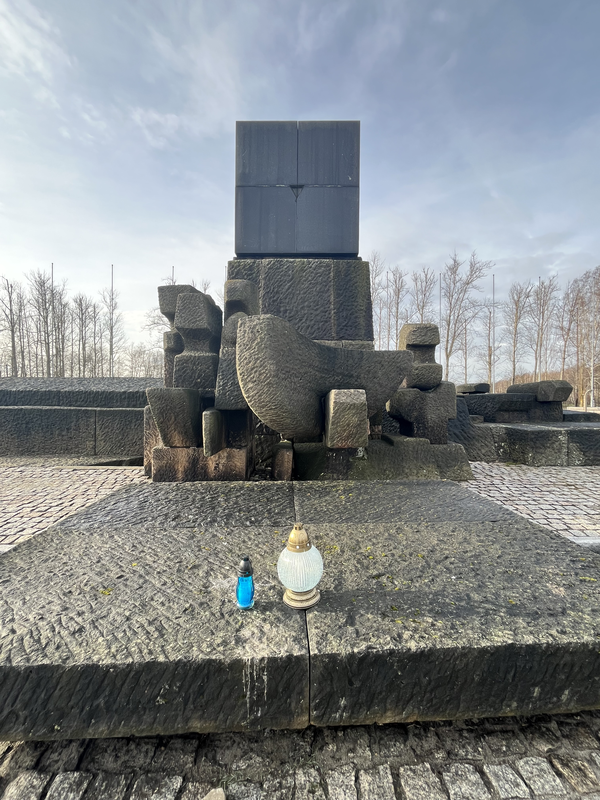
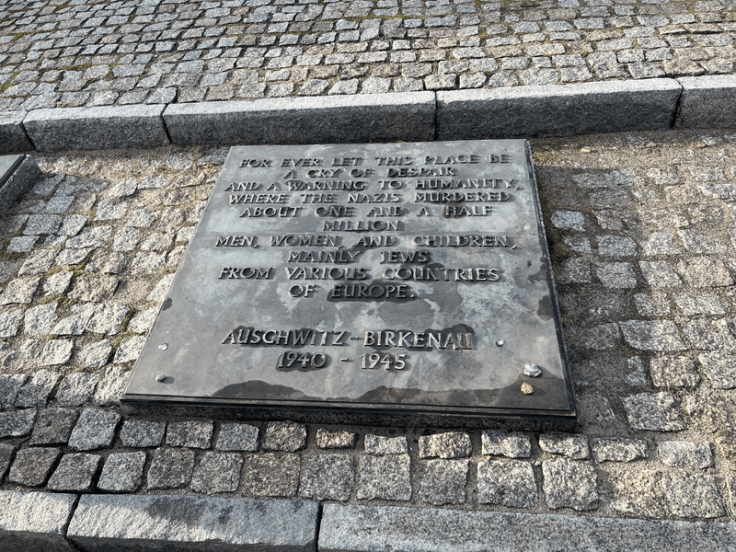
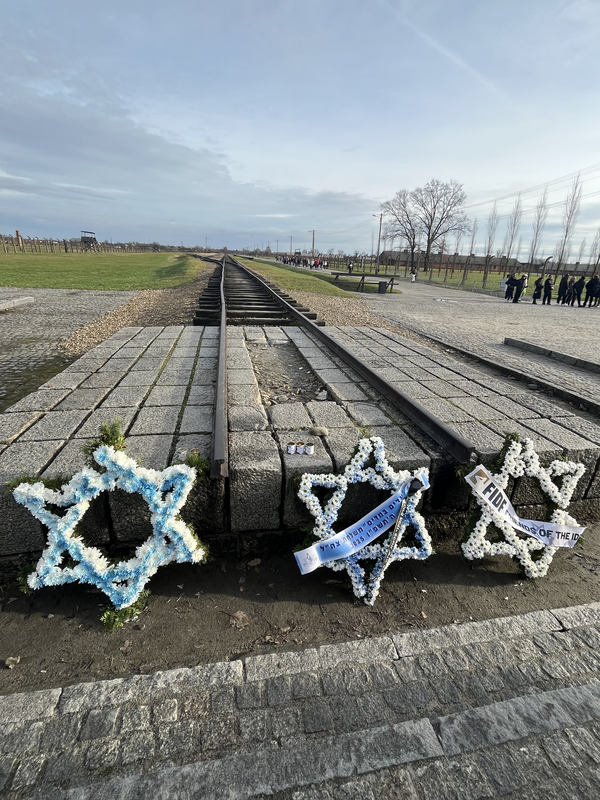
Before heading to Auschwitz II, you get a little bit of a break to use the restrooms, grab a drink, take a quiet moment, etc. before you rejoin your guide to take the free shuttle over to Auschwitz II-Birkenau. It’s about a 10-minute ride over, and you’ll pull up in front of another of the most recognizable views of Auschwitz, the Auschwitz II Historical Gate, the railway terminus used for transporting in trainloads of prisoners. Auschwitz II opened in 1942 as an extension of the Auschwitz camp and became the center for extermination of prisoners. About 90% of deaths at Auschwitz occurred in Birkenau – about one million people. 90% of these were Jews, with the other deaths being Poles, Soviet POWs, and prisoners of other ethnic groups and nationalities. At the far end of the sprawling camp, near ruins of the extermination chambers and crematoria, you’ll see a memorial in all of the languages of the various nationalities that perished in Auschwitz.
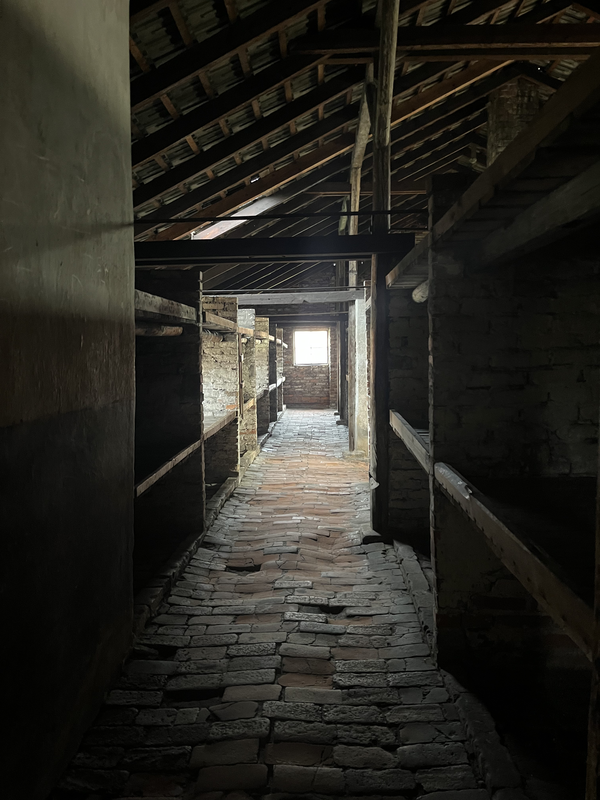
The guide took us in one of the barracks in Birkenau to show the deplorable living conditions – no beds, only 3-tier wooden bunks with 15 people crammed in side to side. The barracks were not well insulated against the elements, so illness, rodents, and lice all ran rampant through the barracks.
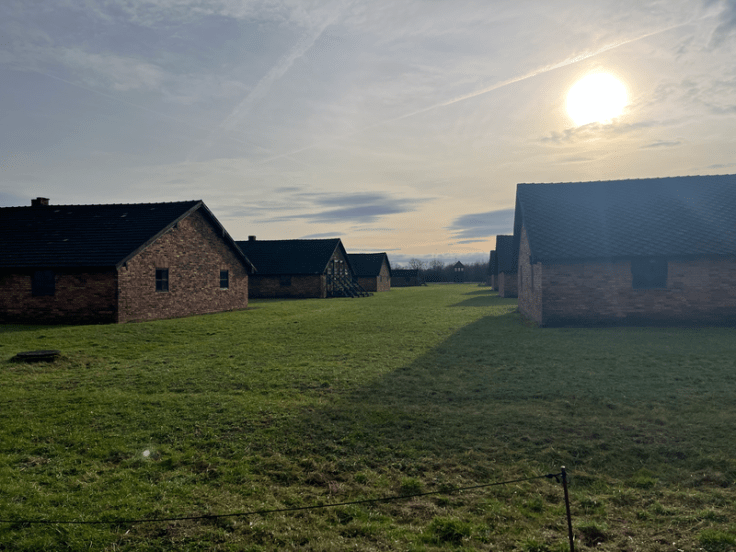
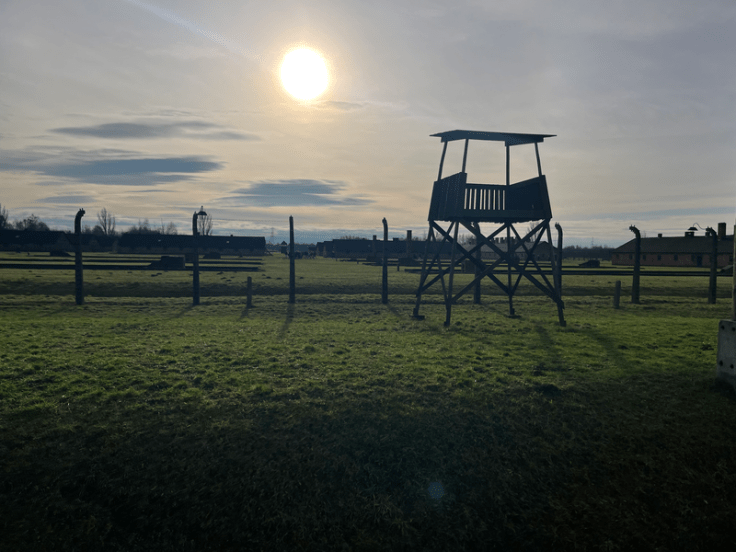
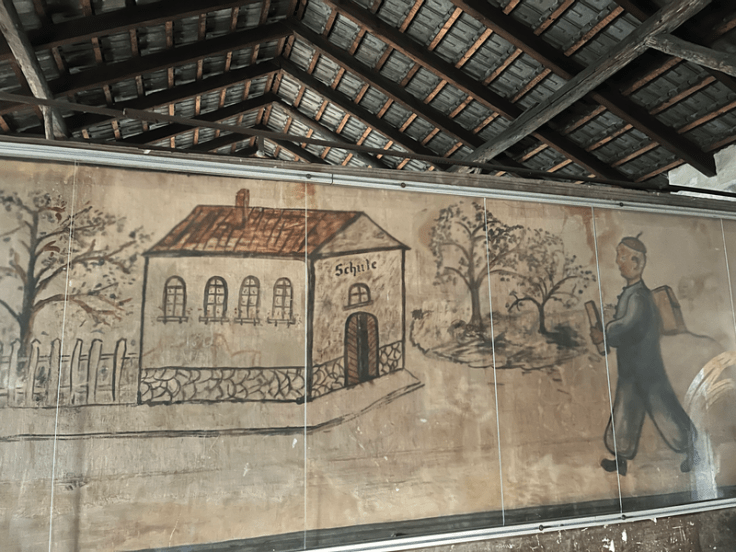
I also noted that walking around Birkenau, there were areas where active preservation efforts were underway. You don’t realize the enormity of the camp until you see it in person, and the museum’s team are actively working to maintain around 155 buildings and 300 ruins, in addition to the conservation of the thousands of artifacts within the exhibitions. It’s a huge undertaking, but so important for the preservation of this somber piece of history for future generations to learn from.
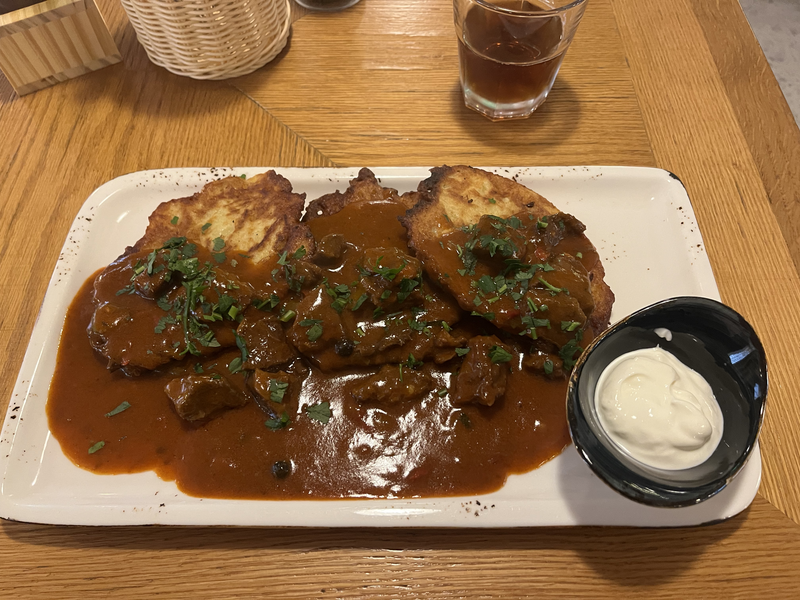
At the conclusion of the tour, the shuttle took us back to the main entrance. I took a slow and reflective walk back through Oświęcim, in need of some food and space to just decompress. I stopped into Restauracja NaNovo a 10-minute walk from the museum. It was a bright and friendly little restaurant serving up pizzas alongside local comfort foods. I had a delicious dish of Hungarian potato pancakes.
After lunch, I had a little time to kill before my 3:49pm return train to Kraków. I saw on Google Maps that there is a medieval castle in Oświęcim housing a museum, but it was a little ways across town and I wasn’t sure I’d have enough time to get there and fully see everything, plus with my emotional state after Auschwitz I just didn’t think I had it in me. I returned to one of the little parks I had passed earlier and just sat and chilled on a bench for a bit until it was time to head back to the train station.
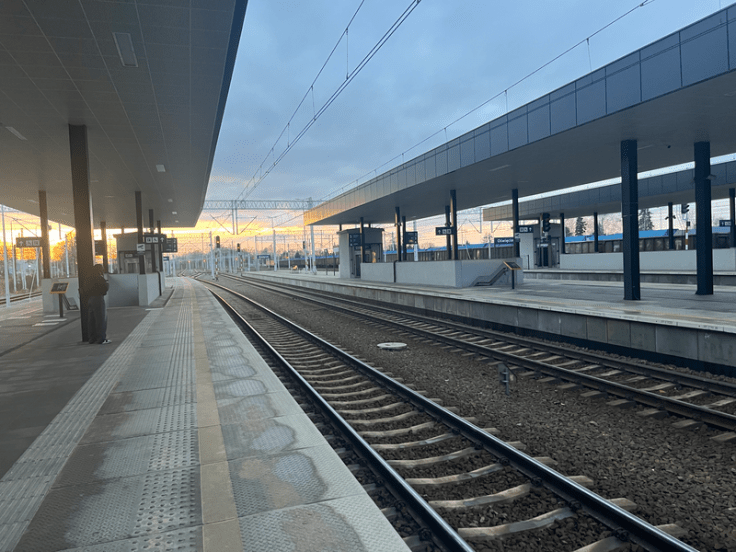
Reflecting on my train ride back to Kraków, the contrast of the day was jarring. It’s hard not to feel a weird sense of guilt as you go from the horrors of the death camp back into normal life, enjoying pleasures like a hearty lunch, a colorful sunset from the train platform, or the coffee and chocolate bar I treated myself to for the ride back. 1.1 million people never got to leave that camp. But that feeling of discomfort and guilt is exactly the point of visiting Auschwitz: not to stay in the darkness, but to understand what happens when the world looks away from it. Seeing the “hair room” or the ruins of the crematoria transforms the pages of your history book into a visceral, heavy reality. It reminds us that these were not just statistics; they were individuals with suitcases, eyeglasses, and families.
If you are planning a trip to Poland, I urge you to make the journey to Oświęcim. It is a difficult day and perhaps the most difficult “tourist” stop you will ever make, but it is a necessary one. We owe it to those who suffered there to look at what happened with our own eyes, so that they are not forgotten and so that we can carry these stories with us back into the world to shape the role we play in it.

 C to Shining C
Leave a comment